



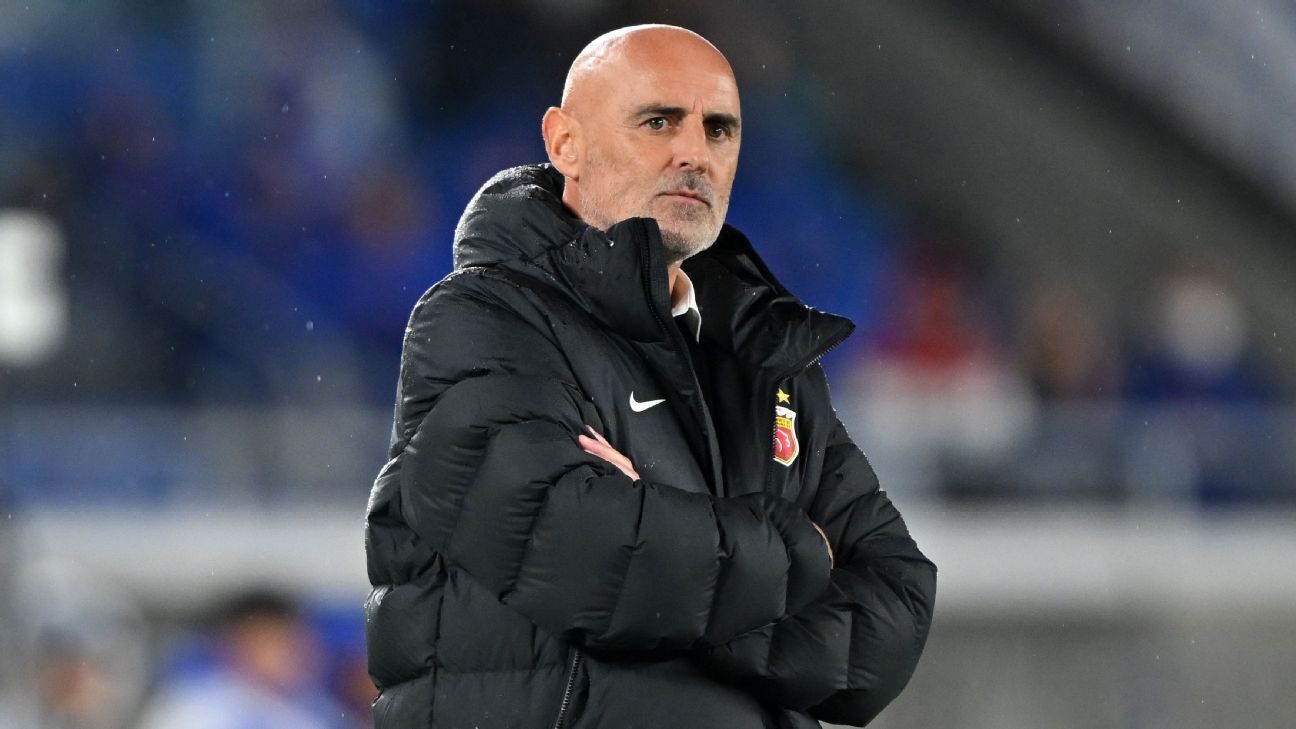
Kevin Muscat has clinched his fifth coaching title. The former Australian international has guided Shanghai Port to their second consecutive title in the Chinese Super League after a decisive 1-0 victory against Dalian Yingbo, securing the trophy on the last day of the season. This latest success adds another accolade to an impressive career.
With two Chinese league titles, a J1 League championship from his time at Yokohama F Marinos, and two A-League Men championships with Melbourne Victory, Muscat’s triumph in 2025 cements his status as one of Australia’s most successful coaches. Very few Australians attain opportunities abroad, and even fewer succeed in capturing silverware in two of Asia’s premier leagues.
After building one of the most potent attacking teams last season, Muscat faced new challenges in 2025. A loss to Dalian could have handed the title to their city rivals, Shanghai Shenhua. The departures of Brazilian star Oscar and former Argentine international Matias Vargas, combined with injuries to leading Chinese striker Wu Lei, left Muscat without key players who were vital to Shanghai’s attack, accounting for 56 of the 96 goals scored in 2024.
Despite these setbacks, Shanghai Port still led the league this season with 72 goals and maintained greater possession than any team other than Beijing Guoan. Achieving this while navigating significant changes is a commendable feat.
– Ranking Ronaldo’s overhead kick goals: Real Madrid, Portugal, Al Nassr
– Soccer’s longest away trips: Why Truro’s got nothing on the ‘Distance Derby’
– Arif leaves void for Johor Darul Ta’zim to fill in Champions League quest
However, the celebrations are short-lived as speculation regarding Muscat’s future intensifies. Despite having a contract with Shanghai that runs until the end of the 2026 season and expressing satisfaction living in China, the relentless nature of football demands constant narratives and developments.
This fervor is justified, especially considering the success of Ange Postecoglou, who garnered immense support from the Australian football community during his tenures at Celtic, Tottenham Hotspur, and briefly, Nottingham Forest. The Australian public is eager to see its own succeed at the highest level and to challenge stereotypes about the value of Australian coaching credentials. Muscat has proven his capabilities to make such a leap in the men’s game.
As a coach with ambitions to advance and having previously assisted Postecoglou, Muscat is well-positioned to take on a new challenge. His past playing experience in Britain and connections to his former teams have linked him to various coaching vacancies, including a near appointment at Rangers and, subsequently, the role at Wolverhampton Wanderers.
Muscat’s close encounter with the Rangers position—where discussions broke down, leading to Danny Röhl taking the job—only serves to fuel speculation about a potential move to Europe. Should the right opportunity present itself, he would likely consider it.
Choosing the right opportunity is critical. Given his challenging six-month experience at Belgian club Sint-Truidense in 2020, Muscat understands the need to be discerning about his next role. After successfully adapting to diverse cultures and winning trophies in both regions, he deserves to be selective about his next destination, ensuring alignment with his vision and sufficient support from the organization.
However, finding such a situation is often easier said than done. Speculation doesn’t always translate into genuine opportunities. While Muscat may enjoy an advantage as an Australian and a native English speaker, he still has a legacy to contend with in Britain—one marked by a reputation for physicality that crossed into brutality during his playing days. Articles have labeled him as “the most hated man in football,” referencing his notorious tackles. This image, despite his transformation into a progressive coach known for nurturing strong team dynamics, continues to linger.
There’s also the possibility that Muscat’s next move could be at the international level. He emerged as a potential candidate for the Socceroos’ managerial role after Graham Arnold stepped down, but chose to remain in Shanghai, allowing Tony Popovic to take the position. Should Popovic’s contract come to an end post-World Cup, Muscat would likely be a strong contender for the Socceroos’ coaching position, should he express interest.
Whatever direction he chooses, Muscat does so from a position of strength. Challenges ahead are inevitable, and success is not guaranteed. But Muscat’s proven track record continues to solidify his reputation as a winner—a significant advantage in the ever-evolving world of football.