



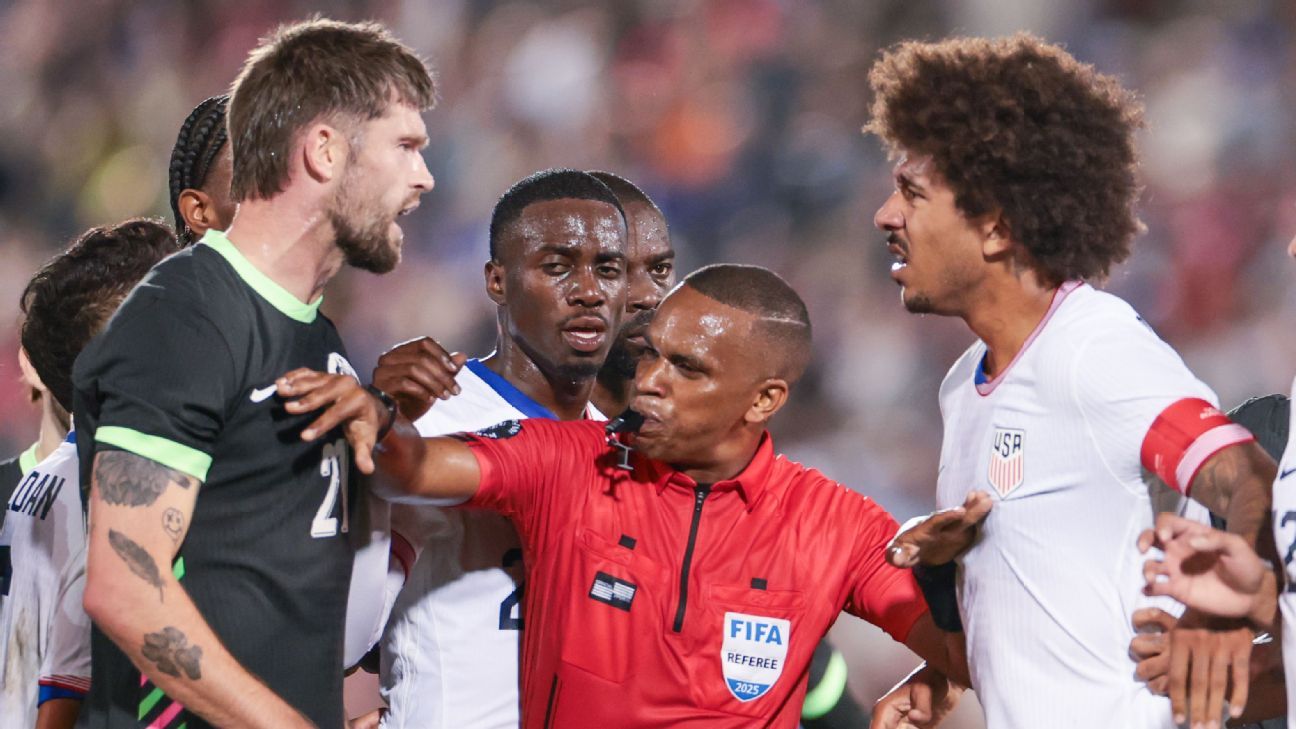
Australia will face the United States during the 2026 FIFA World Cup, but this match may not be the most significant in the Socceroos’ World Cup history.
Truth be told, in terms of landmark games, their encounters in the past—such as the knockout matches against eventual champions Italy and Argentina, the historic victory against Japan in 2006, or the decisive win over Croatia in that same tournament—would likely be ranked higher. However, when Tony Popovic leads his team against the Americans in Seattle on June 19, the excitement and anticipation could elevate this to one of the most hyped matches in Socceroos history.
In next year’s tournament, Australia finds itself in Group D alongside the co-hosts, Paraguay, and a European qualifier from one of Slovakia, Kosovo, Türkiye, or Romania. With preparations underway, the team has an understanding of what it needs to ensure a back-to-back berth in the knockout stages. Meanwhile, fans can start making plans for their trip alongside the Socceroos, from securing tickets amid high demand and skyrocketing prices to sorting out accommodation that seems to start at over a thousand dollars for just a couple of nights.
– O’Hanlon: How the 2026 World Cup changed the ‘Group of Death’
– How travel impacts the 2026 World Cup group stage and its significance
– 2026 World Cup Group D: Analyzing U.S. matchups against group-stage rivals
Both teams are set to kick off their journey on the West Coast of North America, beginning with the Socceroos’ match against the European qualifier in Vancouver, progressing to the Seattle encounter against the U.S., and then a showdown with Paraguay in Santa Clara. Logistically, this setup should be convenient for both the team and its supporters, with the Pacific Northwest’s timezone favoring broadcast times for home viewers while allowing them to avoid the extreme summer heat of North America.
Although the introduction of eight best third-placed teams across 12 groups at the expanded 48-team World Cup lessens the stakes compared to the previous 32-team tournaments, Australia’s journey to the knockout round is likely dependent on how they fare in the Pacific Northwest.
Returning to the matchup with the United States, the American team, led by Mauricio Pochettino and enjoying co-host status, was slotted into Pot 1 of the World Cup draw. With a FIFA ranking of 14, the U.S. was just shy of claiming that status on their own, outperforming other Pot 2 contenders like Croatia, Morocco, and Colombia. After a period of inconsistent performance, the team has started to regain form under their Argentine coach, remaining unbeaten in five matches, including victories over Japan, Uruguay, Paraguay, and Australia itself back in September. With stars like Weston McKennie and Christian Pulisic shining at top clubs worldwide, the U.S. boasts an impressive roster.
Establishing home field advantage, which tends to boost performance, puts the Americans as favorites to lead Group D and aspire for a deep run in the tournament. Falling short of topping the group would be viewed as a disappointment, especially considering the competitive nature of teams like Australia and Paraguay, who only conceded 10 goals in 18 South American qualifiers, along with the potential for Türkiye to join the fray. As some in the punditry suggest, the notion of Australia being an easy opponent seems overly simplistic.

3:17
Should USMNT be happy with their World Cup draw?
The “Futbol Americas” crew reacts to USMNT’s 2026 FIFA World Cup group draw.
From Australia’s point of view, securing points against the U.S. would significantly boost their chances of advancing to the knockout stage. If they can hold their ground against the group’s strongest competitor, it would immensely benefit their campaign, assuming the U.S. does their part against the other teams.
However, with the expectations and pressure mounting on the American side in front of a home crowd, there’s potential for chaos. The match might unfold in a fashion benefiting the Socceroos, who excel at sitting back defensively while targeting counters, especially if the U.S. struggles against Paraguay in their opening match.
While the U.S.’s recent matches have highlighted their need to enhance possession, Australia’s success in qualifying, where they outperformed their expected goals against Japan and Saudi Arabia, demonstrates their capability. Although it’s unlikely to be an attractive style of play, if this approach yields victories during the World Cup, Popovic, who previously led an underdog team from Western Sydney Wanderers to an Asian Champions League title, won’t mind the critics.
The significance of the match against the U.S. transcends merely footballing dynamics. It marks the first encounter with a host nation since Australia faced West Germany in 1974, where the team was composed largely of semi-professionals and captained by the legendary Johnny Warren. The atmosphere at Lumen Field will undoubtedly be electric, intensifying the usual buildup to such matches.
While previous Australian teams facing off against top nations like Germany, Brazil, and Spain were met with less controversial scrutiny, the accessibility of social media and the internet has magnified this. It allows anyone, no matter how obscure, to generate opinions that can reach vast audiences, fueling potential outrage and polarization regarding the match.
With the influx of commentary leading up to kickoff, combined with the passionate and sometimes intense reactions from Australian football fans, there’ll be ample fodder for discussion. Common sense and friendly discourse may take a backseat as the lead-up to this encounter warms up through social media buzzing with opinions from both nations.
On and off the pitch, the clash between the Socceroos and the United States promises to be a monumental occasion that could define their respective World Cup journeys. It may be contentious, but it’s guaranteed to be significant and full of excitement.