



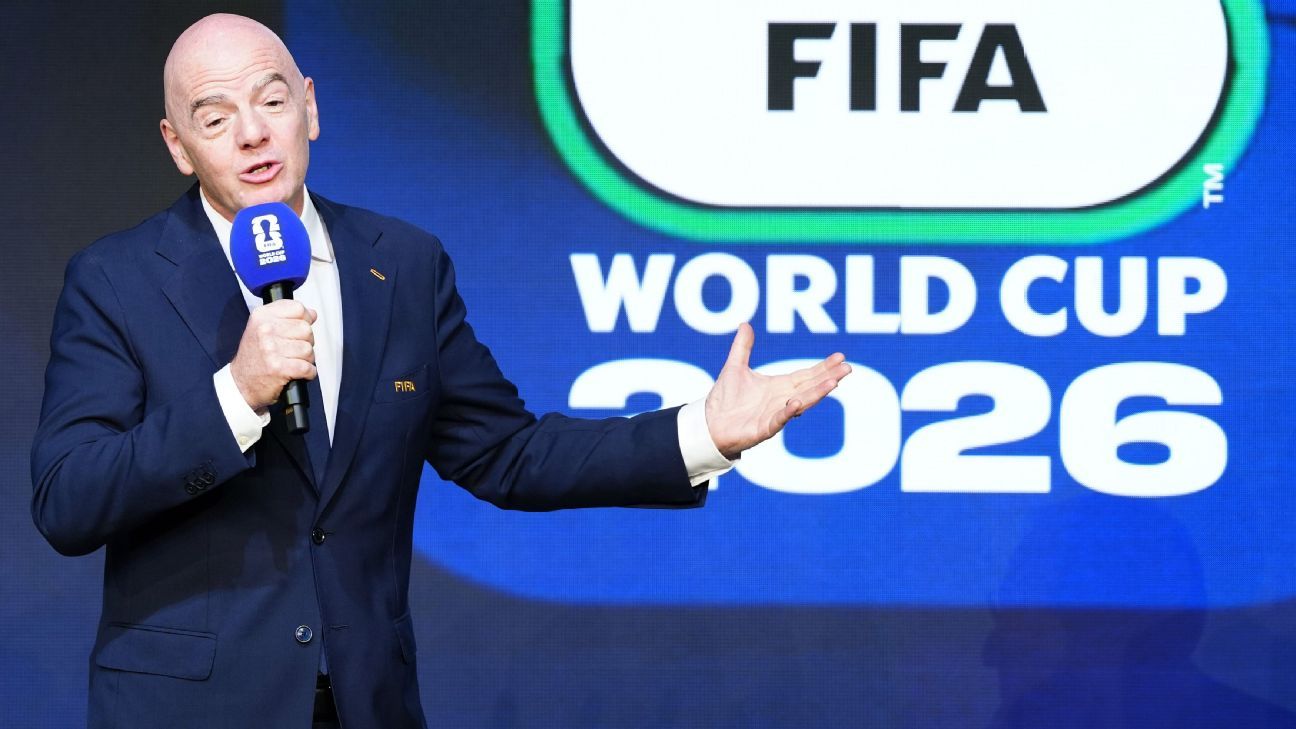
On Friday, FIFA announced it received 5 million ticket requests within the first 24 hours of the third ticket sales phase for the 2026 World Cup, despite significant criticism from fan groups regarding the latest pricing.
The governing body for global soccer stated that the high demand, described as “extraordinary,” reflects the enthusiasm of fans around the world, especially following last week’s tournament draw held in the United States, Canada, and Mexico.
While FIFA highlighted the enthusiasm of fans from over 200 countries for the inaugural 48-team World Cup, it showed little willingness to reconsider prices amidst the backlash that followed the announcement of ticket costs last Thursday.
– Fans accuse FIFA of ‘betrayal’ over World Cup ticket prices
– 2026 World Cup predictions: Group-by-group takeaways, must-see games
– Egypt, Iran complain about World Cup ‘Pride’ match in Seattle
The German Football Association released a ticket price list showing costs ranging from $180 to $700 for different group stage matches. The price for the final starts at $4,185, while the highest could reach $8,680.
According to the English Football Association, fans purchasing tickets for every match up to the final could end up spending over $7,000.
The fan organization Football Supporters Europe (FSE) condemned the current ticket prices as “extortionate” and called for FIFA to suspend sales through national associations “until a solution that honors the tradition, universality, and cultural importance of the World Cup is reached.”
“This is a staggering betrayal of World Cup tradition, overlooking the vital role of supporters in creating the spectacle it represents,” the statement emphasized.
When bidding for the tournament seven years ago, U.S. soccer officials aimed to offer a substantial number of $21 tickets during the opening games. However, for the first time at a World Cup, FIFA has introduced dynamic pricing, which adjusts based on demand following its successful implementation at this summer’s Club World Cup.
In contrast, ticket prices during the 1994 U.S.-hosted World Cup ranged from $25 to $475, and during the 2022 Qatar World Cup, prices varied from approximately $70 to $1,600.
Through the “random selection draw” that commenced Thursday, fans can choose specific matches, ticket categories, and quantities for each match, though there is no guarantee of securing tickets.
The third phase of sales will continue until January 13, 2026, with successful applicants notified by email in February and automatically charged.
FIFA noted that the demand has been particularly strong from the three host nations, along with significant interest from other countries in the Americas. The ten countries with the most ticket requests include Colombia, England, Ecuador, Brazil, Argentina, Scotland, Germany, Australia, France, and Panama.
Among the group stage matches, the contest between Colombia and Portugal featuring Cristiano Ronaldo in Miami on June 27 generated the highest ticket requests in the initial 24 hours. Other sought-after matches include Brazil vs. Morocco (New Jersey), Mexico vs. South Korea (Guadalajara), Ecuador vs. Germany (New Jersey), and Scotland vs. Brazil (Miami).
Despite Scotland’s enthusiastic demand for tickets for their first World Cup appearance since 1998, a supporters’ group labeled the prices as “disgraceful and disgusting,” urging the country’s football association to express their concerns to FIFA.
“This pricing will exclude many of our fans,” the Association of Tartan Army Clubs (ATAC) stated. “FIFA is destroying the dream for our young supporters who are eager to attend a World Cup.”
In response, the English Football Association plans to relay the concerns of fans to FIFA, although reports suggest they hold little hope for any changes.
FIFA concluded its update by emphasizing that, as a non-profit organization, it reinvests revenue from the FIFA World Cup to support the development of football (men’s, women’s, and youth) across its 211 member associations worldwide.
Information sourced from The Associated Press and PA was utilized in this report.