



-

Ryan O’Hanlon
Imagine a modest soccer club in a nation renowned for its talent, a country where every four years, the discussion often revolves around the number of potential World Cup lineups that can be formed solely from its talent pool. This country has seen its national team reach the finals of the last two World Cups.
However, the league in which this club competes has been deeply affected by the influx of sovereign wealth and foreign investment over the past three decades in European soccer. This particular league serves as a stark illustration of how unrestricted financial resources can distort a competitive environment that lacks meaningful constraints on extravagant spending.
In this league, a single powerhouse owned by the world’s wealthiest government has claimed the title in 11 of the last 13 seasons. Yet, these victories come devoid of true sporting merit; there’s no clever scouting or tactical innovation at play. They simply spend about $202 million annually on player salaries, nearly twice the second-highest payroll of $110 million, with no other team even crossing the $72 million mark.
In contrast, our small club is doing its utmost to bridge the gap. With a payroll of just $38 million, they were closely trailing the league leaders before a recent slump, creating and conceding chances at a clip comparable to the fourth-best team, despite ranking in the league’s lower half for expenditure.
They achieve this through a distinctive approach, employing a slow-paced game with numerous short, lateral passes, while still leading in the most crucial goal-threatening passes—through balls. Their squad composition is also notable, with an average player age under 22—remarkable when matched against any top European team’s roster, none of which average below 24 years.
This small club, which last lifted a domestic title in 1979 and was relegated to the third division as recently as 2016, has revitalized itself by fostering and placing trust in young talents like never before. They are consistently surpassing expectations, with their performance improving as each season progresses.
They ought to be one of the season’s standout stories. Yet, they aren’t. Why? Because this unassuming club—Strasbourg in Ligue 1—is owned by the same entity that owns Chelsea, a Premier League club that recently set a record by spending over $1 billion on its team.
Instead of serving as a remedy to the inequities plaguing the sport, Strasbourg has become yet another casualty of it. Essentially, they’ve turned into Chelsea’s feeder club.
– Premier League Future Power Rankings: Projections for all 20 teams
– Rating This Year’s Christmas Sweaters from Top Clubs
– How Sunderland’s Premier League Return Revived the Club and City
The Evolution of the ‘Farm Team’ Concept in Sports
The modern “farm system” was established by the esteemed baseball GM Branch Rickey, who ironically was relieved from his managerial duties with the St. Louis Cardinals and subsequently “demoted” to the position we now liken to a sporting director.
During Rickey’s time, teams in America’s top leagues acquired new players as Premier League teams do today—primarily from lower-tier leagues, which were referred to as the “minor” leagues.
Rickey noted, “When the Cardinals were fighting for their life in the National League, I found that we were at a disadvantage in obtaining players of merit from the minors. Other clubs could outbid us; they had money and superior scouting. We were left with whatever was available or nothing at all.”
His solution was for the Cardinals to purchase one of these smaller teams, utilizing it as a “proving ground” for younger players, thereby allowing the Cardinals to manage a greater number of players than their rivals. This “control” encompassed both employment and the development process.
As Andy McCue at the Society for Baseball Research expressed, “The Cardinals established a network of minor-league teams to sign players economically, differentiate the capable from the exceptional, win championships, and ultimately profit. Rickey sold the competent players while retaining the extraordinary ones for the Cardinals.”
This strategy proved so advantageous that all major league teams eventually adopted similar practices. Today, each team operates three farm teams at uniform levels: single-A, double-A, and triple-A. Following his time with the Cardinals, Rickey moved to the Brooklyn Dodgers, where he pioneered spring training, advanced statistical analysis, and paved the way for Jackie Robinson’s debut, contributing to the foundation of the LA Dodgers, which Todd Boehly partially owns today.
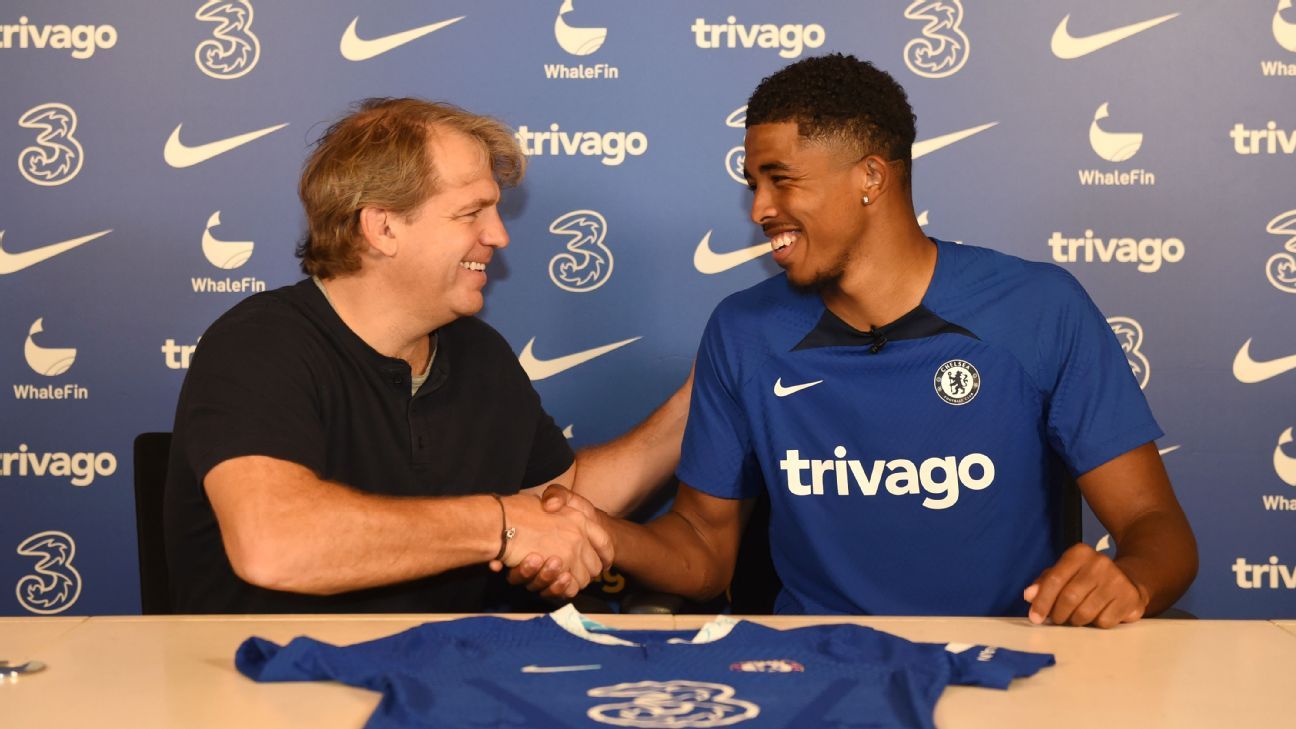
Boehly, part of the BlueCo group that acquired Chelsea in 2022, has since taken a notably proactive role at the club.
He traveled extensively during his initial summer as owner, sought to sign Cristiano Ronaldo, acted as the de facto sporting director by signing nine players—only two of whom see regular minutes—and proposed the idea of an all-star game in the Premier League. He exemplifies the stereotype of an American financier attempting to introduce “revolutionary ideas” to a sport perceived to be outdated.
When Boehly and BlueCo took over Chelsea, the club was the third or fourth best in England and remains in a similar standing today.
However, their innovations largely consist of financial maneuvers—like selling hotels and stadiums to themselves and extending transfer fees over lengthy contracts—that enable them to spend more than their competitors without breaching the Premier League’s financial protocols. While the club has amassed a plethora of young talent, they still lack the ability or even the motivation to make crucial decisions that can transform them from being Champions League aspirants to genuine title contendors.
Nevertheless, their approach with their second club seems to signify a genuine innovation that could bolster Chelsea’s competitive edge—albeit at Strasbourg’s expense.
Why an Academy System Is Inferior to a Farm System
Most premier European clubs operate academies aimed at nurturing young players into professionals capable of competing in top-tier leagues.
Ideally, these players are developed to perform for their club. However, there remains a significant gap in talent between academy-level competition and that of the first-team setups in major European leagues.
In American football, college football is arguably the next most competitive arena, and teams benefit from an annual collegiate draft. By contrast, the gap between Chelsea’s academy and its first team is far more pronounced—akin to the difference between high school football and the NFL.
This brings forth two flawed solutions.
The first is the approach taken by Arsenal this season, where two promising prospects, Myles Lewis-Skelly and Ethan Nwaneri, find themselves members of the first team. While they train daily alongside top players like Bukayo Saka, Martin Ødegaard, and Declan Rice, opportunities for play are minimal, given the current squad’s quality. After promising paragraphs last year amidst a team injury crisis, they have since seen their chances dwindle, combining for zero Premier League starts in the first half of the season.
The alternative solution is to send players out on loan, hoping they get playing time and fit in with new coaching staff. This approach, however, presents its own issues. Typically, managers favor experienced players to ensure victories, leaving young loaned players with reduced playing time as clubs often lack incentive to prioritize their development.
Consider Liverpool‘s Harvey Elliott, who was loaned to Aston Villa after starting just three games last season, only to feature for 91 minutes at Villa, failing to appear in a Premier League match since September.
Chelsea’s solution, however, enables them to maintain an entire team within a highly competitive league where their young players can gain guaranteed playing time, fostering an environment that simulates what they’ll face in the Premier League.
Additionally, Strasbourg functions as a potential managerial training ground as well. Their current manager, Liam Rosenior, who is just 41, offers Chelsea tangible insights into managerial capabilities that could be beneficial should they ever consider hiring him at Stamford Bridge.
1:08
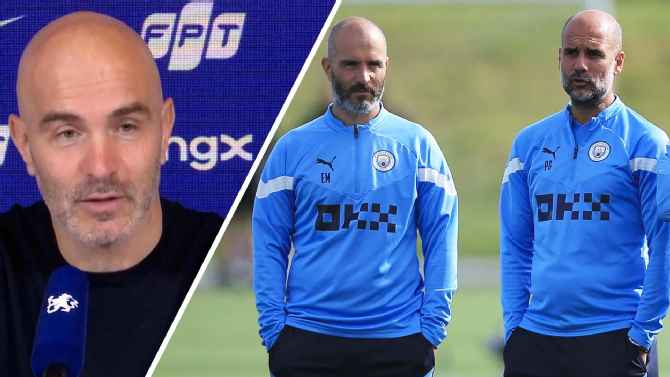
Enzo Maresca: I don’t listen to managerial speculation
Chelsea manager Enzo Maresca has commented on various reports linking him to the Manchester City job as mere speculation.
“We are merely a farm team,” said Alexandre, a representative of four major supporter groups from Strasbourg, requesting anonymity. “We don’t want to just be a farm team; we value our history and the local traditions associated with our club. Decisions regarding Strasbourg’s future should prioritize our own interests, which is currently not the case.”
Chelsea officials might dispute the assertion that Strasbourg serves exclusively as their farm team, noting that only three players from Strasbourg are currently on loan to Chelsea. However, this is largely a matter of semantics, as it’s evident that Strasbourg is functioning primarily as a development pipeline for the Premier League club.
Notably, it has already been confirmed that Strasbourg’s best player, Emmanuel Emegha, is set to join Chelsea next season. Among the 13 Strasbourg players who have played at least 500 minutes this season, only one is older than 23—28-year-old Ben Chilwell, who signed on a “free” transfer last summer.
The situation was summed up succinctly in August when news broke that Brighton’s Julio Enciso was under consideration for a transfer. Reports revealed he was being courted by BlueCo, not specifically Chelsea or Strasbourg.
The Growing Trend of Multi-Club Ownership
Multi-club ownership has been on the rise globally. The Red Bull group is perhaps the most well-known example, owning clubs such as RB Leipzig in Germany, RB Salzburg in Austria, and the New York Red Bulls in MLS, among others in Brazil and Japan, with the entire network now under the oversight of ex-Liverpool manager Jurgen Klopp.
The City Football Group stands as the most extensive multi-club entity, boasting teams in 13 nations. Manchester United‘s Jim Ratcliffe has interests across multiple clubs. Arsenal’s Stan Kroenke also owns the Colorado Rapids and Newcastle’s owners have invested in multiple teams across a league. Several Premier League clubs are similarly tied to these expansive ownership portfolios.
While UEFA has implemented regulations to prevent clubs under common ownership from competing simultaneously in European fixtures, there’s no prohibition against the existence of these multi-club entities.
The consultancy Twenty First Group frequently collaborates with groups aiming to acquire soccer clubs; many either seek to expand their portfolio or are novice buyers aspiring to establish their own multi-club networks.
“Most stakeholders view it as a mechanism to access, enhance, and sell talent—a reasonable hypothesis that remains inadequately substantiated,” noted Omar Chaudhuri, Chief Intelligence Officer at Twenty First Group. “Analysis indicates that clubs under multi-club ownership do not necessarily outperform similarly-sized clubs that are independent, and the logistics of player transitions between teams are often more complex than anticipated. The hurdles to acquiring additional clubs are comparatively low, but achieving success presents significant operational obstacles.”
No groups have operationalized this structure as aggressively as Chelsea, nor have any been as transparent about their intentions.
“Our objective is to illustrate pathways for our young stars to feature for Chelsea while securing them valuable playing time,” Boehly stated shortly after acquiring Chelsea. “For me, this necessitates collaboration with another club in a competitive European league.”
However, his perspective overlooks the deep emotional significance of soccer clubs to their supporters. Though it’s undeniable that Strasbourg has improved since BlueCo’s takeover, the fans feel differently. Some casual supporters express contentment with the club’s increased financial muscle for transfers and quality players, while core supporter groups voice their discontent.
“The overarching scenario is detrimental to the emotional ties supporters have with our football club,” explained Alexandre. “In Europe, a football club represents a community, and Strasbourg embodies this community. It stands in stark contrast to our club being owned by a U.S. private equity fund alongside another English Premier League entity. This situation feels disconcerting.”
The emotional connection to a sports team—notably the driving force behind this vast, global industry—stems from the shared experience of enjoying matches weekly and the unique influence that each club’s identity imparts. There’s an unsettling aspect to transforming something so meaningful into merely a financial instrument designed to bolster the success of a wealthier club, ultimately enhancing the returns for an investor residing in another country.
As long as clubs seek investors and no laws prohibit a single entity from acquiring multiple teams, the Chelsea-Strasbourg arrangement seems more like the beginning than the conclusion. The new dynamics in European soccer point to a reality where the Premier League takes precedence at the expense of everyone else.