



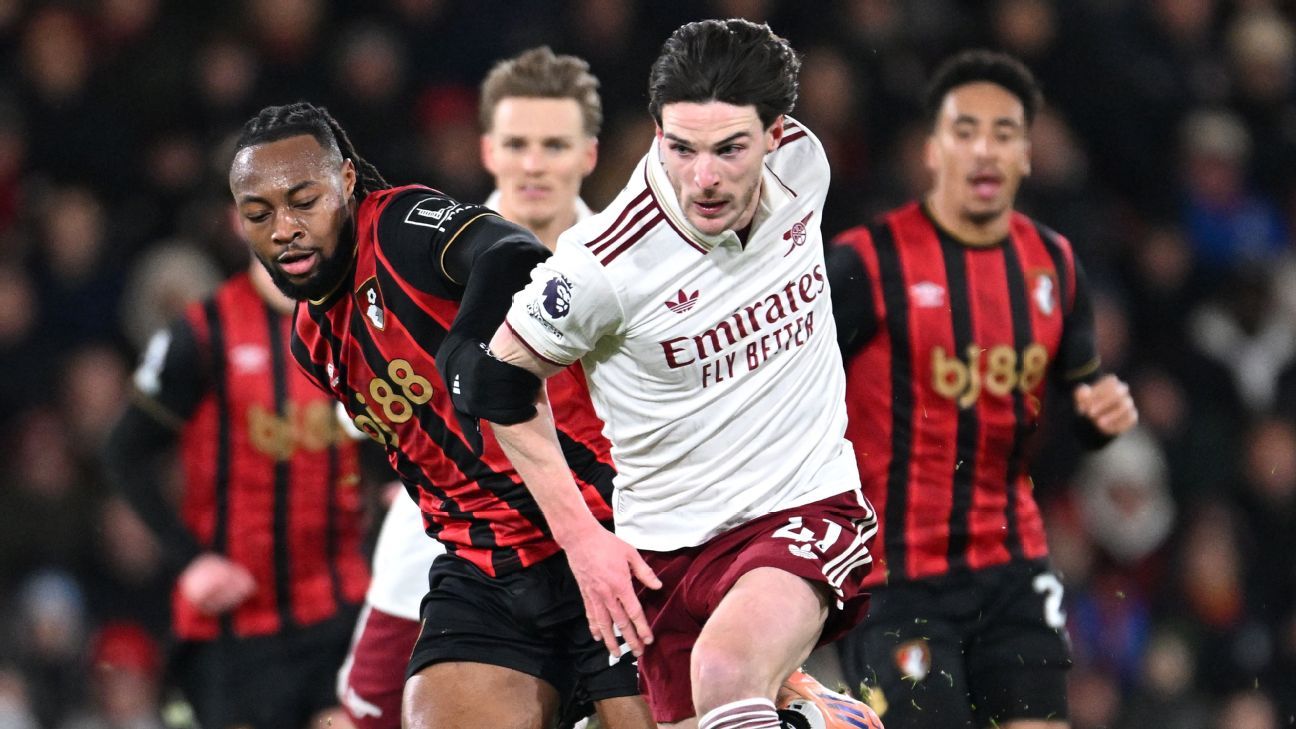
It was clear, right when Bournemouth‘s Antoine Semenyo grabbed Declan Rice‘s Arsenal shirt on Saturday, that the debate surrounding VAR’s involvement in second yellow card decisions was reigniting.
I often hear this question: Why does VAR not intervene in second yellow card situations, regardless of the context or impact on the game? Why is there a distinction between a second yellow and a straight red when the final outcome is the same?
At the moment, VAR is not authorized to intervene regarding second yellow cards; it can only act on goals and straight red cards. This limitation has become especially contentious during the Premier League festive period. On three separate occasions involving Arsenal (twice) and Manchester City, referees opted not to issue a second yellow card, a decision that could have led to a different outcome if VAR had intervened.
But should there be a change allowing VAR to address second yellow cards?
Recent Controversies
Dec. 27: Premier League, Nottingham Forest vs. Manchester City – Rúben Dias
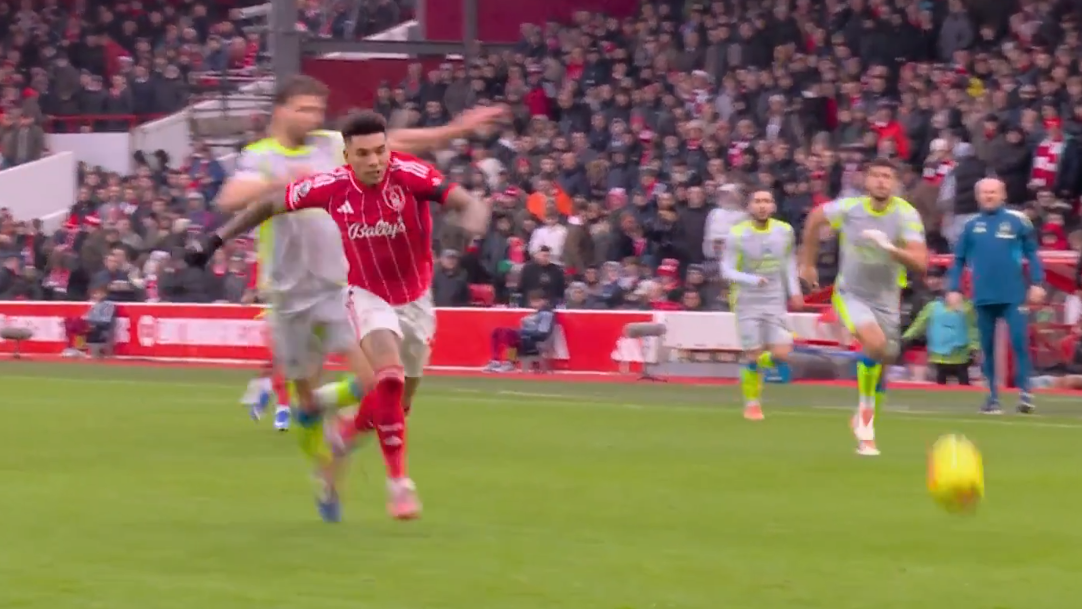
In that match, Dias clipped the heels of Nottingham Forest‘s Igor Jesus as he raced towards a loose ball, creating a clear scoring opportunity for his team. This fouling act, whether intentional or not, disrupted a promising attack and warranted a second yellow for Dias.
Dec. 30: Premier League, Arsenal vs. Aston Villa – Mikel Merino
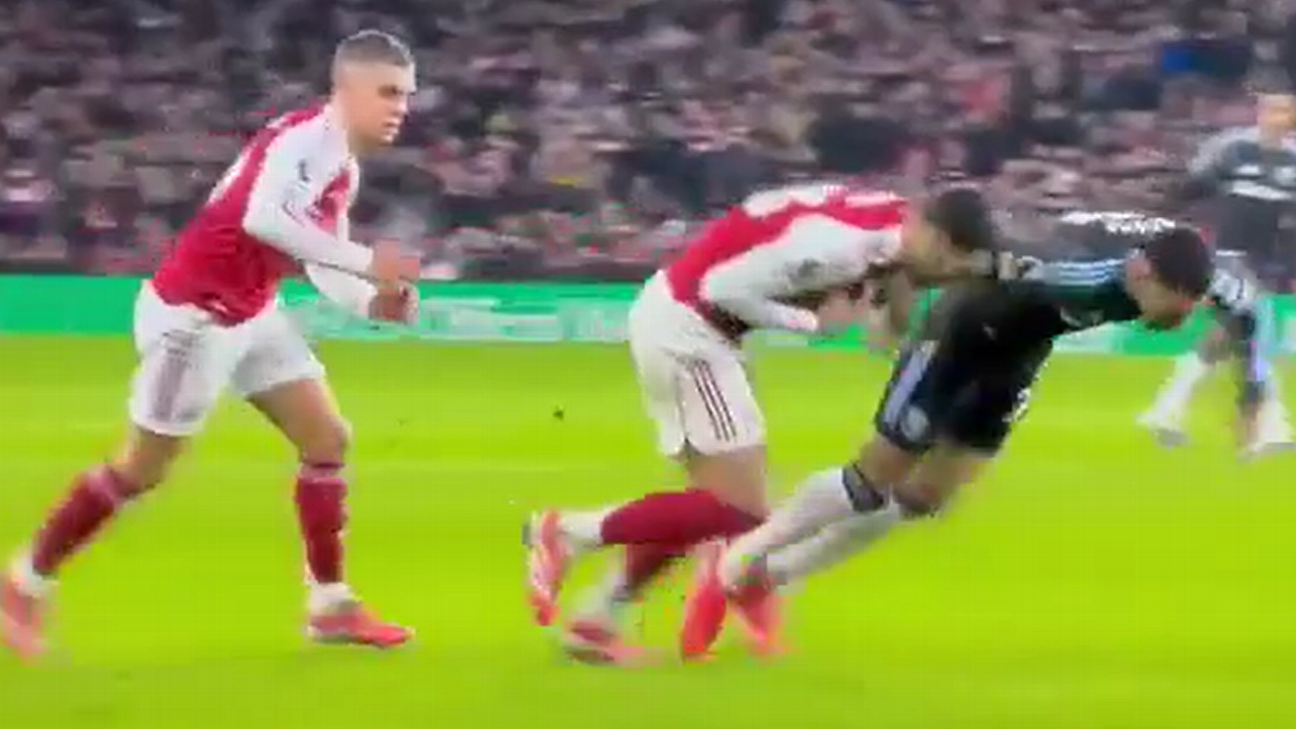
During the match, Arsenal’s Merino intentionally pulled back Aston Villa‘s Morgan Rogers as he made a strategic turn, denying Rogers a clear chance to attack in Arsenal’s half. This action clearly deserved a second yellow, which should have resulted in Merino’s dismissal.
Jan. 3: Premier League, Bournemouth vs. Arsenal – Antoine Semenyo
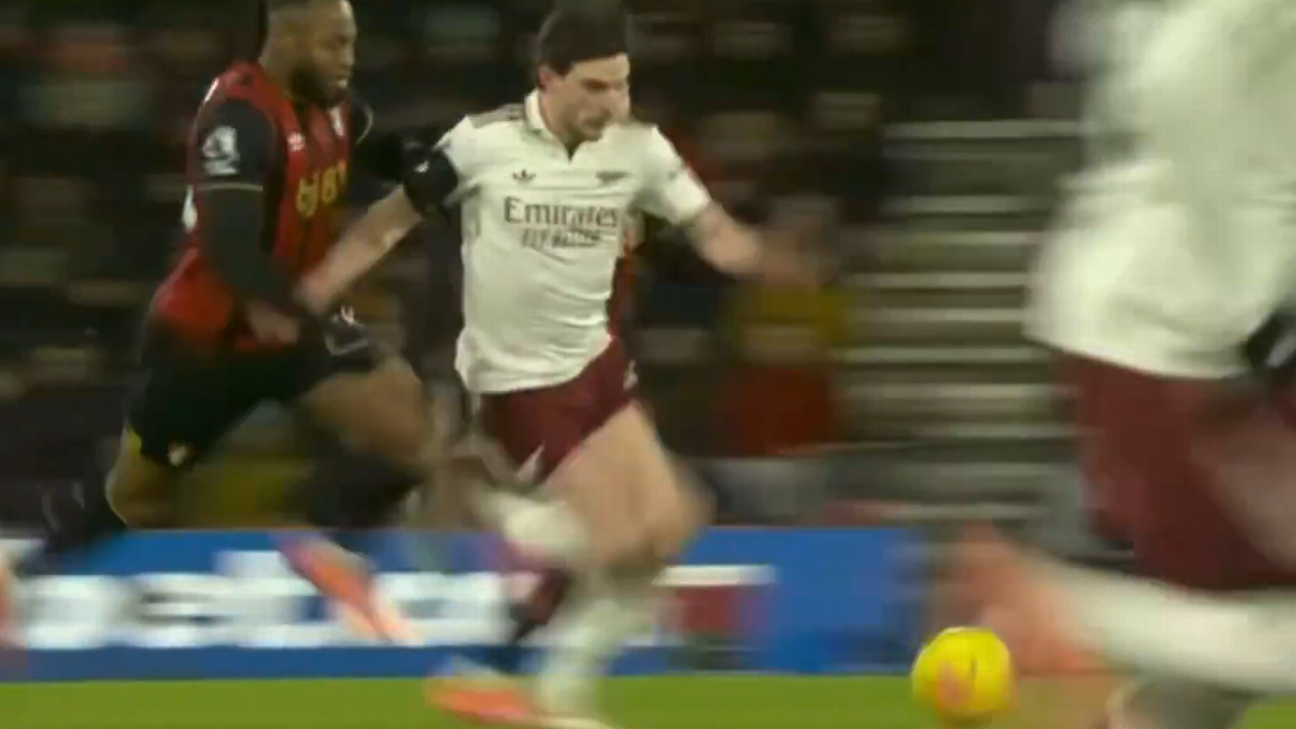
Semenyo deliberately tugged on Rice’s arm as he surged forward into Arsenal’s attacking zone. However, the referee overlooked the foul, preventing the option of a second yellow for Semenyo by halting a promising attack. Had Rice gone down, it’s likely Semenyo would have faced a second yellow card.
Potential Changes on the Horizon
Currently, VAR cannot address second yellow cards unless they are issued to the wrong player; however, changes could be forthcoming. IFAB is considering the possibility of allowing VAR to intervene when a clear mistake has been made regarding a second caution.
The implications of wrongly sending off a player when clear evidence is available can be game-altering, making this change a reasonable step forward.
There is increasing momentum behind enabling VAR to suggest an on-field review for potential second yellow card errors, which I anticipate will be implemented by the start of the 2026-27 Premier League season. If approved by IFAB in a timely manner, it might even debut during this summer’s 2026 World Cup.
– VAR review: Why was Wirtz onside in Premier League, offside in Europe?
– Ruben Amorim sacked as Manchester United head coach
– No Maresca, no problem? Chelsea deal late blow to Man City, Guardiola
A good example could mirror the Dias-Jesus incident. Imagine if Jesus went down in a similar situation, and the referee awarded a free kick before sending Dias off for a second yellow. If VAR later revealed no contact from Dias, the second yellow card would be deemed an error, which currently cannot be rectified.
In such a case, the VAR could recommend reviewing the situation on-field, allowing the referee to assess the replays and make the final decision. This change would be welcome news for fans, clubs, and referees alike, potentially rectifying original mistakes.
However, there is a critical limitation: VAR would only intervene in situations where a second yellow card has already been issued. It would not support calls for a yellow card that the referee missed or decided against (as seen in the earlier examples). So, what will happen in those scenarios?
The Need for More VAR Authority?
While correcting an error following the issuance of a second yellow card would be a positive advance, permitting VAR to intervene with potential second yellow card occurrences could become problematic, and I do not foresee this being incorporated into the existing protocol.
Involvement from VAR in assessing possible second yellow card offenses would constitute a significant alteration to current regulations and drastically reshape how referees govern games at the highest level. Such subjective decisions regarding a second yellow card, whether accurate or not, requires a higher level of discernment.
The risk of introducing VAR into these subjective scenarios could prompt officials to evaluate incidents based on facts rather than allowing them the flexibility to apply their judgment during gameplay.
Looking back at the examples of Dias and Merino, each referee made a conscious choice not to issue a second yellow card—even if I believe that decision was incorrect. Conversely, they did not even classify Semenyo’s pull on Rice as a foul. In each situation, the referee considered all relevant factors and arrived at what they thought was the most appropriate decision for that moment.
I’m convinced that if any of these incidents had been the players’ first offenses, a yellow card would have been issued. However, allowing VAR to intervene in more subjective calls would be similar to re-officiating matches, which is a route we should avoid at all costs.