



Editor’s note: this article was originally published in Spanish and has been translated.
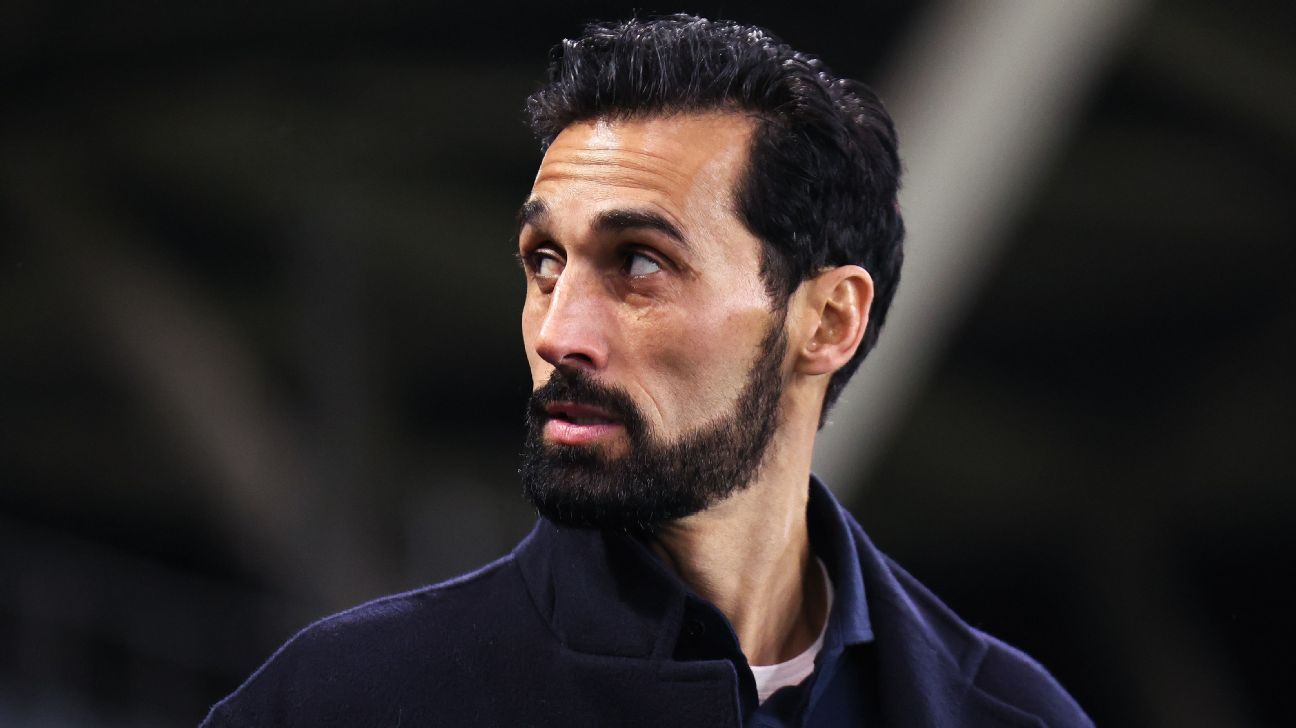
Álvaro Arbeloa, who has never coached a first-team match, steps into the role of head coach for Real Madrid as the successor to Xabi Alonso. His promotion comes after notable success with the club’s youth academy. The former defender, who played for Madrid and Spain, was leading the club’s B team, Castilla, until Monday and takes over after Alonso was dismissed with the support of club president Florentino Pérez.
Despite his rise, sources have indicated to ESPN that Arbeloa didn’t fully win over the Madrid board due to his lack of top-level experience, though he enjoys the president’s confidence. Other prominent names, such as Santiago Solari, Zinedine Zidane, and Jürgen Klopp, were considered, but Arbeloa emerged as the frontrunner following the team’s loss to Barcelona in the Supercopa.
At 42, Arbeloa has a strong rapport with Pérez and is well-respected within the club. With Madrid trailing by four points behind LaLiga leaders Barcelona halfway through the season, there is optimism that Arbeloa can turn things around, beginning with a Copa del Rey round-of-16 match against Albacete this Wednesday (stream LIVE at 3 p.m. ET on ESPN+ in the U.S.).
– Discover why Real Madrid parted ways with Xabi Alonso after 233 days.
– Alonso had his flaws, but firing him overlooks the deeper issues at Madrid.
– Comparing Alonso’s tenure to that of Mourinho, Ancelotti, and Zidane.
What Kind of Coach is Arbeloa?
Arbeloa is known for his bold, proactive coaching style, favoring an attacking approach. He typically employs a 4-3-3 formation featuring a defensive pivot flanked by two ball-skilled midfielders with great vision.
His commitment to nurturing youth talent has been a hallmark of his time at La Fábrica, the club’s academy. Age or experience has not been a barrier for Arbeloa, as illustrated by his promotion of midfielder Thiago Pitarch from the Juvenil C team to Juvenil A, recognizing his potential early on.
Having advanced through Madrid’s reserve teams in the early years of his playing career (2002-2005), Arbeloa brings strong personality and competitive spirit to his coaching style—an influence partly derived from former coach José Mourinho. He is not shy to express his opinions, be it during matches or in press conferences. Colleagues note his ability to connect with players, an essential quality as he steps up to manage the first team.
What Has Arbeloa Achieved?
Arbeloa’s most significant accomplishment at Real Madrid’s youth academy was leading the 2004 Juvenil A team that featured notable players like Nico Paz, Gonzalo García, and others to league, cup, and Copa de Campeones victories while showcasing outstanding football.
He compiled an impressive record of 151 wins in 200 matches during his time at La Fábrica and established a distinctive identity through his engaging coaching style. This past season with Castilla has also been strong, leaving the team in fourth place in the third-tier Primera Federación.
The Profound Influence of Mourinho
Mourinho has been the most influential coach in Arbeloa’s career. He played under the Portuguese mentor from 2010 to 2013 at Real Madrid, having returned to the Bernabéu after a stint at Liverpool. Throughout this period, Arbeloa made 122 appearances and secured a LaLiga title and a Copa del Rey.
Speaking to El Chiringuito in 2017, Arbeloa expressed how much he values the teachings of “The Special One,” stating, “I strive to embody the Mourinhista mindset—it’s about pushing forward and having the courage to be yourself.”
Arbeloa will face Mourinho in just a couple of weeks when Madrid plays Benfica in the Champions League on January 28. In his first press conference as head coach, he remarked, “I haven’t had a chance to speak with José yet. It’s truly an honor to have been coached by him. I’ll be myself. I’m not afraid of failure, but if I tried to emulate José Mourinho, I’d likely fall flat.”
What Other Coaches Has Arbeloa Worked Under?
While Mourinho is the most significant figure in Arbeloa’s development, he has also been shaped by several other coaches. Arbeloa played 98 matches under Rafa Benítez during his 2.5 years at Liverpool, where he made his mark at the top level, and another six under Benitez during the latter’s brief return to Real Madrid in 2015-16.
Playing in the physically demanding Premier League in the mid-2000s certainly honed Arbeloa’s competitive edge and influenced his player preparation style, similar to Arsenal head coach Mikel Arteta’s experience at Everton during the same timeframe.
At Real Madrid, he was also guided by Carlo Ancelotti during the Italian’s first tenure from 2013-2015, making 65 appearances during a period marked by the club’s 10th UEFA Champions League triumph. Arbeloa was a key player for Manuel Pellegrini, who fielded him 38 times after bringing him back to the club. Additionally, he was briefly coached by Mariano García Remón (two matches – giving him his debut in 2004-05), Vanderlei Luxemburgo (two matches), and Zinedine Zidane (three matches).
Another influential figure in Arbeloa’s journey was Joaquín Caparrós, who initially took a chance on him when he struggled to secure a spot among the stars at Real Madrid, leading to Arbeloa’s move to Deportivo La Coruña in 2006. He played 21 matches there before drawing Liverpool’s interest. At the end of his career, while at West Ham, Arbeloa worked with Slaven Bilic, who managed him in just four games before his retirement in 2017.
In 2020, Arbeloa returned to Madrid to coach the club’s U14 Infantil A team. Now, after progressing steadily through the coaching ranks, he is set to lead the first team.