



Last year, the decline in the U.S. dollar’s value cost UEFA approximately $55 million.
In the early months of 2025, the dollar depreciated by around 9% against various foreign currencies, a trend economists attributed to decreasing investor confidence in the U.S. under President Donald Trump, who resumed office in January.
UEFA pointed to “economic, market, and geopolitical dynamics” along with a “sudden weakening of the U.S. dollar” as factors triggering foreign exchange losses that impacted its financial results for the 2024-25 football season.
“In recent years, UEFA has enjoyed the benefits of a strong U.S. dollar, leading to significant foreign exchange gains,” the organization mentioned in its 52-page annual financial report, which notably did not reference Trump by name.
However, in March 2025, circumstances changed as the U.S. dollar swiftly declined by nearly 9%, leading to currency exchange losses of €47 million.
This amount converted to approximately $54.5 million at the exchange rate on Thursday.
This figure was nearly equal to the total “net result” in UEFA’s most recent annual accounts, which reported a loss of -€46.2 million ($53.6 million), covered by reserves.
The losses associated with the dollar reduced UEFA’s reserves to €521.8 million ($605 million) by the end of last June, just above the €500 million threshold necessary to ensure funding for its 55 member federations and to manage national team competitions, from senior ranks down to youth levels.
Although UEFA’s club competitions, including the Champions League, generate billions each season, the majority of these funds are allocated as prize money, yielding little profit for the Nyon, Switzerland-based organization.
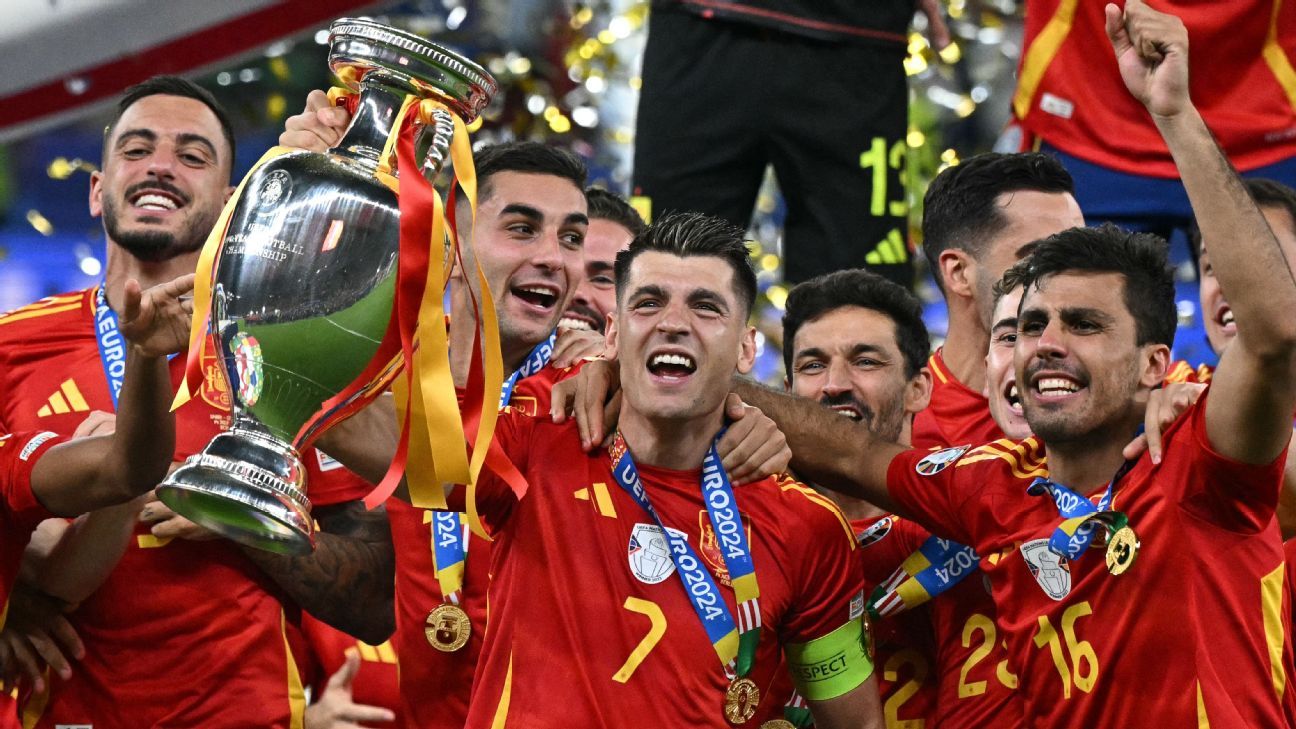
The European Championship, held every four years and which generated about €2.5 billion for the 2024 edition in Germany, significantly contributes to UEFA’s reserves and supports its primary funding initiative known as “HatTrick,” which provides members with double what they receive annually from FIFA.
In its financial report, UEFA stated the necessity of maintaining a robust U.S. dollar position to support outstanding hedge transactions, and noted that once the dollar’s value began to decline last year, “substantial losses were inevitable.”
The report added, “The foreign exchange results had remained consistently positive for several years, but this unfortunately changed in the spring of 2025 when the U.S. dollar suddenly weakened for various reasons, including economic, market, and geopolitical dynamics.”
UEFA recognized a “disappointing” asset management outcome last year compared to the “very exceptional 2023-24” financial year that preceded it during the prior U.S. administration.