



The video assistant referee (VAR) continues to spark debate each week in the Premier League. But how are decisions reached, and are they accurate?
This season, we’ll review significant incidents to clarify the decision-making processes regarding VAR protocols and the Laws of the Game.
 Andy Davies (@andydaviesref) is a former Select Group referee with over 12 seasons of experience in the Premier League and Championship. His extensive background in elite officiating gives him unique insight into the protocols and reasoning behind decisions made on match days.
Nottingham Forest 0-0 Arsenal
Referee: Michael Oliver
VAR: Darren England
Time: 80 minutes
Incident: Potential handball penalty
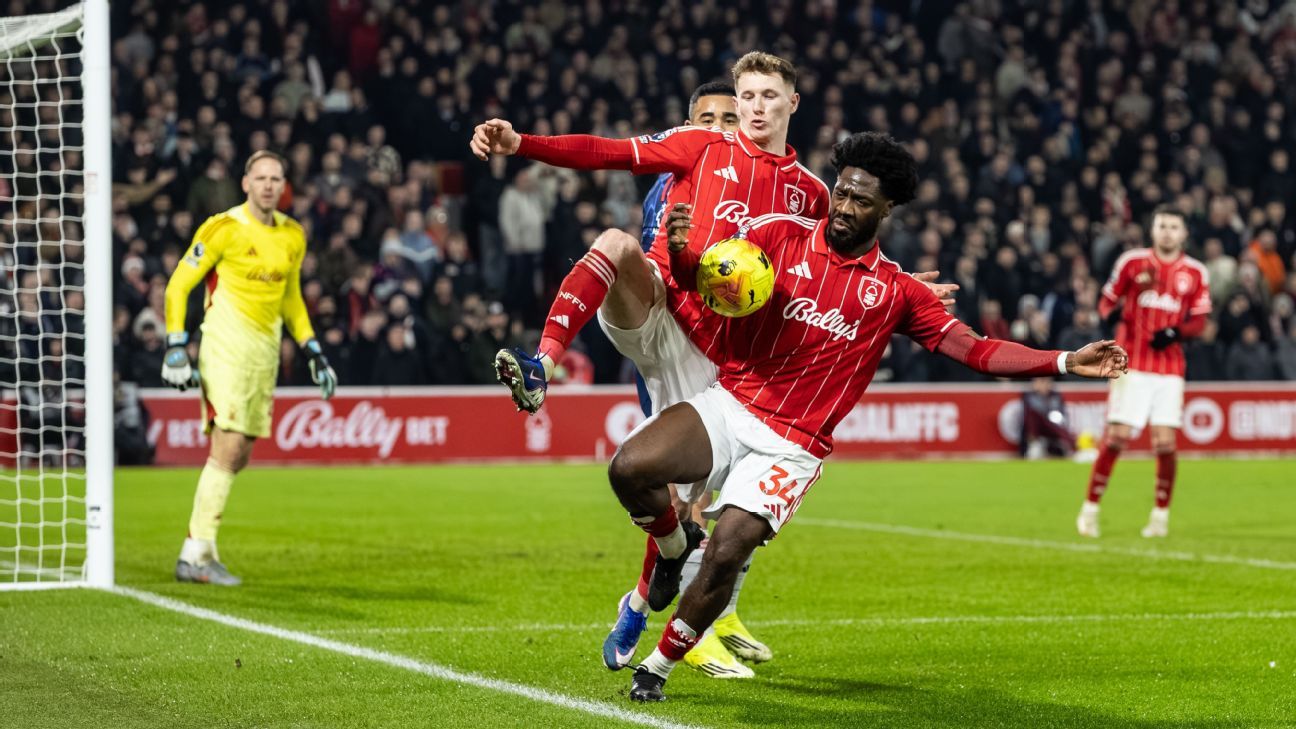
What happened: As the ball went out of play for an Arsenal corner, Nottingham Forest defender Ola Aina appeared to handle the ball while attempting to keep it in play. Simultaneously, Forest teammate Elliot Anderson made contact with Aina from behind as both attempted to play the ball.
VAR decision: The VAR confirmed referee Oliver’s decision of no penalty for Arsenal, concluding that the ball first struck Aina’s shoulder before making contact with his arm, which was in a natural position.
VAR review: Referee Michael Oliver had an obstructed view of the incident. As a result, VAR Darren England held the responsibility to determine if an on-field review (OFR) was warranted. For a VAR intervention in this case, there needed to be unequivocal evidence of a missed offense.
After examining multiple replays, England concluded that the ball had deflected off Aina’s shoulder, suggesting that his arm was in a natural posture. Additionally, the contact from Anderson contributed to the uncertainty around whether a clear error had occurred, leading England to maintain the referee’s original decision of no penalty.
Verdict: While the reasoning for the VAR’s decision is articulate, Aina should consider himself fortunate that the incident didn’t result in an OFR and subsequent penalty. The deflection off his shoulder and the interference from Anderson were not strong enough to disregard the intentional motion of Aina’s arm aimed at playing the ball.
England seemed to feel there were too many uncertainties rather than certainties in this situation, which may lead to polarized opinions on the outcome.
Manchester United 2-0 Manchester City
Referee: Anthony Taylor
VAR: Craig Pawson
Time: 10 minutes
Incident: Red card challenge
What happened: Manchester United defender Diogo Dalot was penalized for a late tackle on Jérémy Doku, catching the Manchester City player high on the knee. Referee Anthony Taylor issued a yellow card, a call that was corroborated by VAR Craig Pawson.
VAR decision: The VAR supported referee Taylor’s yellow card ruling, stating that the contact was minimal and not excessive in force.
Verdict: This decision is likely to be a controversial point of discussion from the derby, especially given its timing early in the match, which Manchester United ultimately won.
Dalot’s challenge was lazy, as the contact was late and high. This would put Pawson in a challenging position while reviewing such a significant challenge so early in the game.
Taylor’s live communication described the tackle as reckless rather than outright dangerous, which likely guided Pawson’s mindset during the review process.
After reviewing the footage, Pawson may have felt hesitant about the challenge’s nature, yet he might not have seen enough to warrant a red card and leaned toward supporting Taylor’s decision to issue a yellow card.
I sympathize with Pawson’s position and understand his logic, but I believe a red card would have been an appropriate ruling given the dangerous nature of the tackle, which posed a risk to Doku’s safety.