



-

Ed Dove
Morocco has been open about its ambition to make history at the 2025 Africa Cup of Nations, yet no one could have imagined the dramatic and contentious way the tournament would play out, leading to near diplomatic tensions in Rabat.
Sadly for the hosts, their quest for glory has crumbled.
Once again, Morocco finds itself waiting 50 years to reclaim its place at the top of African football. The dream of a fairy-tale title victory on home soil dissolved on January 18, 2026, leaving FA President Faouzi Lekjaa, a beloved figure, without the crowning achievement he envisioned alongside Gianni Infantino and Dr. Patrice Motsepe.
That alternate reality will not come to pass.
Instead, the footballing world witnessed a chaotic conclusion to this compelling tournament, highlighted by a perplexing 20 minutes of stoppage time in the second half that will be analyzed for years to come.
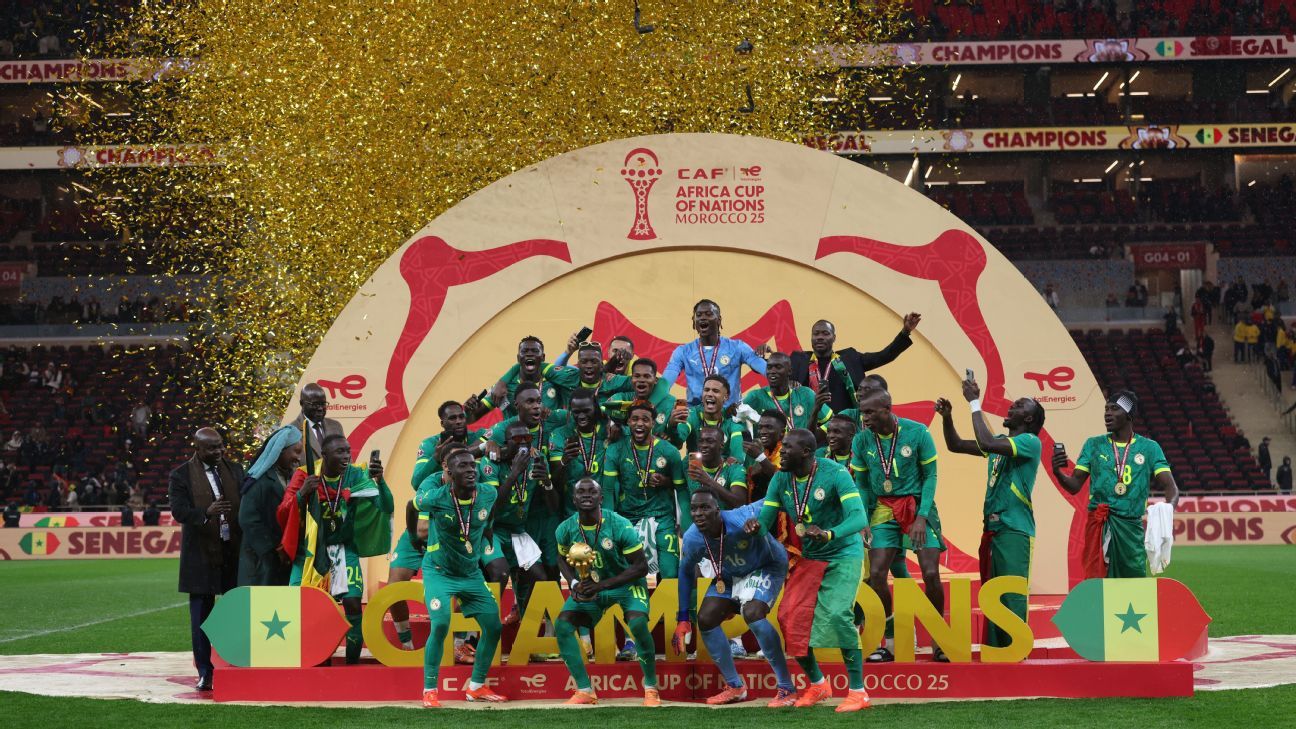
To summarize briefly, Senegal clinched the title, their second in the last three tournaments, with Pape Gueye delivering a powerful winning shot in extra time, while Morocco squandered a last-minute penalty that could have sealed the victory in regulation time… or at least the 20th minute of second-half stoppage time.
However, the result and title became mere side notes in the face of two penalty decisions that nearly led to the first-ever abandonment of a major international final—some might argue that abandoning the match would have been justified.
Initially, Senegal thought they had scored the winner in the third minute of the originally allocated eight minutes of stoppage time, a delay caused by an injury to Neil El Aynaoui that required extensive care.
Ismaïla Sarr scored with a header after Abdoulaye Seck’s shot bounced off the bar and found its way to him, sending Senegal into a frenzy of celebration, marking the first time they had scored in an AFCON final after failing to do so in 2002, 2019, or 2021. However, the joy was short-lived, as referee Jean-Jacques Ndala ruled it out following a whistle he had blown during the buildup, due to a perceived push by Seck on Achraf Hakimi.
Seck’s hands were clearly on Hakimi, who himself was engaged in the tussle, but the nature of Hakimi’s dramatic fall suggests the incident was not as straightforward as the referee assumed, leading to concerns about the decision not to consult VAR for a review.
Moments later, the play shifted quickly to the other end where a corner for Morocco led to Brahim Díaz—the standout player of the tournament—falling under pressure from El Hadji Malick Diouf. Initially, Ndala showed little interest in this incident.
However, Díaz was incensed and began to protest vigorously, urging the linesmen and rallying the 66,000 spectators at the Prince Moulay Abdellah Stadium to support his appeal. The big screen amplified his emotional display, and pressure mounted on the officials to heed his call, as the atmosphere in the stadium grew electric with the hope of a late opportunity to secure a title.
Eventually, Ndala relented. By that time, it seemed half of Morocco’s bench had already invaded the pitch, urging him to review the monitor. After receiving instructions through his earpiece suggesting he needed to reassess, he headed to the pitch side screen, facing a crowd of technical staff and substitutes awaiting the outcome.
When he awarded the penalty, it sparked a clash between both teams, who had previously celebrated their brotherhood leading up to the match but were now at odds over the perceived inconsistency in officiating.
Feelings ran high among the Senegal supporters, a small but passionate group in a sea of Moroccan fans. The normally peaceful Gaindé fan club, known for their positivity and enthusiasm, erupted with frustration, some attempting to breach the pitch to confront the officials, while others clashed with stewards as tensions escalated.
Some fans were forcibly removed; others resorted to throwing projectiles at the stewards, resulting in one being stretchered away with injuries. Many supporters jumped onto the electronic advertisement boards, showing their anger by attempting to topple the displays.
Despite the riot police’s efforts to restore order in that section of the stadium, the atmosphere on the pitch was becoming increasingly chaotic.
Under the direction of a fuming coach Pape Thiaw, Senegal’s players began to exit down the tunnel, leaving only Sadio Mané to act as a peacemaker and salvage a semblance of normalcy.
Thiaw’s motivations were unclear. Some speculated it was a security measure, while others thought it was a protest against the referee’s decisions.
“What we felt was injustice,” Pape Gueye, the match-winner, told ESPN. “There had been a foul against us before, and the ref chose not to look at VAR; we were frustrated.”
For several minutes, the fate of the final was uncertain. Would Senegal walk away from a crucial match? Would this be how Morocco ended a 50-year wait for triumph? Would Thiaw’s security concerns be justified?
After consultations with former head coach Claude Le Roy and others, Mane eventually called his teammates back onto the pitch. However, before they could regroup, tensions flared once again, with players like Seck and Ismael Saibari squaring off against each other.
“Sadio told us to come back on the pitch, to refocus,” Gueye explained. In a week discussing the Nobel Peace Prize, Mane’s calm leadership deserves recognition on this turbulent stage.
In a surreal moment, Díaz, who had waited over ten minutes to take his penalty after so much turmoil, approached the ball even as riot police continued to contain the fracas among the Senegalese fans across the stadium.
Was it really appropriate to continue play under such conditions?
His demeanor had shifted drastically. He seemed almost defeated as he prepared for the shot, placing the ball on the spot that Édouard Mendy had previously scuffed.
Then he missed.
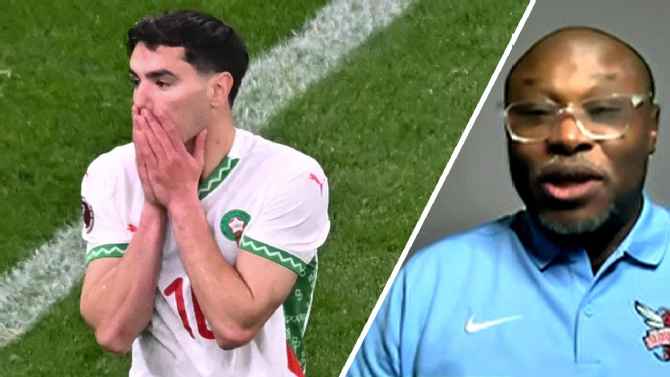
1:29
‘Worst penalty I’ve seen in my life!’ – Udoh on Brahim Diaz’s Panenka
Colin Udoh analyzes the chaos surrounding the AFCON final before Brahim Diaz’s missed penalty.
This was no ordinary miss; it was the pinnacle of penalty failures. The Real Madrid player approached the spot, full of intensity, only to slow down and poorly execute a panenka, which landed safely in Mendy’s grasp.
Speculations arose that he might have intentionally fluffed the kick, opting to fail as a hero rather than succeed as a villain. However, it’s hard to reconcile that theory with his earlier fervor in appealing for the foul, kissing the ball, and choosing to try a panenka rather than a straightforward strike.
If he did suddenly reconsider his approach, shifting his mindset due to the dramatic events leading up to it, the alteration in his energy was profound.
The absence of any celebration from Senegal following Mendy’s save was striking. There were no reactions typically expected in such a high-stakes moment; no players seemed eager to congratulate Mendy for keeping their AFCON hopes alive.
This suggested something deeper—perhaps the weight of history pressed down on all involved. Did Diaz feel he might have sacrificed a victory won under dubious circumstances? Or did he simply lose composure at the critical moment?
In the end, it could be beneficial that the match was ultimately decided by Gueye’s brilliant shot in extra time, rather than Diaz’s contentious late penalty, which could have marred the result and strain relations between Morocco and Senegal.
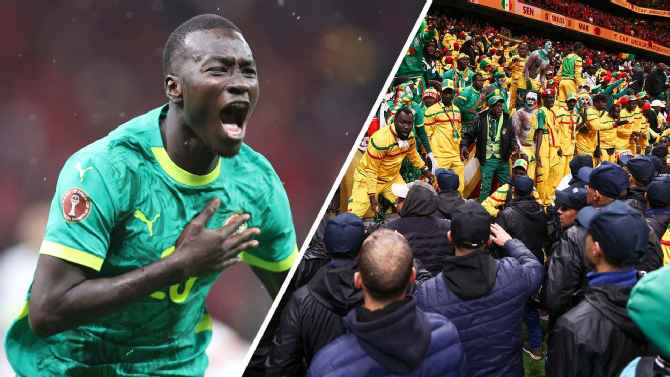
1:12
How Senegal won dramatic 2025 AFCON final
Catch the highlights of the 2025 Africa Cup of Nations final where Senegal triumphed over Morocco in extra time.
Thiaw may become a controversial figure in this saga, especially if it is confirmed that his players’ exit was a protest against the referee’s decisions.
Morocco’s coach, Walid Regragui, expressed his disappointment regarding the situation, stating, “This match has been a disgrace for Africa.” He emphasized that Thiaw’s actions did not exemplify the spirit of African football.
It is vital to view Thiaw’s conduct not just as a reaction to the two controversial incidents, but also as a broader response to complaints that Morocco had too often manipulated conditions to their advantage throughout the tournament.
The tension surrounding this final may spark questions surrounding how future competitions will be judged. How will Senegal be remembered? Will they be icons for championing fairness or will they be criticized for unsportsmanlike behavior in a decisive moment? What about the integrity of AFCON itself, an event already struggling with its reputation?