



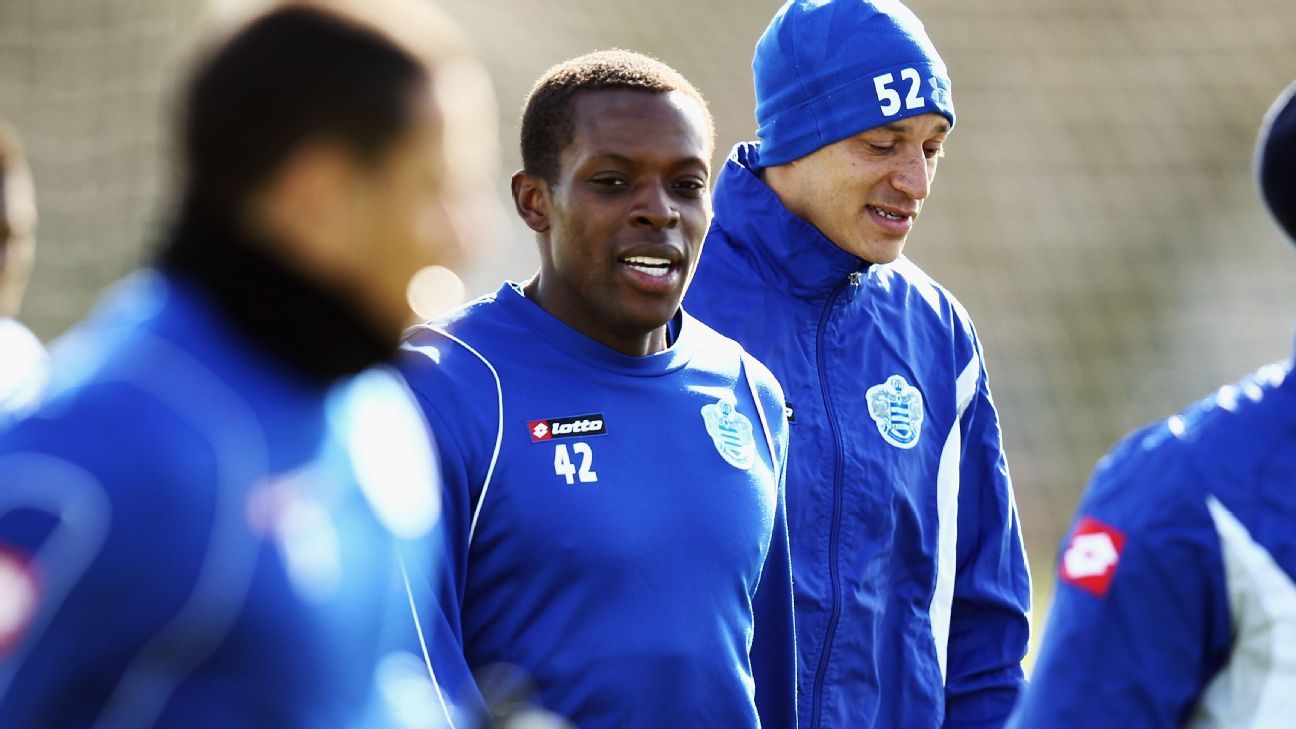
Nedum Onuoha enjoyed a 14-season career in the Premier League, playing for Manchester City, Sunderland, and Queens Park Rangers, before concluding his playing days with MLS team Real Salt Lake. In 2020, he joined ESPN, contributing to shows like ESPN FC and becoming the network’s lead studio pundit in England, sharing his insights on significant topics in football.
The last days of a transfer window can be quite stressful for a professional footballer. The possibility of changing clubs brings with it uncertainty, confusion, and sometimes even feelings of betrayal. A manager’s or director’s whim can completely alter your world—this is simply the harsh reality of football.
On the transfer deadline day in August 2011, I anticipated leaving Manchester City. I cleared out my locker, packed my boots in a bag, exchanged goodbyes with teammates and staff, and faced a difficult farewell after being at the club since I was a 10-year-old for 15 years.
However, no transfer occurred, and the next day I found myself back at City, greeting everyone once again. I was aware that my chances of first-team action were dwindling, and I might find myself in the same predicament when the January window opened.
As expected, when January rolled around, Queens Park Rangers expressed interest in me late in the transfer window. They had replaced their former manager, Neil Warnock, with my ex-boss from City, Mark Hughes, who wanted me to assist the team in their battle against relegation. Though I was uncertain about the move, I had been sidelined under Roberto Mancini at City, making it essential for me to find playing time.
While my wife and I were settled in Manchester, I had heard that Everton was interested in signing me, which seemed a better option both from a footballing and geographical standpoint. However, I was informed that City had struck a deal with QPR, so there was nothing more to discuss. This meant I had to travel to London for a medical examination. I grabbed my washbag and embarked on a 200-mile train journey south.
Did I have much choice? Not really. Transfers hinge on who holds the leverage, and at that juncture, I didn’t have much. Although I wasn’t in the matchday squad, I recognized that I needed a move, and since Everton wasn’t viable for City, I had to accept QPR.
After passing my medical, I signed the contract, trained on Thursday, and found myself included in the squad for Saturday’s FA Cup match against Chelsea, despite not even knowing the names of some of my new teammates.
I transitioned from my familiar life to a completely new one within just a few days.
Once the transfer was finalized, I had to adapt quickly, despite being inactive for months. There’s no time for adjustment; you’re the new player in a dressing room filled with pressure—particularly when the club is struggling at the bottom of the league and you’ve been brought in to turn things around.
I witnessed numerous altercations between teammates as frustrations escalated. On one occasion, two veterans clashed on the pitch over differing views about team dynamics, highlighting the tensions that can arise between seasoned players and new arrivals who need to gel quickly.
This reflects the challenges on the field, but there are also off-pitch implications. Like many others, I entered into a contract with a relegation clause at QPR, meaning that if the team were to be relegated, I could face another move during the summer. Yet, settling into a new area rather than merely commuting between a hotel and the training ground for several months was crucial for me.
Consequently, I signed a short-term lease on a home, uncertain of my future in a few months. Having been married for less than a year, my wife moved with me, which greatly assisted the transition. At 25, with no children, adapting was much simpler.
Now as a father of three, I can’t imagine going through such a disruptive move if they were already in school. However, this is a reality many players, especially those who are older, often confront.
This experience also influenced my decisions on future club transitions. At 31, I faced the chance to move to the U.S. for a fresh start in MLS, but by then I had a young family, which played a crucial role in my choice.
After 6½ years at QPR, I found myself at the end of my contract, facing a notably reduced offer that felt like a betrayal, especially after being recognized as the Players’ Player of the Season and serving as captain. I realized I needed to explore new opportunities.
The summer window coincided with the middle of the 2018 MLS season. I had two offers—one from LAFC, and another from Real Salt Lake. LAFC indicated they would offer me a contract for 2019 based on my performance for the rest of the season. In contrast, Salt Lake presented a contract that guaranteed an additional year after 2018, essentially a 2½-year deal.
Many would view the Salt Lake vs. LAFC decision as straightforward, given LA’s attractions, but I chose Real Salt Lake for the stability it offered. In this instance, I had the leverage, allowing me to choose what was best for my family instead of being pushed towards a club that suited them.
I aimed for 2½ years in the U.S. before returning to the UK, a goal I ultimately achieved. My time in Utah was rewarding, and I was fortunate that the leverage favored me during my decision.
Unfortunately, many footballers lack that luxury of long-term planning. I’ve experienced moments of uncertainty about which team I’ll be playing for and where I’ll be living, and that can be quite unsettling.
It may disappoint some to hear, but only a select group of top players enjoy control over their careers.
Nedum Onuoha was in conversation with ESPN senior writer Mark Ogden