



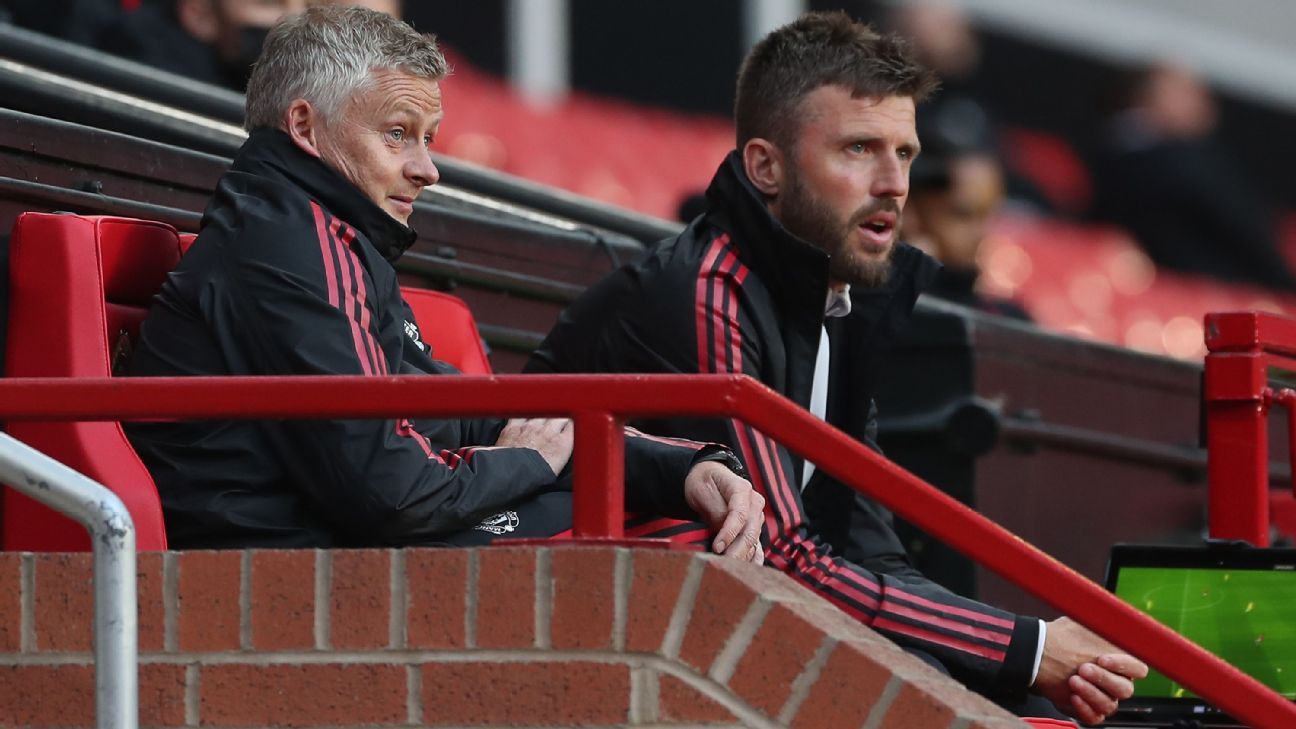
A former player has stepped back into Manchester United to restore stability following a tumultuous period under a Portuguese coach. The parallels between Ole Gunnar Solskjær’s caretaker role in 2018 and Michael Carrick’s recent appointment eight years later are striking.
The similarities may continue. Solskjær took over from José Mourinho and performed well enough to secure the position permanently, while Carrick has succeeded Ruben Amorim.
Having started his tenure with impressive victories over Manchester City and Arsenal, there’s a buzz among enthusiastic fans that United may have already found the right man for the job. The club now has a new leadership structure with fresh voices making key decisions. Yet, the parallels between Solskjær and Carrick remain unmistakable.
United has previously been tempted to promote a caretaker manager, and sustained success through the remainder of the season will bolster Carrick’s case for a similar outcome.
– Laurens’ weekend preview: Will Spurs haunt title-chasing Man City again?
– Premier League Top 50: Ranking the best players of the season again
– ‘Hire and fire’: The exhausting job of a soccer manager in 2026
From Interim to Permanent
Sources connected to Solskjær’s hiring in December 2018 have revealed that he was initially viewed as a “stopgap” following Mourinho’s dismissal, intended to buy the club some time.
Laurent Blanc, who also enjoyed a brief playing spell at Old Trafford, was another candidate considered for the interim position. However, many felt his previous high-profile roles with France and Paris Saint-Germain meant he was less suited for a temporary role.
Solskjær was deemed a safer choice. He had a position at Molde to return to in summer 2019, coinciding with United’s plans to find a permanent replacement. Initially, he was not among the frontrunners for the long-term role, yet he possessed what was termed “option value” by United executives and was not completely dismissed.
Carrick finds himself in a similar position. Upon his appointment, club sources indicated that only “exceptional” performance would earn him the job permanently, stressing that focus would be directed toward external candidates when appropriate.
The general sentiment was that it was “highly unlikely” the situation faced by Solskjær would repeat itself. Like Solskjær, Carrick has left the door open regarding his future. His argument could be that securing a victory in a Manchester derby against one of the world’s most accomplished managers, Pep Guardiola, and handing the league leaders their first home defeat of the season is indeed exceptional.
Returning to Fundamentals
Solskjær’s first eight games in charge saw United win all matches, scoring 22 goals along the way. Sources have conveyed to ESPN that it wasn’t solely the results that endeared him to the management, but also the style of play.
Mourinho’s pragmatic tactics vanished, replaced by “attacking flair, risk-taking, and first-time passes,” as one source described it. Carrick has also exhibited greater bravery in his early games compared to Amorim, particularly at the Emirates, when he made bold attacking substitutions during a tense second half.
There was a prevailing sense during Solskjær’s tenure that he was helping to revive a lost identity under Mourinho. One source noted that he had “real clarity about what United needed to do to return to being Manchester United again” and was reminiscent of conversations with Sir Alex Ferguson.
Before Mourinho’s departure, concerns arose among executives regarding comments he made about certain squad players during the previous summer’s tour in America. This was seen as an early warning sign of his potential exit.
Likewise, Amorim’s remarks about players like Benjamin Sesko and Patrick Dorgu, where he stated Sesko was “struggling” and that Dorgu was “anxious” with the ball, did not sit well with club leadership.
Carrick has also opted to keep his press conferences brief. When given the opportunity to criticize Diogo Dalot after a poor performance against City, he refrained from agreeing with criticism, instead choosing to defend him—a choice Amorim may not have made.
Solskjær managed to gain favor through his media handling, and Carrick appears to be following in those footsteps.
Off-Field Dynamics
Solskjær’s impact extended beyond the pitch. When Mourinho learned of the club’s interest in hiring a director of football, he confronted then-executive vice-chairman Ed Woodward angrily, insisting, “Tell me this isn’t true.”
While the club aimed to modernize its structure, there was a belief that it couldn’t progress under Mourinho’s leadership. In contrast, Solskjær was perceived as more open-minded and preferred collaboration over dictatorship.
Under Solskjær, the club managed to appoint its first football director and technical director in March 2021. One source noted that it was far “easier to move forward” without Mourinho’s influence.
Similar considerations will be vital this time around. Amorim ultimately resisted the club’s structure, and his contentious fallout with director of football Jason Wilcox was a key factor in his departure.
United appear committed to maintaining the current distribution of authority and insist that any permanent manager will need to fit into their decision-making framework.
External candidates like Thomas Tuchel and Roberto De Zerbi have been known to assert strong demands, particularly regarding recruitment—a potential issue considering Amorim’s exit. This makes a more adaptable and accommodating figure like Carrick an appealing choice for Wilcox and CEO Omar Berrada.
Could History Be Repeating Itself?
Ultimately, results remain paramount. Solskjær achieved 14 victories in his 19 games as caretaker and was named permanent manager by March 2019.
“The results Ole has delivered since taking over as caretaker manager in December speak for themselves,” Woodward commented at that time.
Sources have communicated to ESPN that there wasn’t a single decisive moment that led to management’s belief in Solskjær. However, it was beneficial that in January 2019, he guided his squad to a 1-0 victory over Tottenham, managed by then-front-runner Mauricio Pochettino for the United job.
“We discussed a process, but ultimately we didn’t need to. He demonstrated the right attributes both on and off the field from the outset,” a source explained.
As it stands, United intends to continue their managerial search. They have considered waiting for a manager currently engaged with the World Cup—such as Tuchel, Pochettino, Carlo Ancelotti, or Julian Nagelsmann.
There are also contenders with Premier League experience, including Andoni Iraola, Marco Silva, and Oliver Glasner. Key criteria for Wilcox and Berrada include the ability to manage the pressure associated with overseeing United, especially since a vital part of the role involves helping players navigate that same pressure.
There was speculation that this pressure may have overwhelmed Amorim, and United wishes to avoid making the same error. This aspect was a distinguishing feature for Solskjær in 2019 and may prove vital for Carrick as well.
Both managers navigated the intense scrutiny of Old Trafford as players, each earning multiple league titles and the UEFA Champions League during their time on the pitch. They have the experience to handle the demands of the role.
Currently, United is keen to clarify that they are not suggesting the past will repeat itself, but if Carrick continues to achieve favorable results, the calls for permanence may become too loud to ignore.