



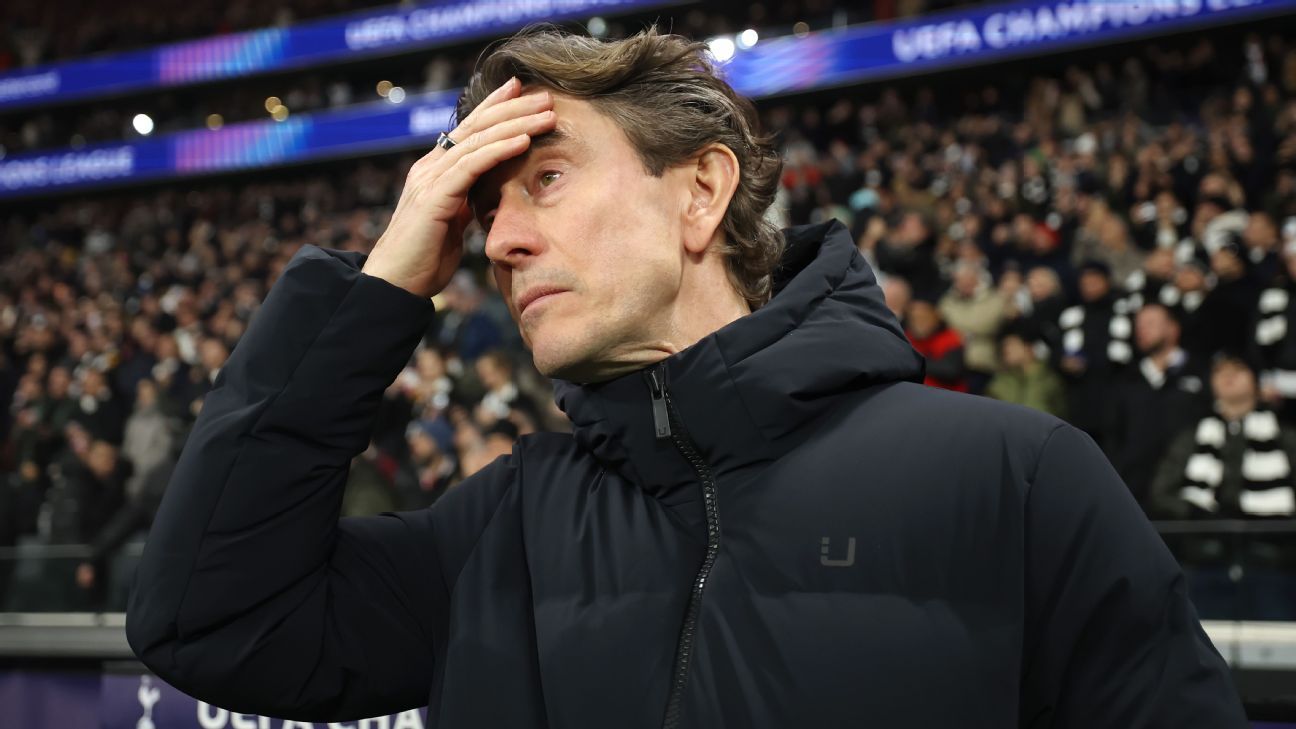
During Tottenham Hotspur’s preseason tour in Hong Kong last summer, Thomas Frank embarked on his typical early-morning run, a routine he maintained from his tenure as Brentford manager. However, shortly after he left the Kerry Hotel to admire the views of Victoria Harbour, Frank was swiftly recognized by local fans, who had gathered daily at the hotel’s entrances and lobby to catch a glimpse of their team.
Before he was overwhelmed by requests for selfies and autographs, he made his way back to the hotel, where club officials pointed to this moment as an illustration of the increased scrutiny he would face with Spurs compared to his previous experiences. The adjustment proved to be too challenging for Frank.
– Who could replace Frank as Tottenham’s coach?
– Analysis: Why Daniel Levy left Tottenham after 25 years
– Ranking: The top 25 managerial jobs in soccer, best to worst
The 52-year-old was dismissed as Spurs head coach on Wednesday, having never quite seemed aligned with the club from the start. He leaves after eight months, securing only 13 wins from 38 matches, with Spurs currently sitting 16th in the Premier League table. (They have yet to record a league victory in 2026.) While Spurs are through to the UEFA Champions League round of 16 after a solid group stage, they could not risk the past repeating itself.
Last season, in pursuit of European success, they overlooked their domestic commitments, culminating in a UEFA Europa League victory—their first trophy in 17 years—and subsequent departure of head coach Ange Postecoglou. If they attempted to compartmentalize this season with the hope of an improbable Champions League triumph, it could lead to relegation.
Currently, Spurs are only five points above the relegation zone, having secured just two wins from their last 17 matches, and change was clearly necessary. But what went wrong, and who is at fault?
Frank initially showed promise, stabilizing a porous back line that had plagued Spurs under Postecoglou. He managed to keep five clean sheets in his first eight matches across all competitions, including a significant 2-0 victory over Manchester City.
Tactical flexibility characterized his early tenure, a refreshing change from Postecoglou’s rigid approach. Spurs were 2-0 up against Paris Saint-Germain in the UEFA Super Cup before the European champions leveled the score, forcing a penalty shootout that they ultimately lost 4-3.
This collapse was an unwelcome reminder of past inadequacies at Spurs, marking an unfortunate initiation for Frank. The initial struggles only intensified once their Champions League campaign began, leading to a frantic search for solutions.
The demanding schedule—three matches in seven days for consecutive weeks—ultimately revealed weaknesses across the board: in Frank, the squad, and the club as a whole.
Friends of Frank, living nearby in East Sheen, noted the increasing frequency of early-morning taxis taking him to Tottenham’s training ground, a stark adjustment for a manager previously accustomed to fewer midweek matches at Brentford. Meanwhile, players expressed surprise at the emphasis on strategies to counter opponents during training rather than focusing on enhancing their own play.
Discipline also became a concern. Sources informed ESPN about rising unease surrounding Frank’s handling of a challenging incident in early November, where Djed Spence and Micky van de Ven ignored his request for recognition from the home crowd following a disheartening 1-0 defeat to Chelsea.
Frank’s inability to command the dressing room was further exemplified by a reluctance to publicly criticize Cristian Romero, despite the defender’s repeated criticisms of the club via social media regarding a lack of investment and the injury crisis that left around 12 players unavailable. Romero’s recent red card in Saturday’s 2-0 loss against Manchester United—his second of the season—added to the team’s woes, as he will miss several weeks with a suspension.
Both Frank and the club’s leadership recognized a deficiency in squad leadership. This acknowledgment contributed to their decision to sign Conor Gallagher from Atlético Madrid in January, along with failed attempts to acquire Andy Robertson from Liverpool.
Frank’s credibility was further undermined by a series of questionable public statements. Upon his appointment, Frank remarked, “One thing is 100% sure, we will lose matches.” While factually true, such comments were unfavorably compared by fans to those of previous managers who aimed higher and emphasized aspirations for winning trophies.
Frank indicated on Monday that addressing supporters through the media requires balancing reality with the promise of hope—a balance he consistently failed to achieve.
1:50
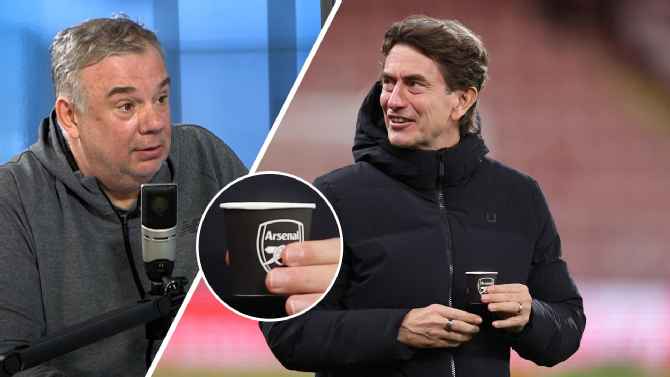
Marcotti: Thomas Frank’s legacy will be remembered despite Arsenal cup incident
Gab Marcotti shares his insights on Thomas Frank’s ‘avoidable’ incident regarding an Arsenal cup during a match against Bournemouth.
His mistake of holding an Arsenal-themed coffee cup during a loss to AFC Bournemouth on January 7 further showcased his struggles with the expectations of managing a top club. Such gaffes, although seemingly minor, contributed to distancing him from the fanbase.
As early as November 8, Frank’s substitutions were met with boos during a 2-2 draw against Manchester United. Despite that match leaving Spurs in third place at the time, the team’s performances were uninspiring, lacking the confidence and conviction necessary for success. As the downward trend continued, fan dissent intensified, culminating in a dismal 2-1 home defeat to Newcastle United that left all parties frustrated.
Fans taunted Frank with chants of “you’re getting sacked in the morning,” as echoes of former Spurs boss Mauricio Pochettino reverberated from the stands. The board had no choice but to take action.
A Significant Overhaul at the Top
It’s evident that Frank’s exit will not solve all of Tottenham’s issues, as the club’s challenges extend well beyond the managerial level. Sources at the training facility indicate a sense of confusion and lack of direction within the organization.
Daniel Levy, who resigned in September after 24 years as chairman, undoubtedly had his flaws, but it was noted he was always approachable and willing to engage with staff. Many now miss that communicative atmosphere, believing the current ownership lacks a clear vision for the club’s future.
Tottenham’s ownership situation is complicated. The current owners, Enic Sports & Developments Holdings Ltd, are controlled by billionaire Joe Lewis, who possesses an 86.58% stake in the club. Lewis’ family, including his daughter Vivienne, son Charles, and grandson-in-law Nick Beucher—co-CEO of the Tavistock Group—are taking on more hands-on roles. However, the daily operations fall under the guidance of CEO Vinai Venkatesham and sporting director Johan Lange.
Inside sources revealed that Lange was instrumental in Frank’s hiring, succeeding Postecoglou. After rehiring Fabio Paratici as co-sporting director in October, the club quickly confirmed his departure in January as Lange continued to back Frank, who he has known for two decades. Venkatesham is working to update the club’s structures and raise standards, though these initiatives will require time to bear fruit. Many within the club feel they are simply holding steady while awaiting changes. One source indicated that Beucher has attended first-team training sessions and engaged with players.
This lack of unity in the club’s direction also hindered their ability to support Frank in the transfer market. Unsuccessful attempts to obtain Morgan Gibbs-White from Nottingham Forest and Eberechi Eze, who opted to join Arsenal from Crystal Palace, further complicated Frank’s attempts to build a more dynamic squad. Recruitment has been a longstanding issue.
Injuries significantly impacted the team as well, with striker Dominic Solanke sidelined for several months, while midfielders James Maddison and Dejan Kulusevski face uncertain comebacks this season. Frank has privately stated that the medical team requires considerable improvement.
Club sources acknowledge that a quick solution is improbable. This contributed to their hesitance in parting ways with Frank, who privately recognized the challenge of overhauling the squad and addressing a history of underachievement that has hindered the club.
Nonetheless, there is a limit to how long short-term outcomes can be overlooked, and the prospect of relegation loomed large. Ultimately, faced with such dire possibilities, Frank’s departure became inevitable.