



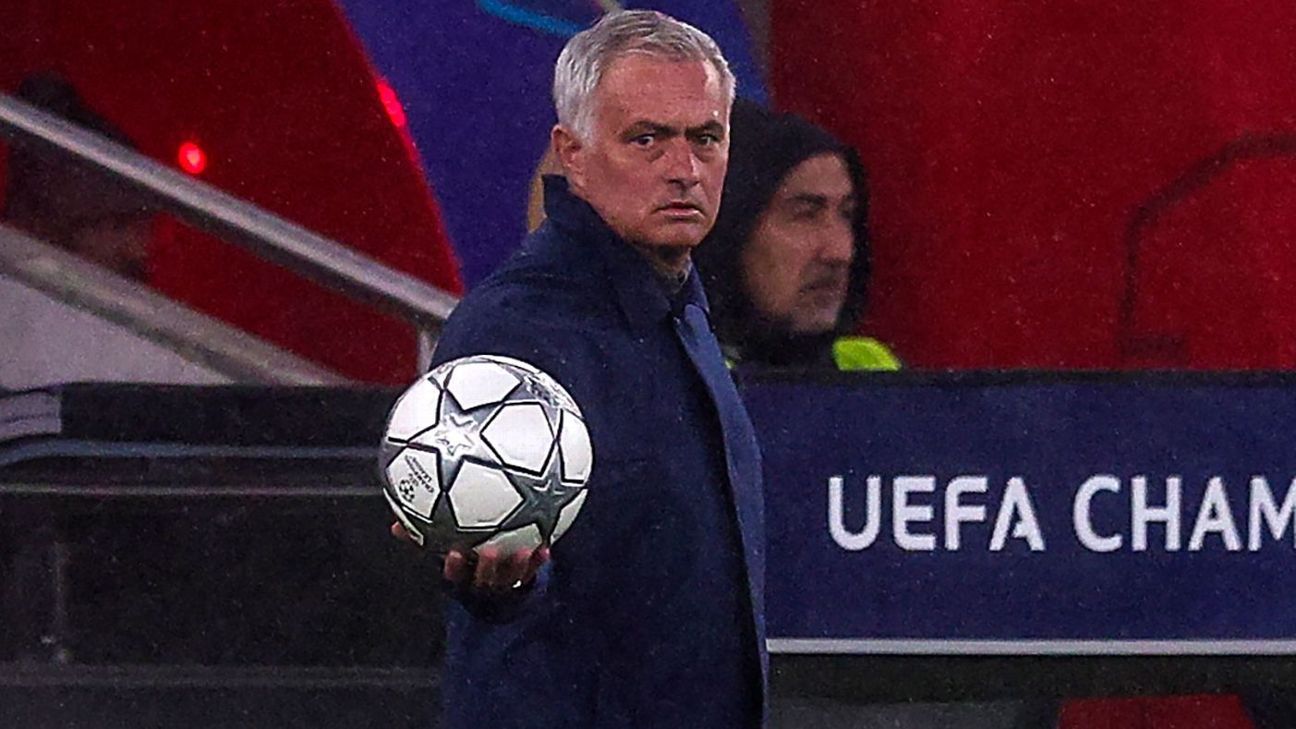
José Mourinho isn’t one to go quietly into the night, a reality that will likely haunt Real Madrid as they gear up to face Benfica with their UEFA Champions League aspirations on the line.
Having transformed the “Special One” into the “Normal One” during a tumultuous tenure at the Bernabéu from 2010 to 2013, Madrid knows that they should expect a surprise as they battle Mourinho’s Benfica for a coveted round of 16 spot in the next week.
This season, Mourinho has already cast a shadow over his former club, orchestrating Benfica’s stunning 4-2 win last month, capped by goalkeeper Anatoliy Trubin‘s memorable last-minute header that kept Benfica in contention and sent Madrid into the playoffs. The teams will face off again on Tuesday at Estadio da Luz, followed by a second leg in Madrid on the next Wednesday.
– All you need to know about the UCL knockout rounds
– Managerial chaos: Anticipating 2026’s coaching carousel
– Ranked: Top 25 managerial positions in soccer
With rumors suggesting that Mourinho might succeed Roberto Martínez as Portugal coach following the 2026 FIFA World Cup, every Champions League fixture could very well be the 63-year-old’s last. This particular match-up serves as a perfect stage for Mourinho to delay his departure from Europe’s elite competition—a clash between the club that fostered him and the one that may have broken him.
Would Mourinho revel in the opportunity to avenge his past by eliminating Madrid from the Champions League, 13 years after departing the Bernabéu? Undoubtedly.
Since his departure from Madrid in 2013, where he secured just one LaLiga, Copa del Rey, and Supercopa, Mourinho has captured more major trophies than most coaches. However, he has always gauged his success against the highest standards, not merely against his peers.
He secured a Premier League title with Chelsea in 2015, the UEFA Europa League with Manchester United two years later, and also claimed League Cups during his stints at Stamford Bridge and Old Trafford, as well as the UEFA Conference League with AS Roma in 2022. However, the pinnacle of Mourinho’s achievements occurred before he joined Madrid when he was a consistent victor, claiming Champions League titles with FC Porto and Inter Milan (the latter as part of a Treble), alongside numerous domestic cups in Portugal, England, and Italy, and six league titles in eight years with Porto, Chelsea, and Inter.
During those eight years, he claimed 17 trophies, yet in the subsequent 16 years across Madrid, Chelsea (again), United, Tottenham Hotspur, Roma, and Fenerbahce, he could only manage nine. The decline began at Madrid.
At the Bernabéu, he faced confrontations with influential players such as Iker Casillas and Sergio Ramos, while his rivalry with Guardiola saw his once unshakeable status become vulnerable. Where he once commanded unwavering loyalty from star players at Porto, Chelsea, and Inter, that bond frayed at Madrid and never fully recovered, leading to similar clashes with key players at succeeding clubs—Eden Hazard (Chelsea), Paul Pogba (Man United), and Dele Alli (Spurs)—signifying a pattern of disconnection in subsequent managerial roles.
2:17
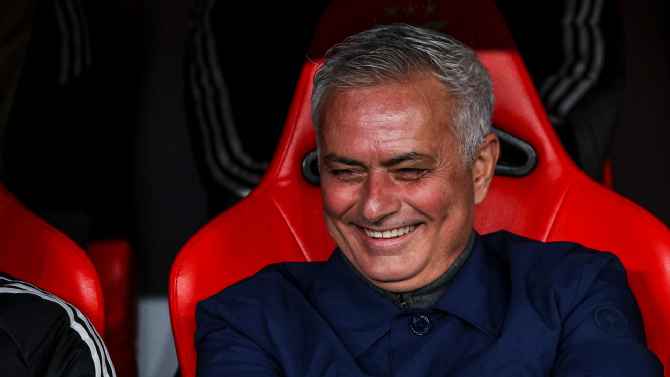
Did José Mourinho get lucky with Benfica’s playoff qualification?
Gab Marcotti and Julien Laurens analyze the dramatic conclusion to Benfica’s match against Real Madrid, where goalkeeper Anatoly Trubin stunned everyone with a last-minute header that secured Benfica’s place in the Champions League playoffs.
Sources from Mourinho’s two stints at Chelsea suggest he emerged a different person upon returning for a second time. His experiences at Real Madrid left him with lasting scars, altering his demeanor both on and off the field. Despite coaching elite clubs, he has struggled to restore his winning reputation, causing his managerial prospects to diminish with every subsequent role.
In public, Mourinho has described his time at Madrid as a peak, stating in a 2019 interview with Channel 11: “Real Madrid was my best experience because of what I learned as a coach, as a person, from the lessons I took in my career and life. It’s the best memory of my career, it was fantastic.” Yet, the underlying truth paints a different picture.
Though it represented the largest responsibility of his career, it ended with a sense of unfulfillment and an incongruity between his ambitions and the results, leaving a lingering sense of “what might have been” over his tenure at the Bernabéu.
No matter where he goes, Mourinho has a knack for generating headlines, and the recent 4-2 win against Madrid was quintessential Mourinho. Had he not instructed his goalkeeper, Trubin, to push forward in a do-or-die moment, Benfica might not have scored that pivotal goal, and they wouldn’t have faced Madrid in back-to-back matches this week.
Mourinho hasn’t returned to coach at the Bernabéu since he left in 2013—he led Inter to Champions League glory against Bayern Munich at the venue in the 2010 final—so his upcoming return for the second leg next week will bring a flood of emotions for both him and the home fans.
As such, Real Madrid has every reason to be cautious about their reunion with Mourinho, as he may just have one final moment to shine in the Champions League.