



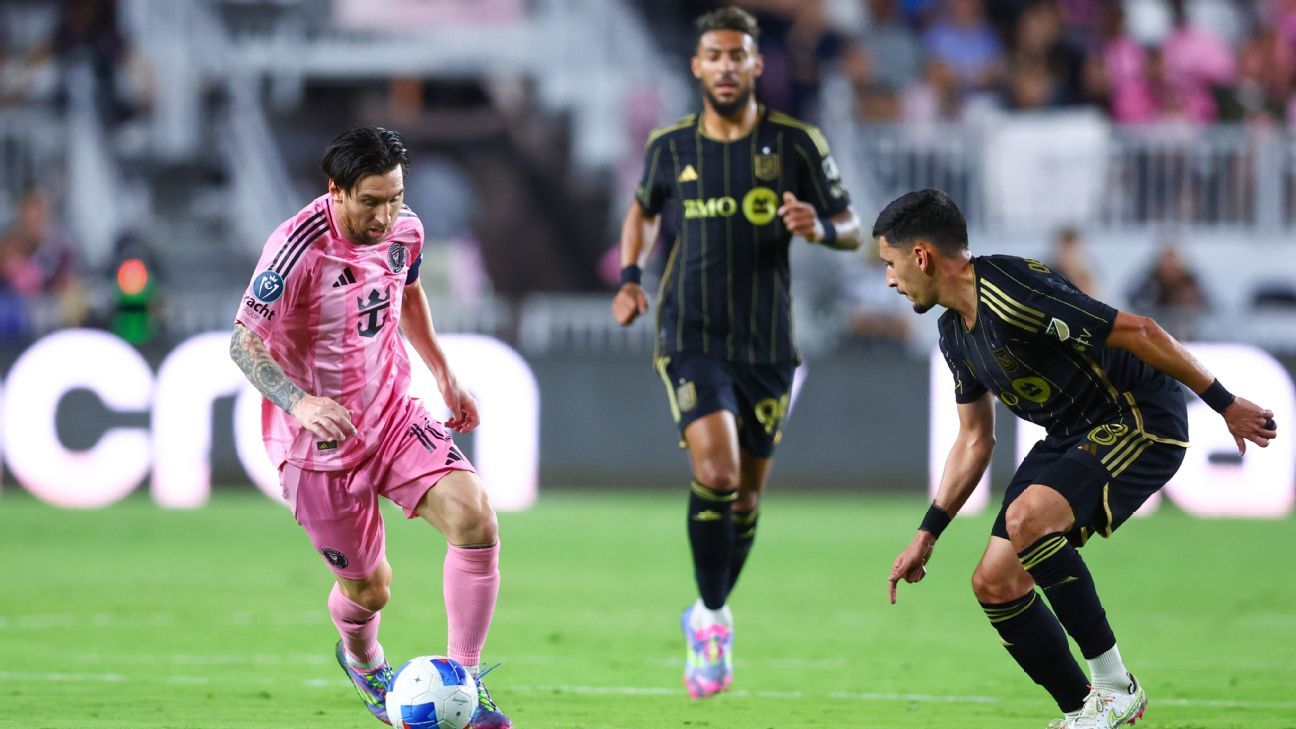
Quietly, and without much fanfare, MLS has decided to forego its traditional Rivalry Week for the 2026 season. Instead of the usual cluster of derby matches typically held in May, the league has opted for a more staggered approach to showcase its marquee regular-season games in the upcoming season, which kicks off this month with Inter Miami facing LAFC.
“Our goal is to create moments that fans can look forward to and plan around. We believe having a consistent schedule is crucial for enhancing fan engagement with their favorite clubs and our league,” stated MLS executive vice president Camilo Durana in an interview with ESPN.
“We’ve cultivated remarkable rivalries, and every match brings fresh narratives, especially with new signings or transfers. The drama, tension, and rivalries in MLS aren’t confined to a single week; they unfold continuously,” he added.
– MLS Jersey Power Rankings: Who’s the best dressed in 2026?
– Minnesota’s James Deal: A Low-Risk Match of Convenience
– How MLS Players Prepare During Offseason for World Cup Readiness
Part of the league’s broader strategy for 2026 is to consistently present more engaging storylines, players, and events by spreading out rivalry matches.
“By crafting these key moments, we saw an opportunity to foster stronger habits among fans, with major sponsors aligning with this vision. Our responsibility as a league is to create occasions and visibility for our matches and our product,” Durana explained.
This season, MLS will introduce a weekly Saturday Showdown, highlighting a key matchup. Kicking off with LAFC vs Inter Miami on February 21, the initiative aims to spotlight noteworthy games with enhanced production across Apple and MLS platforms. This will be in addition to the existing Sunday Night Soccer showcase.
With more rivalry matches spread throughout 2026, it’s evident that the league is working to capture fan attention more consistently.
“We have incredible stories to tell, and we believe we can leverage our channels, clubs, and partner resources to help fans understand their significance, providing ample opportunities to watch consistently and build a deeper fanbase over time. This is an ongoing effort, not just a single weekend event,” Durana asserted.
Nevertheless, the league is still promoting a select number of rivalries from July 16-17 when MLS resumes post the league’s World Cup hiatus starting May 25. While it won’t be a comprehensive Rivalry Week—missing clashes like the Hudson River Derby (New York City FC vs. New York Red Bulls), Hell is Real (Columbus Crew vs. FC Cincinnati), Texas Derby (FC Dallas vs. Houston Dynamo), and the Rocky Mountain Cup (Real Salt Lake vs. Colorado Rapids)—the league aims to use this timing to engage a broader soccer audience.
Scheduled after the World Cup semifinals and just before the tournament’s final, a selection of high-profile rivalry matches will take place in mid-July to showcase the league to new soccer fans.
“Currently, we estimate that about 100 million people will come out of the World Cup with an interest in soccer,” Durana noted. “Our objective is to ensure they recognize Major League Soccer as the North American variant of the global game, right in their vicinity.”
“While the shift to ongoing weekly highlights wasn’t solely motivated by the World Cup, it aligns with our strategy to position ourselves prominently,” he concluded.
Will this approach yield positive results? League officials may feel reassured by last year’s audience engagement growth—with 3.6 million viewers tuning in to last year’s final—but MLS remains consistently ranked as the third-most viewed soccer league in the U.S., behind the Premier League and Liga MX.
The league has considerable potential for growth, and with a new strategy in place for 2026, we will soon discover how much further it can extend its reach during a World Cup year—especially one co-hosted by the United States, Mexico, and Canada.