



The Video Assistant Referee (VAR) frequently stirs controversy in the Premier League, but how are these decisions made, and are they accurate?
This season, we will analyze key incidents to clarify the decision-making process, including VAR protocols and relevant Laws of the Game.
Screenshot credit: BBC, TNT
Andy Davies (@andydaviesref) is a retired Select Group referee with over 12 years of experience officiating in the Premier League and Championship. Having extensive experience at the highest levels, he provides valuable insights into the VAR processes, rationale, and protocols applied during a Premier League matchday.

Nottingham Forest 0-1 Liverpool
Referee: Anthony Taylor
VAR: Paul Tierney
Time: 90 minutes
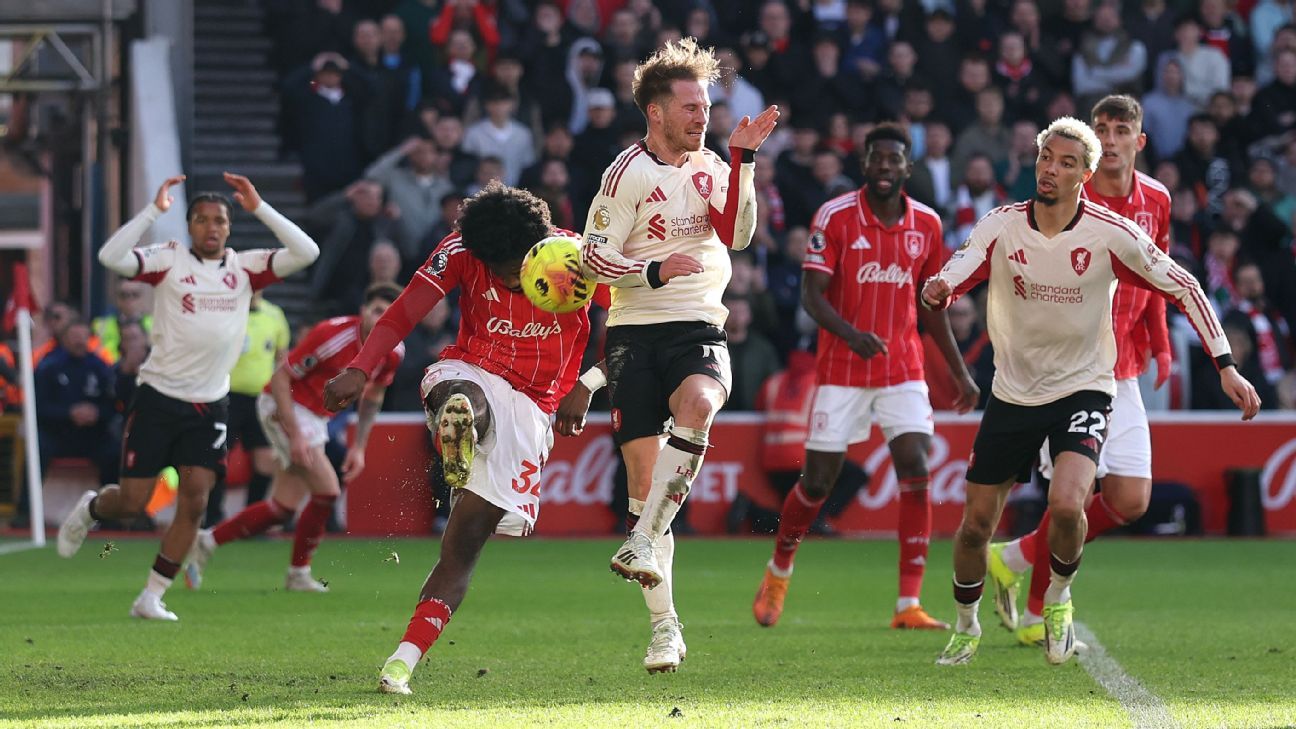
Incident: Liverpool’s goal is overturned due to a handball offense in the buildup.
What occurred: Forest’s Ola Aina attempted to clear the ball, which deflected off Alexis Mac Allister and into the goal.
VAR decision: Following a VAR review, the referee reversed the initial goal decision for Liverpool.
Taylor’s statement explained: “Upon review, the ball made contact with the arm of the goal scorer, Liverpool No. 10 [Mac Allister]. Thus, it’s deemed an accidental handball by the goal scorer, hence the final decision is a direct free kick.”
VAR review: Tierney quickly identified that the ball had struck Mac Allister’s arm before going into the Forest net, with the tolerance level defined at the sleeve region.
Verdict: This VAR intervention was correct, regardless of how disappointing it may be for Liverpool. The rules state that a goal cannot be scored from a hand or arm, even if the action is unintentional.
Time: 97 minutes
Incident: VAR check for offside on Virgil van Dijk leading to Mac Allister’s goal.
What transpired: After Mac Allister scored, a VAR check was necessary on Van Dijk, as the defender’s positioning significantly enabled Mac Allister to score.
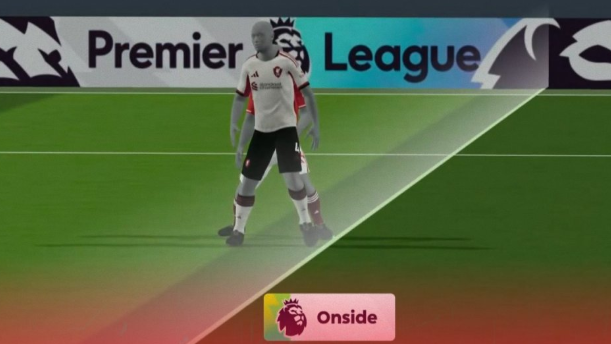
VAR decision: The review confirmed the goal stood.
VAR review: A swift review indicated that Van Dijk was marginally onside using semi-automated technology.
Verdict: A close call, but Van Dijk was confirmed to be onside, despite how the initial replays might have suggested otherwise.
2:02
Are Man City more confident in title aspirations following their victory over Newcastle?
Don Hutchison and Steve Nicol analyze Man City’s Premier League title chances after defeating Newcastle.
Manchester City 2-1 Newcastle United
Referee: Tom Bramall
VAR: James Bell
Time: 42 minutes
Incident: Goal disallowed for offside.
What happened? Dan Burn scored from a Sandro Tonali free kick, but the goal was disallowed for offside. Replays indicated that Burn was offside only due to being pushed by City’s Rúben Dias.
VAR decision: VAR checked the on-field decision to disallow the goal and confirmed an offside offense had occurred.
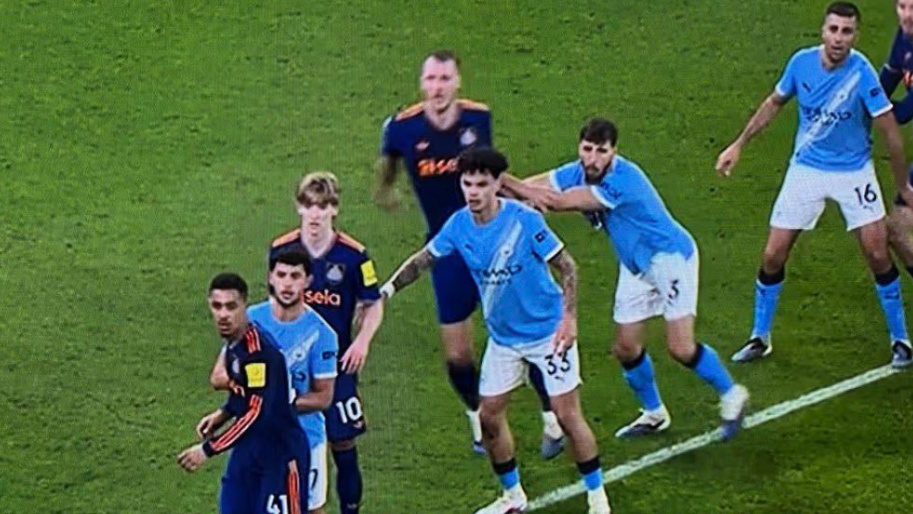
VAR review: Bell recognized that Dias had pushed Burn before the goal was scored. Although Burn was offside when he scored, the VAR’s review focused on the foul and whether it constituted a penalty kick.
It was a clear push; however, it happened before the ball was played by Tonali, meaning VAR couldn’t intervene as the ball was inactive.
According to Law 12: Direct and indirect free kicks and penalty kicks can only result from offenses committed when the ball is in play.
Verdict: Newcastle fans may feel wronged by this decision. Nonetheless, this was a calculated tactic by Dias and the City defense, demonstrating a clear understanding of the rules and the timing of the push. Since there was no offense that could have been called in this instance under the laws of the game, the VAR could not intervene unless it was a case of violent conduct, which did not apply here.
Time: 51 minutes
Incident: Potential second yellow card for Man City’s Bernardo Silva
What transpired: Silva, already cautioned, appeared to jump into Burn without making an attempt to play the ball. Was he lucky to avoid a second yellow card?
VAR decision: The VAR did not classify this as a possible red card incident, and based on current regulations, they cannot intervene in second yellow card scenarios, only in cases of straight red cards.
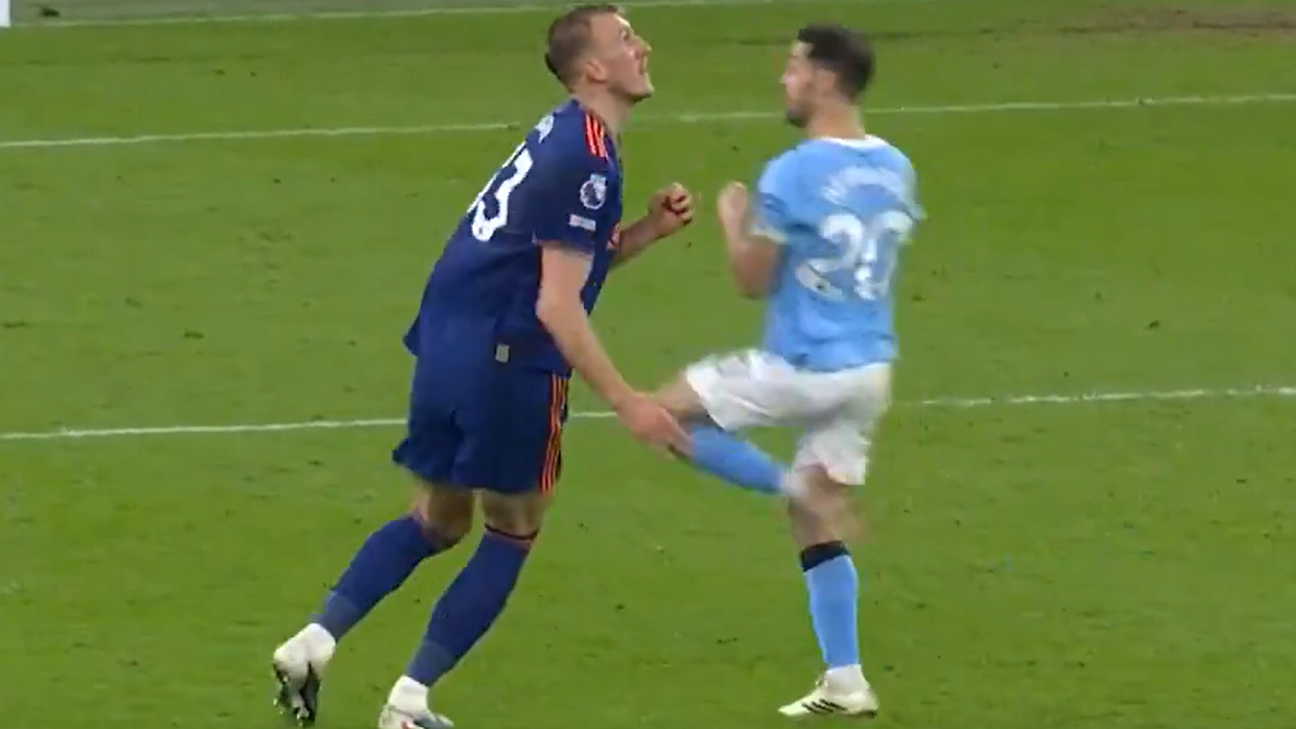
Verdict: For a referee to issue a second yellow card, the challenge must meet a high threshold of recklessness. It should be an instinctive decision made in the moment. Reviewing the clip, Silva was fortunate not to receive a second yellow for an unnecessary challenge, as he made no attempt to play the ball.
However, given the game’s physicality, this moment wasn’t particularly conspicuous, and wouldn’t have raised significant concern for Bramall in real-time. In high-stakes matches, officials often rely on their instincts, and in this instance, sensible game management prevailed, as issuing a second yellow did not seem to be the most obvious conclusion.