



The International Football Association Board, responsible for establishing football’s laws, has announced significant changes set to take effect on July 1, applicable during this summer’s 2026 World Cup, which begins on June 11.
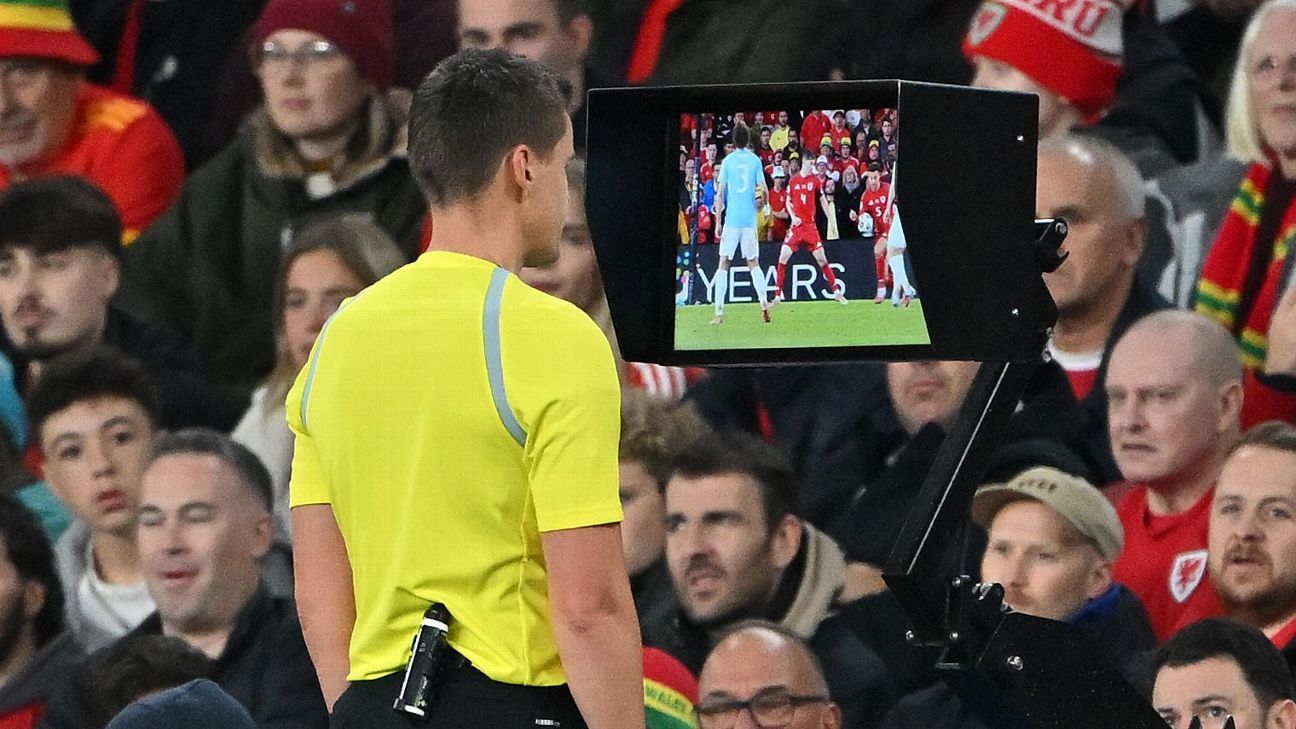
Referees will now have the ability to utilize VAR for corner kicks, alongside an expanded core VAR protocol that includes instances of second yellow cards and cards issued to the incorrect team. Additionally, IFAB has approved measures to address tactics that disrupt match tempo, although current issues surrounding corner kicks were not seen as serious enough to warrant immediate changes.
With these new regulations in place, we examine their potential impact on the game.
 Andy Davies (@andydaviesref), a former Select Group referee with over 12 seasons of experience in the Premier League and Championship, offers insights into the VAR process from an elite perspective.

A five-second countdown for throw-ins and goal kicks
Rule: If a referee believes a throw-in or goal kick is taking too long or is intentionally delayed, a five-second visual countdown will start. Failure to resume play before the countdown ends will result in a throw-in awarded to the opposing team, or a corner kick awarded for delayed goal kicks.
Verdict: Positive
Following last year’s introduction of an eight-second rule for goalkeepers holding the ball, this change is a step in the right direction towards better match flow and player accountability.
In previous seasons, the excessive time taken for goalkeepers to set for goal kicks has drawn criticism. Data has indicated that the full process could take up to a minute, which is excessive.
Traditionally, referees could issue yellow cards as a warning for time-wasting, although they may hesitate early on in the game for such technical offenses. This new rule empowers referees to address delays more effectively, encouraging players to expedite their restarts.
Ten-second time limit for substituted players to exit
Rule: To enhance game flow, players being substituted must leave the pitch within 10 seconds of the substitution announcement. Failure to comply will result in the substitute being barred from entering until one minute after the game resumes.
Verdict: Positive
This change will help reduce the frustration caused by players taking too long to leave the pitch. Previously, players rarely faced penalties for lingering on the field, but now there are clear timelines for exiting the game.
While strict enforcement of the 10-second rule may vary, as long as players are moving promptly towards the sidelines, referees will likely exhibit leniency. However, those who delay unnecessarily will face repercussions.
Injured players must leave the field for one minute
Rule: If a player is assessed for an injury or play is halted due to their injury, they must exit and remain off the pitch for a full minute once play resumes.
Verdict: Negative
Extending the current 30-second rule to one minute is unnecessary and could have adverse effects. Sixty seconds is a lengthy interval in football, which can vastly influence the outcome of a match.
This change may unintentionally encourage players to feign injuries to waste time, countering the positive impact seen with the 30-second rule, which has shown a significant decrease in stoppages for injury assessments.
Furthermore, a loophole exists for goalkeepers, who remain exempt from this rule, allowing teams to exploit this to delay play.
Injured players do not have to leave if an opponent is carded
Rule: Players treated on the field after a foul that leads to a yellow or red card for the offending player are not required to leave the pitch.
Verdict: Positive
This logical change has been advocated by referees for some time. Previously, even justified penalties required players to leave the pitch, which seemed unfair.
Enhanced powers for VAR
Rule: VAR will assist referees when there is clear evidence regarding:
– Red cards stemming from an incorrectly issued second yellow card;
– Mistaken identity when the wrong player receives a red or yellow card for an offense.
Verdict: Positive
This development has been long anticipated, considering the significant implications of a player being sent off. Allowing VAR to correct erroneous second yellow card decisions is a logical enhancement.
It’s crucial to highlight that VAR can only intervene on apparent errors regarding second yellow cards, preserving its role in subjective situations.
These instances, while infrequent, are pivotal when they do happen. Recent examples like Nottingham Forest’s match against Bournemouth, highlight the potential game-changing nature of such errors.
Further power for VAR
Rule: VAR will also be allowed to intervene when a corner kick is clearly awarded incorrectly, provided the review can be completed without delaying the game.
Verdict: Negative
From a fan’s perspective, this feels like an unnecessary intrusion. VAR reviews typically introduce delays, and this amendment seems like an over-reliance on technology. While a few significant corner kick controversies exist, they have not been a frequent problem in the Premier League.
However, from a referee’s standpoint, getting a corner kick decision right can be highly significant. While IFAB allows leagues to opt out, I anticipate the Premier League will go this route.
With this rule set to debut at the World Cup, it will be intriguing to see how it impacts the tournament.