



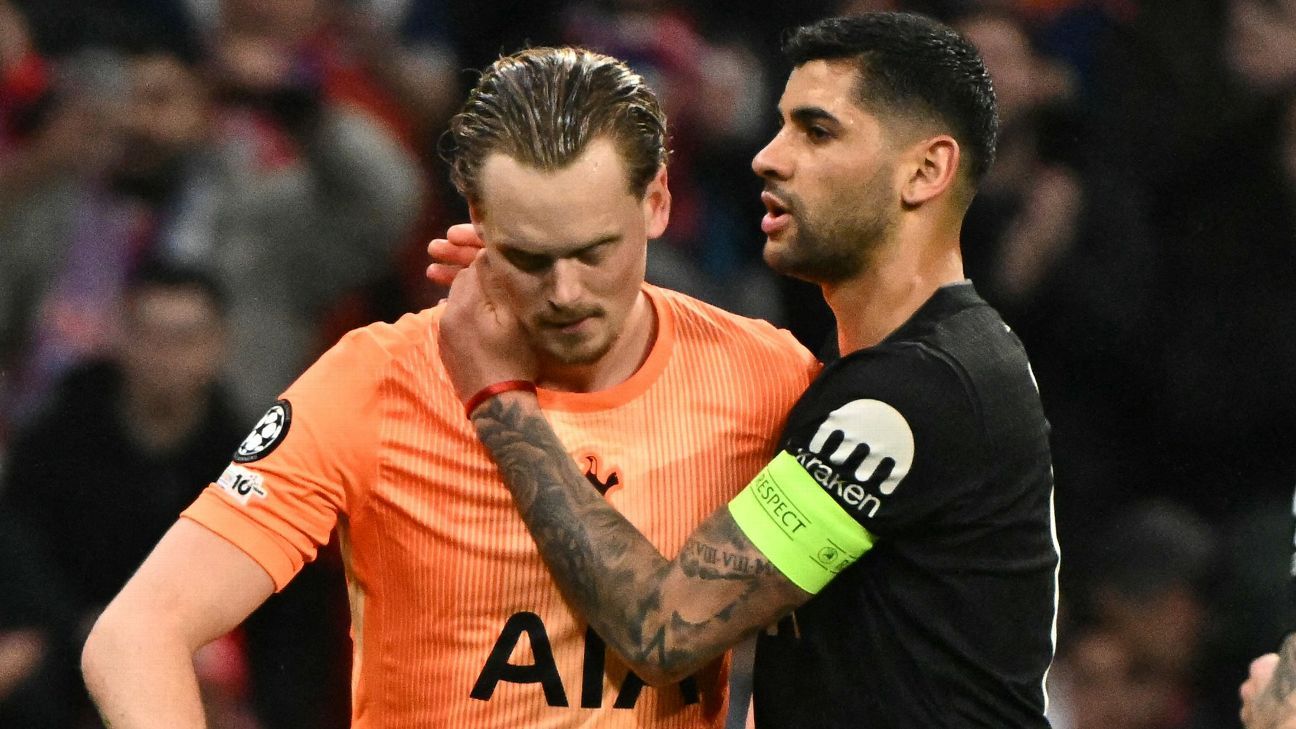
Antonín Kinsky faced a challenging European debut, suffering through a series of errors during Tottenham Hotspur‘s 5-2 UEFA Champions League defeat to Atlético Madrid. His struggles culminated in his substitution just 17 minutes into the match, with his team already trailing 3-0, highlighting the brutal nature of professional football.
When the 22-year-old was named in the lineup for his first European match, many Spurs fans might have viewed it as a reasonable gamble, especially given the recent performances of first-choice Guglielmo Vicario and other senior players. However, the situation changed rapidly.
Kinsky’s initial error occurred just six minutes in when he slipped while trying to clear the ball, leading to the opener for Atlético. While such slips can happen to anyone (as evidenced by Micky van de Ven‘s similar mistake that resulted in the second goal), it was a pivotal moment in the game.
– Spurs’ unprecedented implosion felt like rock bottom
– The stats behind Kinsky’s disastrous night for Tottenham
– UCL Talking Points: Spurs struggle as all English teams lose
In situations like that, teammates are generally more focused on the impact on the game rather than casting blame. Though they may express disappointment, the prevailing attitude is often about encouraging one another to press on.
Kinsky’s second mistake was a far more technical issue. Attempting a first-time pass with his weaker left foot, he inadvertently allowed Julián Álvarez to score into an empty net, pushing the score to 3-0 in less than 15 minutes. This was a clear failure of execution, independent of the pitch conditions.
After his initial slip, Kinsky looked visibly distressed. Following his second mistake, he found himself on the ground, possibly not even witnessing the goal as it happened. At this juncture, the emotional weight of the situation becomes apparent, underscoring just how difficult it can be to cope with failure in such a high-stakes environment.
Rarely do we see goalkeepers substituted so early due to performance issues. Nevertheless, Spurs interim manager Igor Tudor may have felt that Kinsky’s confidence had eroded to the point where he could no longer contribute effectively. Accepting such a decision can be incredibly challenging for any professional athlete.
When blunders highlight the spotlight on you, the hope is that teammates will rally to support you and that the coach will keep you on the field to help you recover. Facing adversity is often a part of an athlete’s journey, and overcoming such challenges is integral to their development. Being removed from the game signals a lack of trust, one of the hardest pills to swallow for any player. As Kinsky walked off the field, self-doubt likely consumed him, a difficult place for any professional to navigate.
Interestingly, Tudor appeared not to acknowledge Kinsky during his exit. If I were in Kinsky’s position, I might have preferred not to receive an explanation for my replacement from a coach who initially doubted my capabilities.
Early substitutions, especially in the goalkeeper position, are rare. Despite Kinsky’s struggles, the decision felt almost extraordinary—where even a handshake from a manager wouldn’t alleviate the discomfort of such an event.
The unique circumstance of Kinsky’s early substitution drew attention to the dynamics in the locker room at halftime. By the time players reconvened, they were not only processing the frustration of the scoreline (4-1) but also the emotional state of a distraught Kinsky. Acknowledging either side could undermine the other; focusing solely on the goalkeeper seems trivial when the team is underperforming and vice versa.
What transpired during halftime remains uncertain. Did Kinsky share his thoughts? It would have been Tudor’s first opportunity to address him since the contentious substitution. Given the short break, how much of Tudor’s focus would be allotted to Kinsky? The remaining players would be observing the manager’s approach, searching for guidance on turning the game around while grappling with their disappointment and anger toward their performance.
I’ve faced similar situations where individual mistakes impacted the team’s performance, and the best approach is to own up and apologize. However, this can become awkward, especially if teammates are still in disbelief, but the overall situation still requires attention. Professional athletes possess an innate drive to win, and the aftermath of such events is rife with conflicting emotions that complicate the recovery process for both players and coaches.
2:25
Laurens: Tudor should have resigned after Atletico Madrid defeat
Gab & Juls criticize Igor Tudor’s decisions in Spurs’ 5-2 loss to Atlético Madrid in the Champions League.
Tottenham’s upcoming match against Liverpool looms large as they continue to seek crucial points to stave off relegation from the Premier League. If Kinsky is selected to start at Anfield, the pressure on him will be immense, raising questions about his mental resilience following the Madrid debacle. In such critical times, the absence of sentiment in football is stark—every player is under scrutiny as the fight for results intensifies, and that could translate into pressure from fans and fellow players alike during matches.
Can Tudor still trust Kinsky to navigate the potentially high-pressure environment of this pivotal confrontation for the club?
Football’s unique allure is tied to the exhilaration and invincibility players feel when the spotlight shines favorably upon them. Yet when it turns negative, players are left to face that scrutiny head-on, striving to navigate forward despite uncertainty regarding their immediate future on the pitch and chances for redemption.
Kinsky’s teammates now face a critical decision—to vocally support him or provide him with space. There is no definitive solution, as the reality remains that mistakes were made. While this incident may not fully encapsulate Kinsky’s abilities as a keeper, it reflects a challenging moment affecting both him and Tottenham as a whole.
None would want to endure such a moment, and although the first leg is behind them, the looming second leg in North London on Wednesday casts a long shadow. The implications extend beyond just Kinsky; all eyes remain on him, Tudor, and the Tottenham squad. This moment has the potential to leave a lasting impact.
Nedum Onuoha was interviewed by ESPN senior editor Tony Mabert