



-

Sam Tighe
Multiple Authors
Week after week, Rúben Amorim has deployed his Manchester United squad in a 3-4-2-1 formation. Many fans have criticized this approach, often branding it as overly defensive.
This sentiment is common among supporters of teams utilizing a back-three setup. With three center backs, as opposed to the traditional two in a back four, it’s understandable why fans might perceive a more defensive stance. However, this isn’t always the case.
The past decade offers numerous examples of teams utilizing a back three while attacking aggressively. For instance, in the Dutch Eredivisie, the effectiveness of this shape has been evident, and even Amorim’s United has somewhat countered the notion of a back three being inherently defensive. During his tenure this season, United notched the highest number of shots on target (109) and the third-most xG (36.14) in the Premier League, trailing only Arsenal (36.41) and Manchester City (38.02).
While Amorim’s side did face challenges, it’s incorrect to assume that adopting a back three automatically results in a defensive mindset; it can be an audacious tactical choice. Here’s how.
Wing Backs: Dynamic Attackers
A key characteristic of the back-three system is the presence of wing backs, defining players who straddle the roles of defender, midfielder, and attacker. This multifaceted role is integral to modern football tactics.
Unlike traditional defenders, most wing backs possess a strong attacking inclination. The common saying that every full back is essentially a failed winger has evolved in today’s game, where wing backs can significantly enhance offensive plays with the support of others covering defensive duties.
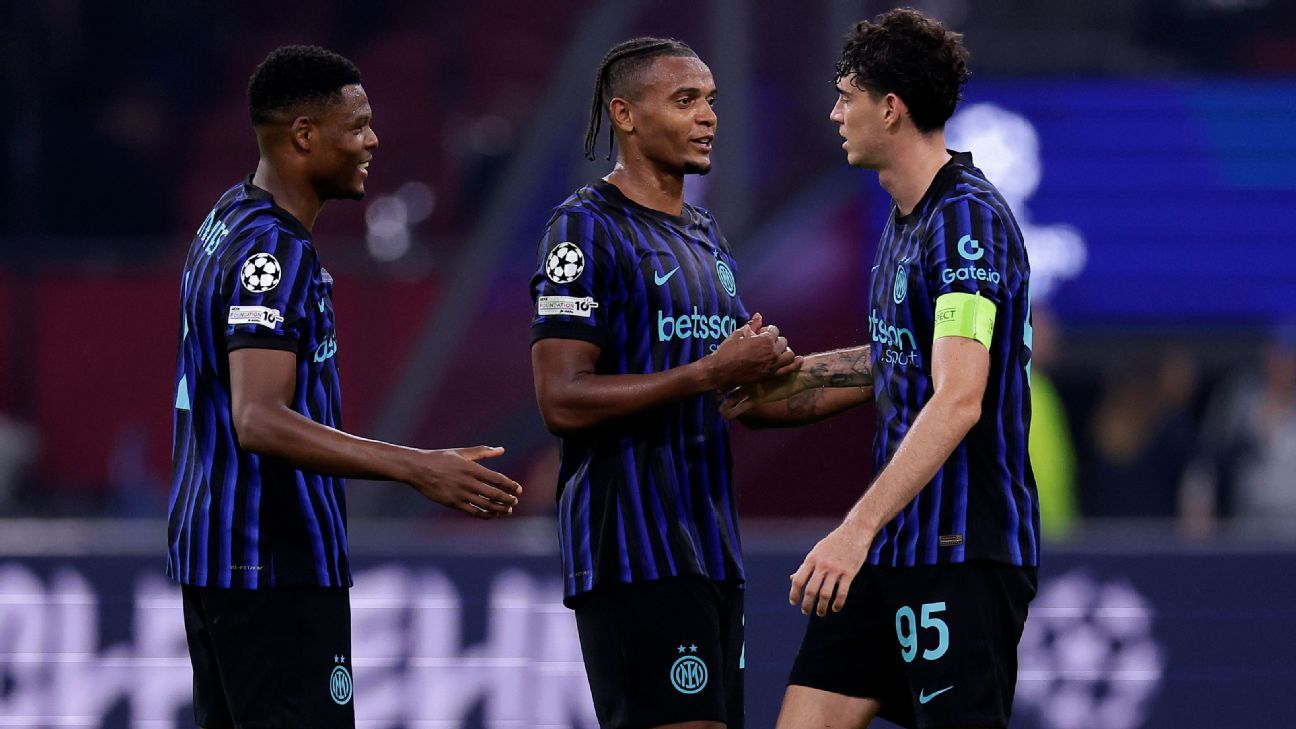
For instance, Inter Milan’s wing backs, Federico Dimarco and Denzel Dumfries, exemplify this role effectively.
Dimarco, operating on the left, leads Serie A with the most chances created (76) and boasts the highest Expected Assists (8.49), indicating the quality of his passes while predominantly occupying the final third. Dumfries mirrors this aggression on the right flank, frequently invading the opponent’s box and posing a significant aerial threat.
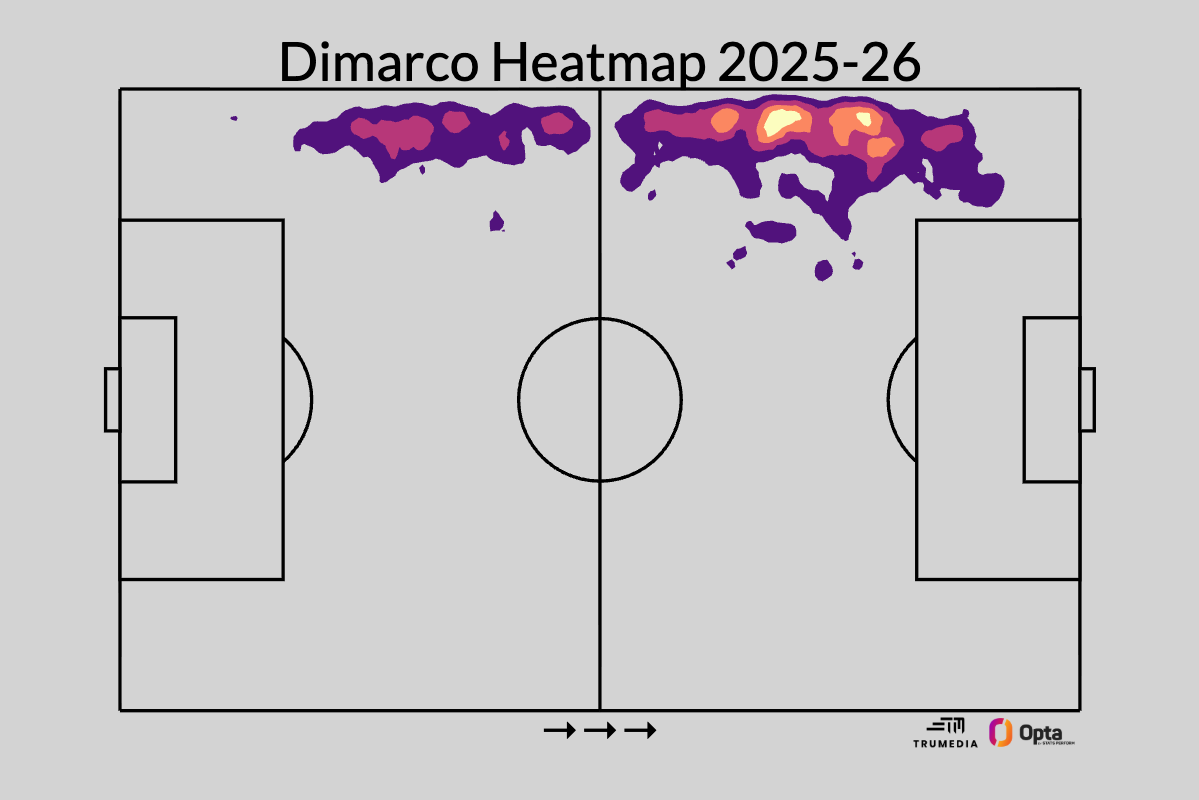
The high positioning of both wing backs allows a majority of Inter’s players to frequently touch the ball in their opponent’s territory, a hallmark of their attacking strategy.
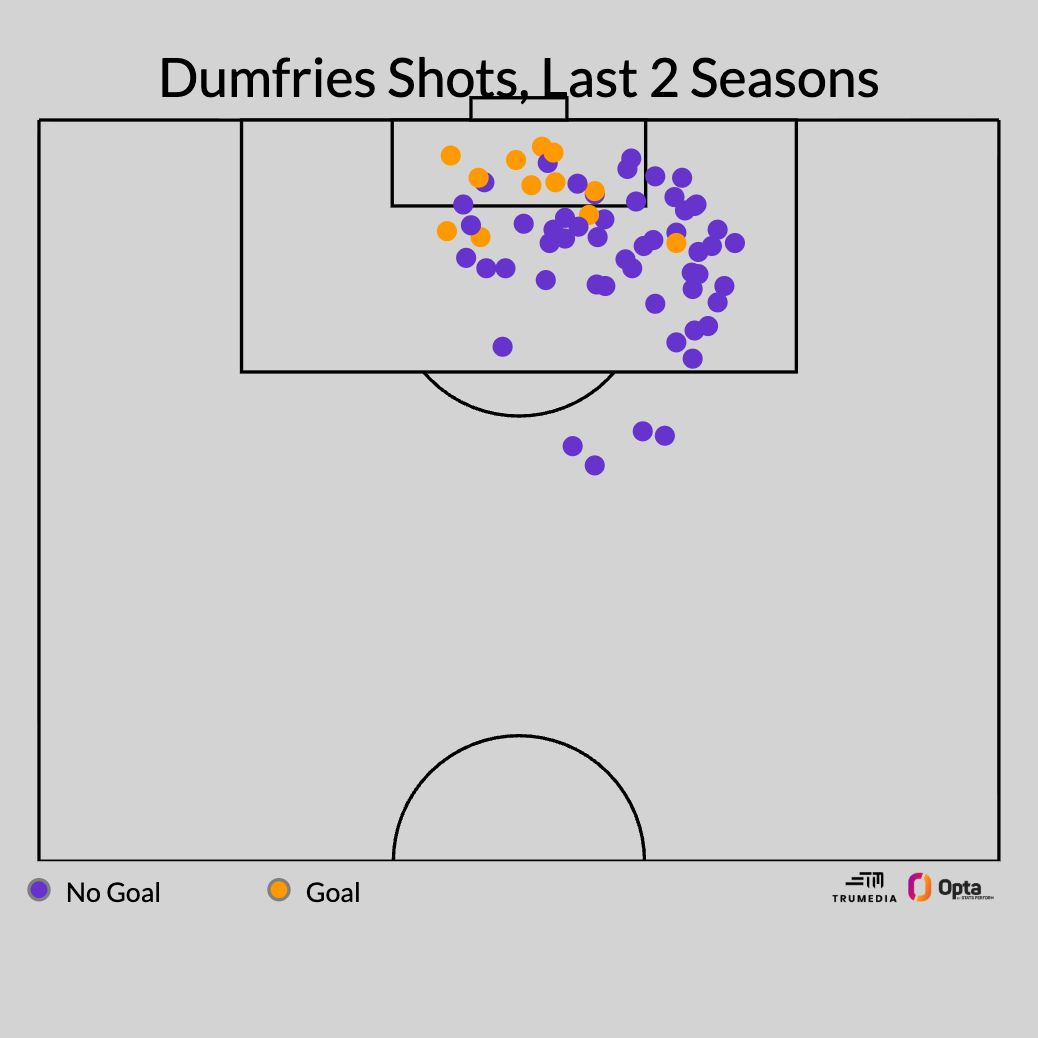
Crystal Palace wing back Daniel Muñoz exhibits similar qualities, contributing 15 goal involvements since the onset of the 2024-25 season. His speed and stamina allow him to persistently traverse the touchline, making him a challenge for opposing defenses to track.
Coaches like Antonio Conte and Simone Inzaghi have recognized the potential of wing backs, integrating them into their systems. However, this requires a back-three formation to do so without exposing the defense.

1:39
Hutchison: Carrick has made a mockery of Amorim’s Man United
ESPN’s Don Hutchison believes Michael Carrick has made a “mockery” of Ruben Amorim’s Manchester United.
Center Backs in Midfield
Interestingly, employing a back three does not have to equate to a surplus of defenders within the team structure.
Some managers design their tactics to permit one of the center backs to advance into midfield during possession. This strategy creates a numerical advantage in the central area while maintaining two center backs for defensive coverage.
Amorim is a strong advocate of this method. While at Sporting CP, he had Gonçalo Inacio perform this role; at Manchester United, he has instructed Lisandro Martínez and subsequently Luke Shaw to take on these responsibilities.
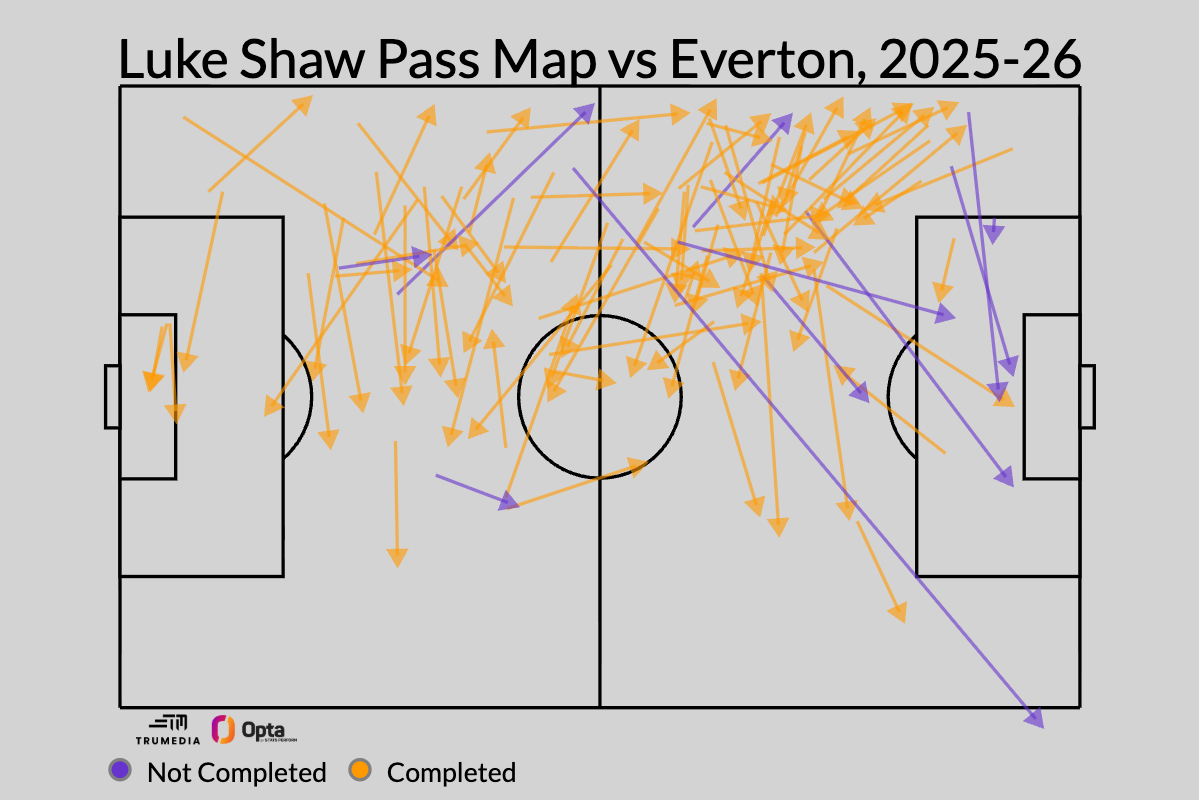
The pass map above illustrates a concentration of passing activity from what resembles a left central midfield or even a left No. 10 area, highlighting how Amorim’s system often integrated Shaw (or Martínez) closely with Bruno Fernandes.
Atalanta’s Giorgio Scalvini has similarly fulfilled this role, while Borussia Dortmund’s Nico Schlotterbeck often ventures into midfield from a left-center-back position. Chelsea’s 2016-17 Premier League-winning side under Conte also encouraged David Luiz to roam forward freely.
Nonetheless, John Stones’ role for Manchester City during their treble-winning season epitomizes how a center back can transform a team’s dynamics by pushing forward into midfield.
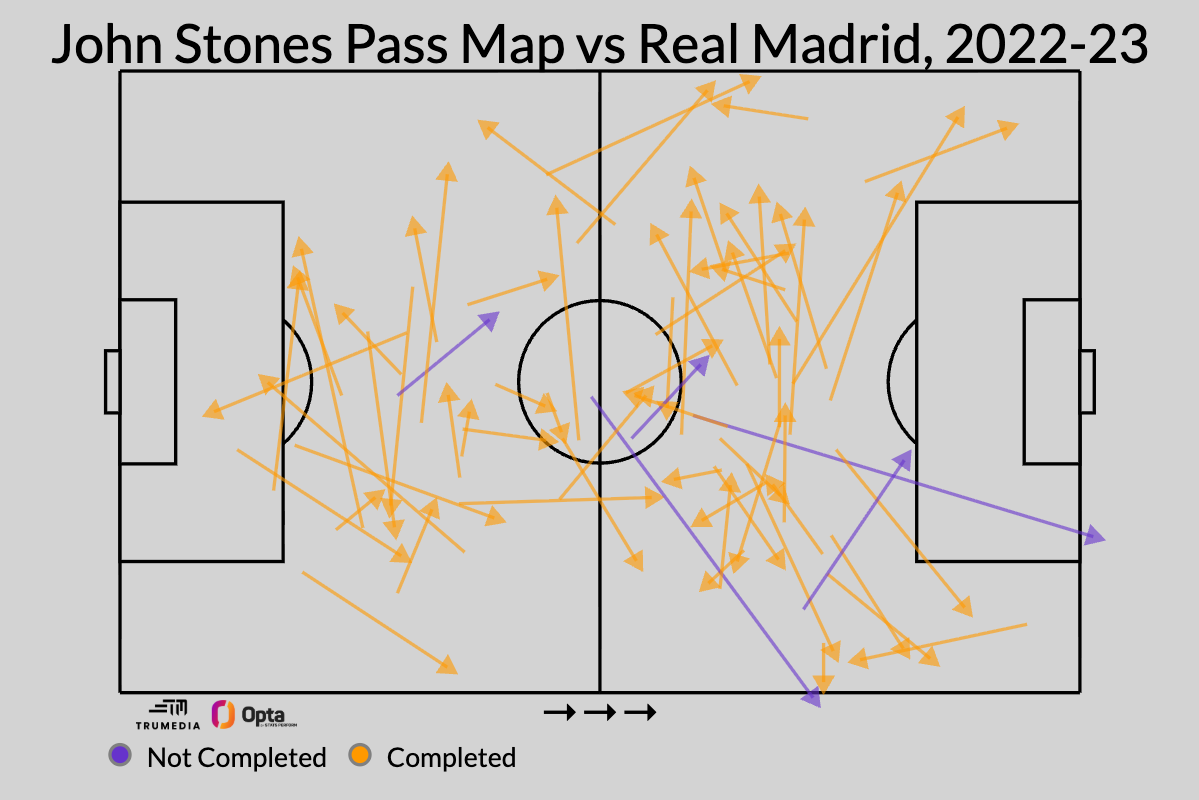
Midway through that campaign, Pep Guardiola effectively deployed four center backs (Stones, Rúben Dias, Manuel Akanji, and Nathan Aké) in the backline, instructing Stones to partner with Rodri in midfield during offensive phases. This adjustment resulted in a 3-2-5 formation, enabling Guardiola to deploy five attackers while also safeguarding against counters.
Observing Stones’ pass map during a Champions League semifinal against Real Madrid illustrates his pivotal role in attacking play while still fulfilling defensive responsibilities.

2:25
Marcotti ‘really disappointed’ in Guardiola’s tactics vs. Real Madrid
Gab & Juls react to Man City’s 3-0 loss to Real Madrid in the first leg of their round of 16 Champions League clash.
Center Backs in the Attack
Several center backs extend their influence well into the final third of the field.
While at Genoa and Atalanta, Tottenham’s Cristian Romero was known for making bold runs into the offensive zone, occasionally positioning himself alongside the striker after surging upfield, thereby injecting unpredictability and chaos into the attack.
Currently, Juventus’ Federico Gatti showcases a similar approach, frequently pushing forward, albeit while accepting a degree of risk. Inter’s Alessandro Bastoni combines solid defense with long-passing abilities while also pushing far past midfield, often overlapping his wing back (Dimarco) for crosses or making runs into the penalty area.
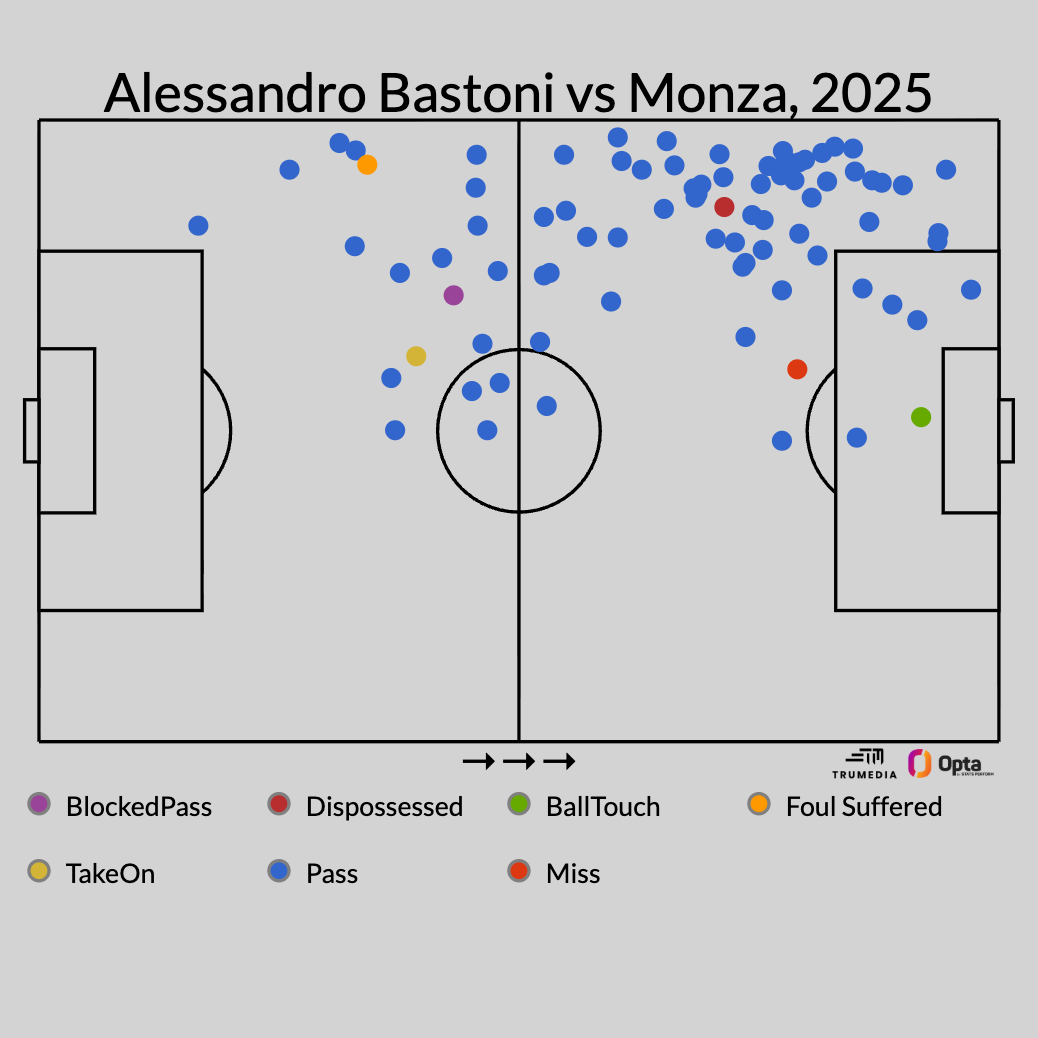
Bastoni has racked up an impressive 477 touches in the attacking third this season, ranking him among the top contributors in Serie A, contributing significantly to a potent attack while remaining crucial to a defense that has allowed only 23 goals in 29 matches.
However, NEC Nijmegen takes this philosophy to extremes.
This historic Dutch club, despite never winning a major trophy, currently sits third in the Eredivisie, outperforming giants like Ajax and other consistent European competitors such as AZ Alkmaar and FC Twente.
NEC has achieved this impressive position through a daring playing style. They initiate attacks from the back, allowing center backs to surge forward and integrate with the offensive line, while wingers may drop deep, creating a fluid and unpredictable shape on the pitch. Right center back Elazar Dasa has delivered 34 crosses this season, outpacing some forwards in Europe.
Their foundation rests on a 3-4-2-1 format, but as soon as a pass is made, cohesive patterns dissolve, making it perhaps the truest embodiment of why a three-center-back setup does not equate to a defensive approach. Remarkably, only upcoming champions PSV Eindhoven have netted more goals (77) than NEC’s 67, while they share the seventh-most goals conceded (45)—quite impressive for a team that often leaves itself vulnerable at the back.
Redefining Tactical Norms
Just like no 4-4-2 formation is identical—Sean Dyche’s defensive variant at Burnley vastly differs from Unai Emery’s possession-driven style at Aston Villa—a back-three setup doesn’t always mean a defensive posture.
Real-world evidence supports this claim: Inter leads Serie A with 65 goals; Dortmund ranks second in the Bundesliga with 55; and Lens sits third in Ligue 1 with 49—all teams that consistently operate within a back-three framework.
Conte has effectively leveraged back-three formations for attacking success at clubs like Chelsea, Juventus, and Napoli ; while Manuel Gasperini has crafted thrilling attacking sides at Atalanta with a similar structure.
ESPN’s Ryan O’Hanlon recently argued that both the global football landscape and particularly the Premier League would benefit from the introduction of more back-three systems, as their flexibility and creativity could serve as an effective response to a prevailing trend of man-marking and physical play.
However, not all back-three implementations have been successful, which brings us back to Amorim’s Manchester United. His team had an abundance of missed chances, struggled to maximize the potential of young striker Benjamin Sesko, and restricted influential midfielder Bruno Fernandes to a deeper role, diminishing his effectiveness. United’s defense was shaky, allowing 30 goals—more than six other teams—as the back-three approach exposed a lack of dynamism in the central midfield. Since interim coach Michael Carrick has transitioned to a back four, results have seen a marked improvement.
Nevertheless, don’t let this deter you from the viability of a back-three formation. As seen with last season’s Champions League finalists Inter and the Dutch avant-garde NEC, when executed effectively, a back three can redefine the limits of attacking football—something football needs more of.