



The use of video assistant referees consistently stirs controversy in the Premier League. But how are these decisions made, and are they accurate?
This season, we will analyze key incidents to shed light on the decision-making process, focusing both on VAR protocols and the Laws of the Game.
Andy Davies (@andydaviesref) is a former referee in the Select Group, having officiated for over 12 seasons in the Premier League and Championship. With vast experience at the highest levels, he has worked with VAR in the Premier League, providing unique insights into the processes, reasoning, and protocols implemented during a matchday.


Referee: Stuart Attwell
VAR: Craig Pawson
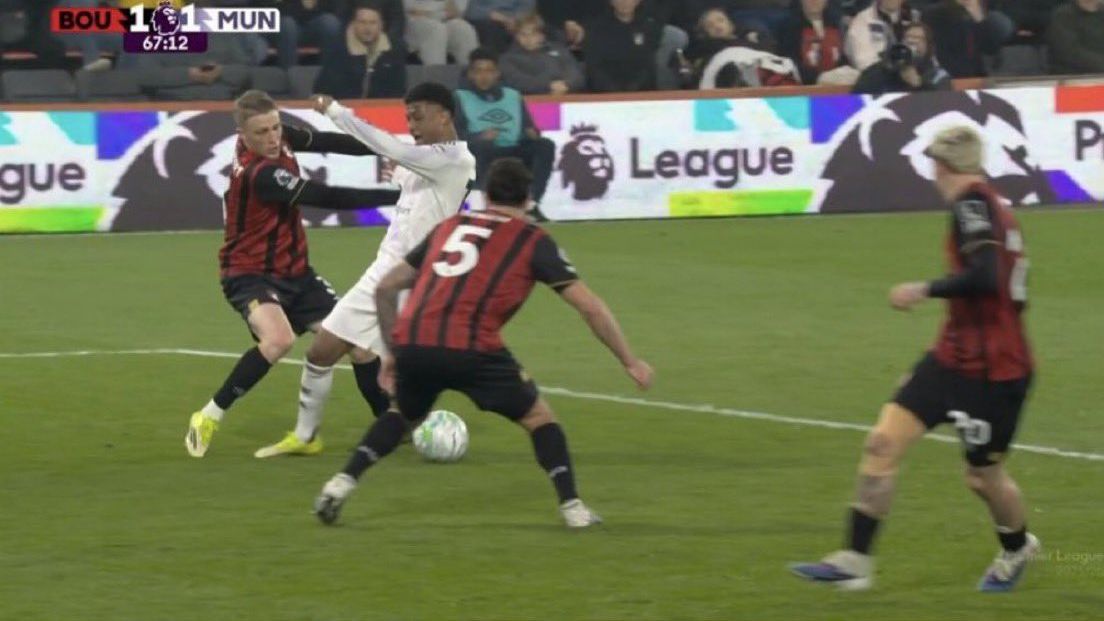
Time: 67 minutes
Incident: Potential penalty for Manchester United
What happened: In the 67th minute, Bournemouth defender Adrien Truffert made upper-body contact with Manchester United’s Amad Diallo, leading Diallo to fall and claim he was pulled. The incident drew more scrutiny when Bournemouth scored their equalizer just after the referee waved away the penalty appeals. VAR confirmed that Attwell’s no-penalty decision was correct.
VAR decision: The absence of a foul on Diallo for Truffert’s challenge was reviewed and upheld by VAR, as the contact was deemed insufficient for a penalty.
VAR review: Since Bournemouth scored immediately after the penalty appeal, VAR’s review required a comprehensive check rather than a background check, had the goal not occurred. Pawson likely began reviewing the Truffert challenge as the ball went into the net and concurred with Attwell’s on-field decision. After the Bournemouth goal, the entire sequence was re-examined, confirming that the contact did not meet the threshold for a foul.
Verdict / Insight: Referee Attwell viewed Truffert’s arm contact as regular play given both players’ positions in the penalty area, a judgment with which I concur. In real-time, it seemed that Amad intentionally went to ground, attempting to win a penalty instead of being fouled, as indicated by his teammates’ reactions. His decision to fall was poor and not deserving of a penalty kick.
Premier League
Time: 78 minutes
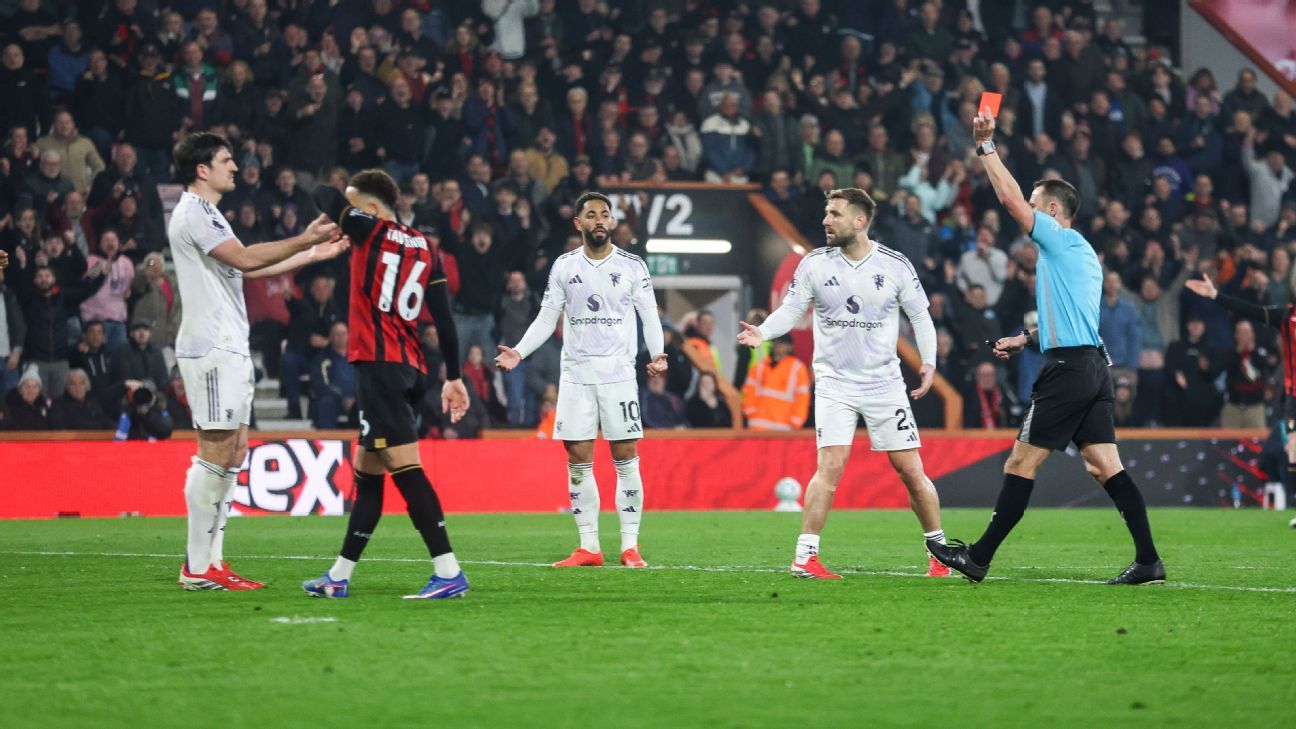
Incident: Penalty awarded to Bournemouth and Harry Maguire sent off for denial of an obvious goal-scoring opportunity (DOGSO)
What happened: Referee Attwell frustrated Manchester United once more by awarding a penalty against Maguire for holding Evanilson, who was on a clear scoring opportunity. Attwell deemed the foul a DOGSO offense, resulting in Maguire’s red card.
VAR decision: The penalty and red card issued to Maguire for DOGSO were reviewed and confirmed by VAR as a holding foul with no attempt to play the ball.
VAR review: Pawson found the review of the penalty and red card straightforward. It’s important to note that the on-field decision is only overturned in the presence of clear and indisputable evidence of an error by the officiating team.
Attwell’s explanation classified Maguire’s actions as a clear holding offense, which impeded an obvious scoring opportunity without any attempt to play the ball. The replay reaffirmed this, leading Pawson to uphold both the penalty and red card.
Verdict / Insight: The decision to award a penalty to Evanilson and issue a red card to Maguire has ignited debate, especially regarding the level of contact and its effect on the attacker’s ability to stay on his feet and shoot.
Analyzing Maguire’s conduct, it’s challenging to argue against penalizing him for a clear act of obstruction. He made a deliberate effort to impede his opponent’s scoring chance without any attempt to play the ball. While the degree of contact may be debatable, the evident intention and evidence of contact justify the penalty and red card. Furthermore, this is not a situation I would expect to see VAR intervene.