



-

Jeff Carlisle
Multiple Authors
ATLANTA — The U.S. men’s national team is in the final stages of its preparations for the World Cup. With the tournament approaching, individual player performances and overall team chemistry are under close examination.
This past Saturday, the match against Belgium served as a reality check for the USMNT, culminating in a disappointing 5-2 loss. While it was just a single game, the U.S. appeared unprepared for the competitive matches awaiting them in June.
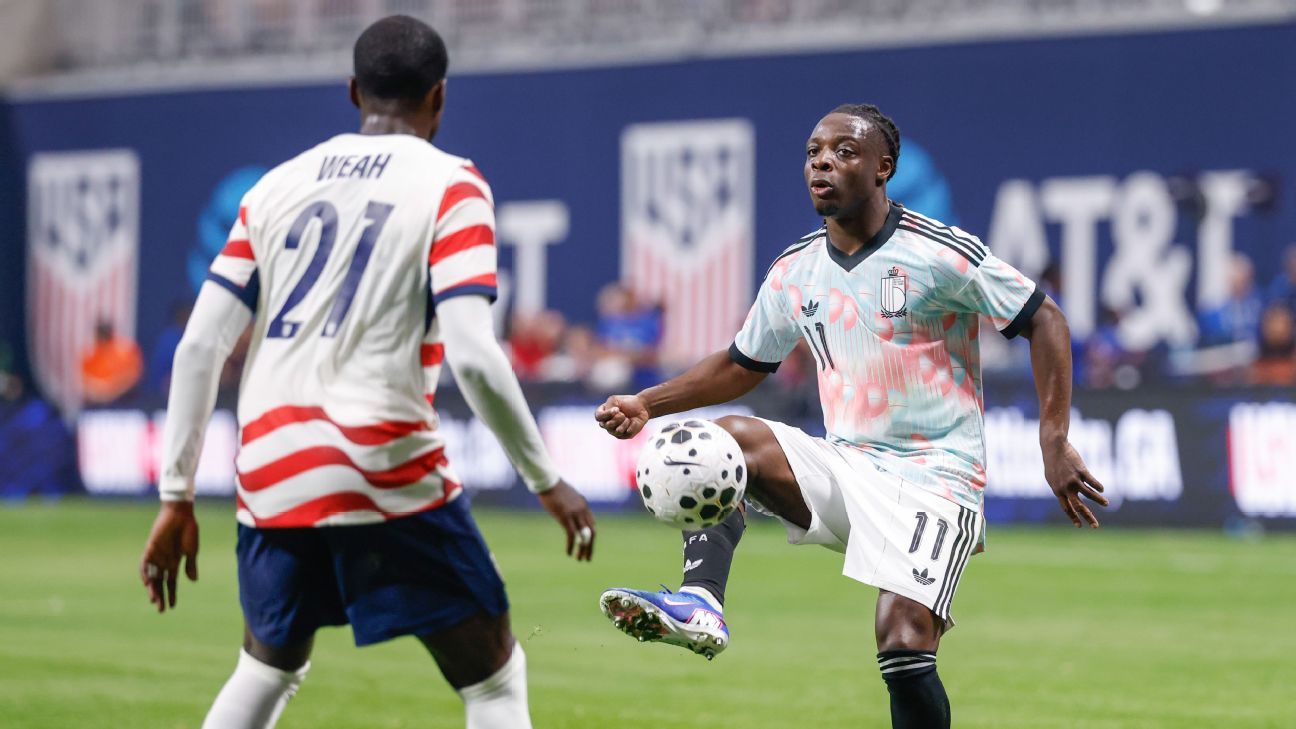
The U.S. showed some promise during the first half, with Weston McKennie scoring to give them a 1-0 lead. However, their defense faltered in the second half, unable to cope with the dynamic play of Belgian winger Jérémy Doku, leading to the end of their five-game unbeaten streak.
– USMNT player ratings: Weah struggles as U.S. faces tough loss to Belgium
– O’Hanlon: Is USMNT depth a factor at the 2026 World Cup?
– USMNT players discuss their experiences with Mauricio Pochettino
The focus of the match was largely on the USMNT’s center backs. With Miles Robinson and Chris Richards sidelined due to injuries and Noahkai Banks uncertain about joining the team, the back line faced scrutiny. Veteran defender Tim Ream has struggled this season, while Mark McKenzie is still working on his consistency. Consequently, coach Mauricio Pochettino reverted to a traditional 4-3-3 formation with Ream and McKenzie at the back.
Ultimately, the center backs were not the sole issue. The overall team performance was lackluster, raising doubts about the U.S. squad’s readiness. Defensively, the Americans frequently struggled with wing play, allowing Belgium to isolate Doku on the flanks. On one occasion, Doku drew significant attention from the U.S. defense, creating space for Charles De Ketelaere, who assisted Amadou Onana‘s goal.
Doku’s talent is undeniable, as evidenced by his success with Manchester City. However, the USMNT aims for significant accomplishments this summer and must learn to compete against top-tier teams like Belgium. Notably, Timothy Weah often found himself outmatched by Doku, which raises concerns about the team’s adaptability. It prompts the question of whether any player could have performed better defensively.
The U.S. must also improve its support for the flanks and track late runs into the penalty box, a fundamental defensive strategy that appeared poorly executed. This issue likely extends beyond the defensive line and highlights the need for an immediate adjustment in tactics.
Concerns extend to the U.S. midfield as well. With Tyler Adams absent due to a quadriceps injury, Johnny Cardoso faced a prime opportunity to contribute. Despite a challenging season with Atletico Madrid, Cardoso had shown improvements and seemed essential to the squad. Yet, he has struggled to replicate that level of performance on the international stage.
In this match, Cardoso had moments of promise, completing all of his 13 passes and facilitating McKenzie’s goal. However, his halftime substitution raised eyebrows, especially as the team needed possession. Pochettino later explained that it was a pre-planned change due to discomfort Cardoso experienced earlier in the week.
The decision is puzzling, especially for a team struggling to maintain control. The second half saw Belgium overwhelm the U.S., highlighting ongoing defensive issues. Goalkeeper Matt Turner, who started unexpectedly over Matt Freese, found himself under constant pressure. Despite utilizing his bench, performances dipped, aside from Ricardo Pepi, who contributed to a consolation goal.
Is it time to panic? Not quite. Four years prior, the U.S. faced a 2-0 defeat to Japan in a friendly that raised similar concerns. At that moment, then-coach Gregg Berhalter gathered essential insights into the team’s capabilities. Pochettino has similar work ahead to evaluate his team before the World Cup.