



-

Jeff Kassouf
Multiple Authors
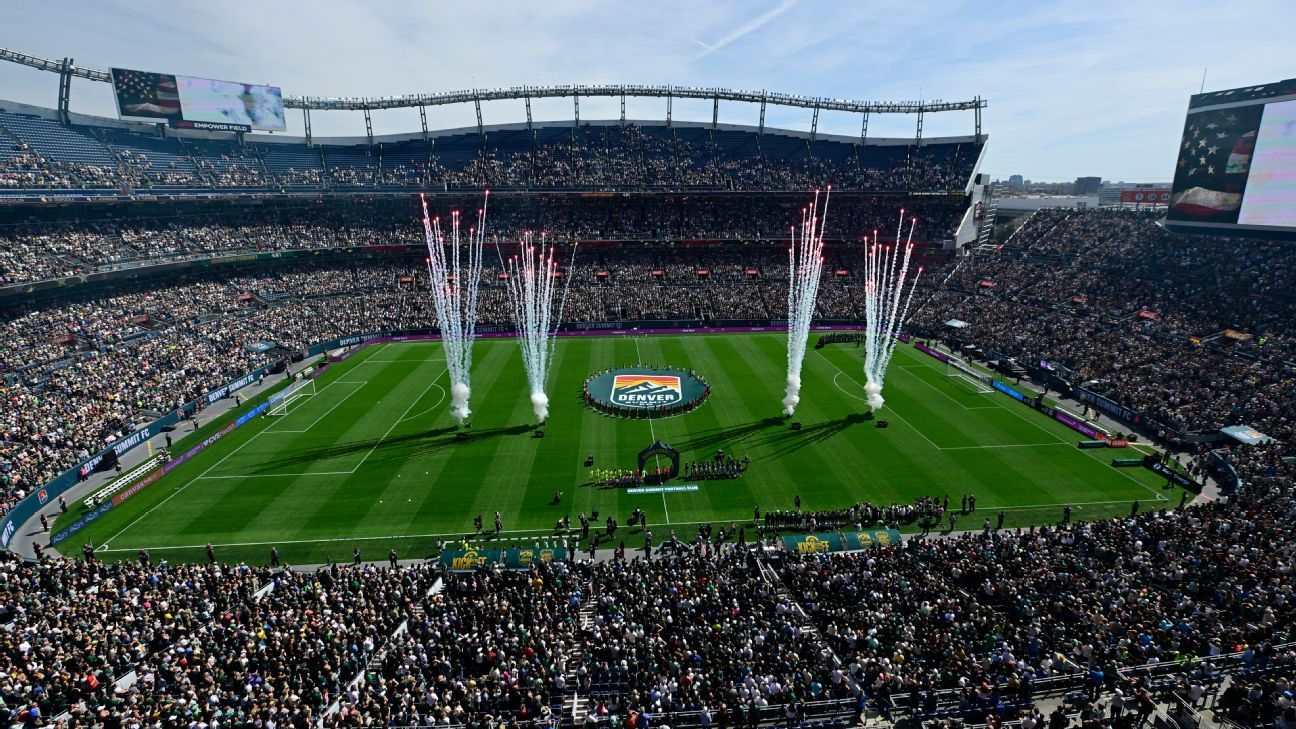
DENVER — As kickoff approached at Empower Field at Mile High on Saturday, the line for merchandise on the west side of the concourse wound for hundreds of people. Fans, deviating from the traditional Denver Broncos colors of blue and orange, donned forest green in support of the city’s new NWSL team, Denver Summit FC.
A notable presence among the 63,004 attendees was those sporting Lindsey Heaps‘ No. 10 jersey, anticipating the arrival of the USWNT captain this summer. For at least that day, Denver’s new NWSL team set a national standard for club soccer, recording a league attendance record along with the highest attendance for a women’s soccer match in the United States.
With fighter jets soaring overhead and smoke from on-field pyrotechnics wafting into the press box and luxury suites just minutes before kickoff, the significance of the event was unmistakable. The atmosphere reflected a dramatic evolution in the NWSL over just a few years, raising the bar for what is possible in the league.
“We never imagined this could be a reality for the NWSL,” said commissioner Jessica Berman pregame, from above the field. “Expansion teams redefine possibilities and compel existing teams to elevate their ambitions. This team has certainly done that.”
– USWNT Transfer Grades: Assessing all the major moves
– UWCL Talking Points: How can VAR and refs improve?
– Predicting the USWNT’s 2027 Women’s World Cup starting lineup
An estimated half a million individuals were anticipated in downtown Denver for various events, including pro sports games, March Madness viewing parties, a “No Kings” political protest, and several Disney on Ice performances. Yet the celebration of the new NWSL franchise emerged as a must-see attraction. Defender Kaleigh Kurtz noted that in the lead-up to Saturday, she couldn’t wear her team apparel without being approached by fans—a far cry from her previous anonymity while playing for the North Carolina Courage.
A fan festival downtown on Thursday amplified excitement leading up to what the team branded “The Kickoff.” The Summit decorated an entire city block with their green signage, local coffee shops introduced Summit-themed drinks, and billboards promoting the match lined the busy freeways.
“When we joined this league, it was a completely different experience,” goalkeeper Abby Smith, who has played for seven NWSL teams over the past decade, reflected after the game. “Some of us veterans shared emotional moments, witnessing the league’s rapid growth and the passionate support from Colorado is incredible.”
While the atmosphere was electric, the match ended in a 0-0 draw, with few significant scoring opportunities, including a second-half shot from Summit forward Natasha Flint that was close to a goal. Ultimately, exhaustion became a factor for both teams, each having played their third match within a week.
Equally noteworthy as the day’s festivities are the plots of land to the south of Mile High, which will shape the future of the Denver Summit franchise and influence rising expectations among league officials in New York.
On those lands, the Denver Summit plans to construct a 14,500-seat stadium at Santa Fe Yards, located a few miles south in a developing neighborhood adjacent to an arts district, accessible via an existing light rail stop.
Further south, amidst suburban traffic, lies the team’s training complex and a temporary stadium in Centennial, Colorado. Summit FC aims to occupy the 12,000-seat temporary venue later in the year, slightly behind the initial timeline. Partial grass for the fields has already been laid, with steel beams rising from the dirt-filled area between office parks, residential buildings, and a government facility.
A spokesperson for the Denver Summit revealed the total investment in infrastructure will approach $350 million, in addition to the $110 million expansion fee for joining the league. All of these developments have occurred since the team’s official announcement by the NWSL in January 2025.
“What we’ve accomplished in 15 months is nearly unheard of for a team,” said Rob Cohen, the team’s controlling owner, prior to the match. “Just 15 months ago, we had no staff, no plans for our performance center, no players, and no coaching staff.
“To achieve this in just 15 months—playing several games, maintaining a record of 1-1-1, and attracting 60,000 fans—is astonishing.”
This view resonates with many, not due to a lack of belief in the demand for women’s professional soccer or the myriad untapped markets available for the expanding 16-team (soon to be 18-team) league. Instead, it stems from the astounding level of ambition and investment now witnessed.
Five years ago, expansion fees were as low as $2 million, and franchise valuations hovered just above that. Many teams were, and still are, secondary or tertiary tenants in their venues, lacking dedicated training facilities for regular use.
It’s important to note that Saturday’s attendance of 63,004 fans will not become the norm for the NWSL. This impressive figure stands in contrast to the challenges faced by other markets that struggle to attract even 5,000 fans per game. However, it does establish a new standard not only for attendance at future significant events but also for what NWSL players, owners, and fans can envision as attainable.
“Portland and LA have consistency,” argued Summit forward and NWSL veteran Ally Brazier, who grew up in the area. “If we had our own stadium, we could achieve that level of consistency right now. Looking forward to moving into our temporary stadium and eventually our official stadium in 2028, it’s clear that we will cultivate a crowd similar to Portland or LA.
“We’ll see large audiences and an electrifying atmosphere that players will be excited to experience.”