



In a relegation battle, reaching the 30-game milestone can bring a sense of impending doom, especially if your team’s form is lacking. The pressure intensifies as the season nears its end.
I can attest to this firsthand. Having faced relegation twice with Queens Park Rangers in 2013 and 2015 and being part of the squad that narrowly avoided it in 2012, I’ve experienced the sheer anxiety of striving for survival in the final months of a season.
While players may cling to hope, that sentiment can diminish as results falter, revealing the harsh truths of the game. Soon, the team might question if their last victory is already behind them. There’s a possibility that one of the teams fighting for survival could go winless for the remainder of the season, and you can only hope it’s not you.
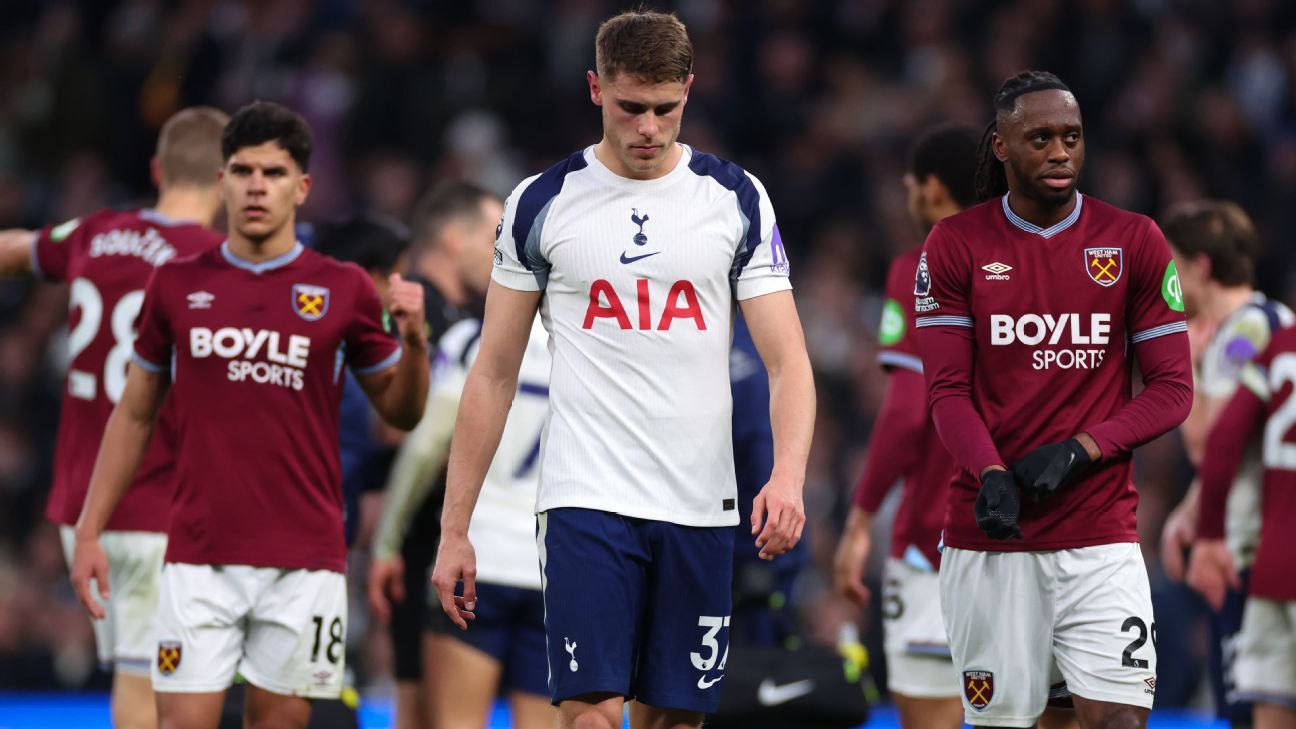
Assuming that Wolves and Burnley find themselves in dire straits at the bottom of the Premier League, four teams—West Ham United, Tottenham Hotspur, Nottingham Forest, and Leeds United—are entrenched in a struggle to escape the third and final relegation slot, each with seven matches left to ensure it’s someone else that gets relegated.
At this point, all teams harbor hope because enough points are still up for grabs. Yet, players are undoubtedly monitoring their rivals’ schedules, gauging whether they play before or after their own games, and trying to predict how those matches will unfold and their impacts.
This weekend perfectly exemplifies the mental toll it can take on players at the bottom of the table. West Ham, currently third from the bottom, faces Wolves at home, aware that a victory could propel them above Spurs ahead of Roberto De Zerbi’s managerial debut away at Sunderland on Sunday.
The stakes of Friday’s match are monumental due to the domino effect of the outcome. A West Ham victory would plunge Spurs into the relegation zone, a daunting reality since they haven’t triumphed in a league match since December. They’ll head to Sunderland, who boast a solid home record, feeling the urgency to win to escape relegation.
Conversely, if West Ham fails to conquer bottom-placed Wolves, Spurs will feel a momentary relief. But that relief is short-lived, as they’ll quickly realize the weight of needing a victory at Sunderland, bringing a different kind of pressure—one derived from opportunity rather than necessity.
2:05
Burley: De Zerbi needs to focus on fight, not football at Spurs
Craig Burley and Steve Nicol reflect on Roberto De Zerbi’s appointment at Tottenham.
It’s a tough spot to navigate. When a win just keeps you afloat, the pressure can become overwhelming for some. I doubt any Spurs players will want to watch West Ham’s game on Friday, but if they begin receiving texts that West Ham is losing or that the score remains level with just ten minutes left, they’ll likely turn on the TV, seeking a morale boost to bolster their belief in survival.
This scenario often produces a mix of nerves: some players may claim they can’t bear to watch, while others will try to assert control by insisting it doesn’t matter since the outcome is “in our own hands.” But it does matter. Any player who claims, “I don’t look at the league table. I just concentrate on our own game,” is, in my view, missing an important emotional connection to the situation they find themselves in.
All clubs embroiled in the relegation battle seek a spark to ignite the momentum they need to climb out of danger. Unfortunately, none of the four teams currently in the mix for relegation are experiencing any positive momentum.
Spurs have yet to record a win in the league in 2026—an astonishing statistic—while Leeds are winless in six league matches. Forest’s recent victory over Spurs was only their first in eight games, and despite the talk of revival under manager Nuno Espirito Santo, West Ham has only secured one win in their last six matches and remains in the relegation zone.
During our survival campaign at QPR in 2012, the turning point came from the January acquisition of former Liverpool striker Djibril Cisse. His relentless goal-scoring, with six goals in eight league games, including a crucial 89th-minute winner against Stoke, propelled us out of the relegation zone heading into the final fixture against Manchester City.
During our last ten matches, we managed to defeat Liverpool, Arsenal, and Spurs at home, which helped us stave off relegation by a single point.
However, the following year was starkly different. We finished last, with a clear demarcation by late February, indicating our predicament was unsalvageable, leading to a winless streak in our final nine matches.
This is the point at which hope diminishes: a separation forms from teams you’re contesting against, making even a win feel futile. Our season was epitomized by a game against Reading in April, where both teams needed a victory to maintain hopes of survival. We ended up drawing 0-0, and both of us were relegated.
Despite the current standings, West Ham, Spurs, Forest, and Leeds haven’t been irretrievably doomed just yet. They find themselves in a mini-league where three will ultimately succeed in avoiding the drop. It’s all about perspective—statistically, the chances of relegation are still relatively slim.
At this stage of the season, fortunes can shift quickly. Should Forest and Leeds secure wins this weekend while West Ham and Spurs do not, the gap starts to widen, putting two teams in jeopardy.
The players are the ones who feel the brunt of this pressure—the nerves, the demand, and above all, the glimmer of hope.
Nedum Onuoha was conversing with ESPN senior writer Mark Ogden