



Observing from a vantage point high in the stadium, a team of crucial assets for U.S. Soccer quietly goes to work. “We have the best seats in the house, allowing us to see everything clearly,” noted Natasha Patel, the director of sporting analytics for the federation. “Our role is to support the decision-making process.”
Analysts play a vital yet understated role in relaying in-game information that aids tactical and technical adjustments, navigating through data that could be the decisive factor between a frustrating draw and a thrilling last-minute win for the U.S. men’s national team.
With the FIFA World Cup approaching this summer, the pressure on this group intensifies. As Patel puts it, “we are one of the most integrated departments with the technical staff.”
Beyond in-game assistance as the tournament nears, U.S. Soccer’s analysts also contribute to training session development, video analysis, performance evaluations, opponent scouting, talent identification, and more. While players score goals and coaches make the final calls, the analytical team remains an essential component in steering the direction of the USMNT.
“Many fans are unaware of the numerous activities occurring behind the scenes,” explained San Diego FC sporting director Tyler Heaps, a former analytics director at U.S. Soccer. “There are many different processes happening out of sight.”
As the “support engine” for manager Mauricio Pochettino and his players, can these data specialists guide the U.S. to triumph on the world stage?
Drones and promotional videos: A day’s tasks
Flying drones may not be the first image that comes to mind when you think of a U.S. Soccer analyst, yet it’s part of their extensive responsibilities. “For the senior teams, we use multiple drones to film training sessions live,” Patel explained. “This allows us to capture various angles during practice.”
Video footage is streamed directly to a laptop, enabling analysts to communicate with the training staff about noteworthy moments as they happen. Screens nearby display significant highlights to the players.
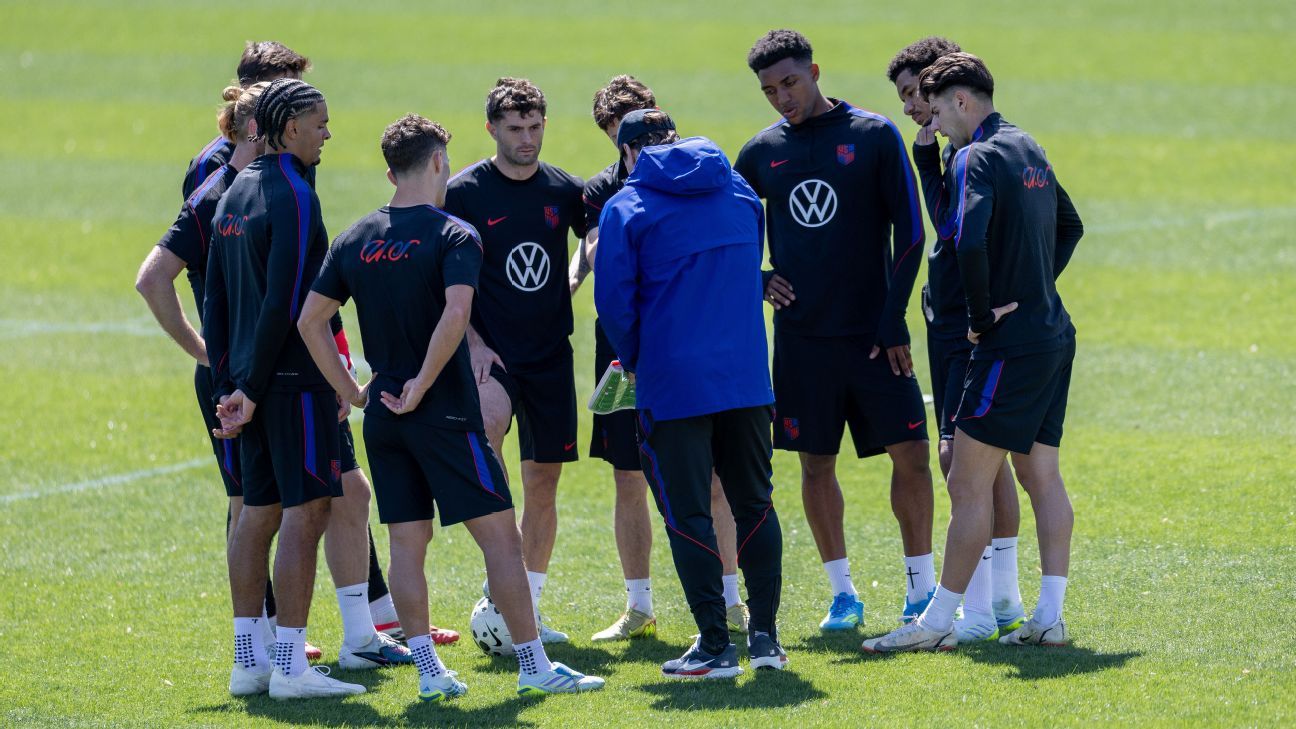
“It’s like an outdoor meeting space where we can gradually provide information. It’s an opportunity to reinforce positive actions or make necessary adjustments,” Patel added. “We can do this in real-time.”
However, their duties extend far beyond just piloting drones. For Patel and her team of performance analysts, a critical responsibility is preparing for opponents. Employing video and data, they create comprehensive profiles of upcoming rivals. These analyses highlight strengths and weaknesses, key players, and potential advantages for the U.S. game model.
To ensure players don’t have to sift through hours of footage, Patel and her team curate a concise playlist, effectively telling “the players a little bit of a story” around each opponent. This narrative is supported by a wealth of information, which is where Sam Gregory, director of data analytics, comes in.
“Our department essentially manages all aspects of data related to sports,” he said. “This includes tactical analysis, opponent preparation, performance evaluation, and anything related to physical performance on the field.”
Working in sync, their primary goal remains to keep players and coaches informed without overwhelming them. On match days, they provide reminders of objectives and highlight clips from training, along with motivational footage before players step onto the pitch.
“These videos might not always be purely motivational. They aim to convey emotions and messages that connect players to the significance of not just the game, but also what it means to wear the shirt and represent the crest,” Patel stated.
For club and country
The dynamics shift when you transition from club to national team analysis. “At the federation level, the player pool is limited. You’re constrained in the number of players you can assess,” Heaps commented on scouting and talent identification. “However, this focus can be an advantage, as club recruitment can become overwhelming due to the multitude of leagues and players.”
“One of the challenges in data and analytics is narrowing down the vast amount of information,” he added.
Gregory, who previously worked as an analyst for Inter Miami CF, echoed this sentiment regarding player scouting.
“In the club environment, we usually defined a specific profile we were looking for—like a right back with certain qualities—and would research all available options across the world, bringing back a list of players. However, in preparing for the World Cup roster, I won’t introduce a player to Mauricio who isn’t already on his radar.”
Instead, the focus is more technical: How can the current American players perform in various contexts? What are they excelling at within their clubs? What unique talents can they contribute to U.S. Soccer in their designated roles?
“At the club level, the options are practically limitless,” Gregory remarked.
Diving into data introduces unique challenges as well. “In a club context, analyzing performance data is generally more manageable,” Heaps stated. “However, internationally, the data can be inconsistent due to a smaller pool of games played.”
In a recent year, for example, the USMNT played 18 competitive matches, while Heaps’ San Diego FC participated in over double that at 44, not including preseason friendlies. This reality emphasizes the importance of collaboration with clubs to gather information and develop a strategic framework for USMNT players.
“We are increasingly focusing on club-country collaboration, ensuring each player has a tailored development plan,” Patel explained.
Gregory highlighted a practical example of this collaboration through data exchanges. “Players will share their performance data from the weeks before they join the national camp, while clubs provide us with training load information on those players,” he said. “In turn, we share our training load data from the national environment back with the clubs.”
Players are also intrigued by this information. Though no specific names were mentioned, Gregory indicated that players sometimes approach him during camps with inquiries about their data. “The worst thing we can do as analysts is force players to engage with this data. Thankfully, we have many who genuinely care and are eager to learn,” he noted.
‘The U.S. Way’ and what lies ahead for the World Cup
With all of this information at their fingertips, does this mean the analysts are in control of the USMNT’s strategies?
“I would never go to Mauricio and dictate how the team should play; he has a much deeper understanding of this,” Gregory emphasized, clarifying that the manager retains the final say. “Our focus is on ensuring that coaches have access to the necessary data.”
Rather, Gregory, Patel, and the team’s analysts serve as supportive guides for both the USMNT and the broader U.S. Soccer structure.
“In supporting the men’s national team, our approach is consistent with how we assist other teams in the federation,” Gregory explained. “While the senior level receives greater attention, we strive for uniformity across all levels.”
This philosophy positions senior national teams within a broader context. When assessing data annually, analysts examine significant trends and insights from youth competitions to shape the overarching “U.S. Way,” a unifying approach for the entire U.S. Soccer ecosystem.
“While this pertains to the men’s national team, I perceive these inquiries as larger federation-wide considerations,” Gregory reflected. “My aim is for us to leverage this insight to enhance our playing style across all U.S. Soccer levels—not solely within the men’s national team.”
As the countdown to the World Cup continues, Patel declined to disclose the full extent of the analytical team assisting the USMNT this summer, but she assured that a robust group will support them. “We aim to unify the federation. The tournament being hosted here presents a valuable opportunity,” she concluded. “We will have additional head coaches contributing to opposition preparation, along with analysts who will help compile videos and data.”
Whether perched high in the stands or engaged in behind-the-scenes analysis, the journey towards the USMNT’s June 12 tournament opener is well underway. “Our objective is to serve as a strong support engine,” Gregory said. “If we perform our job effectively, we will be the most prepared team heading into the World Cup.”