



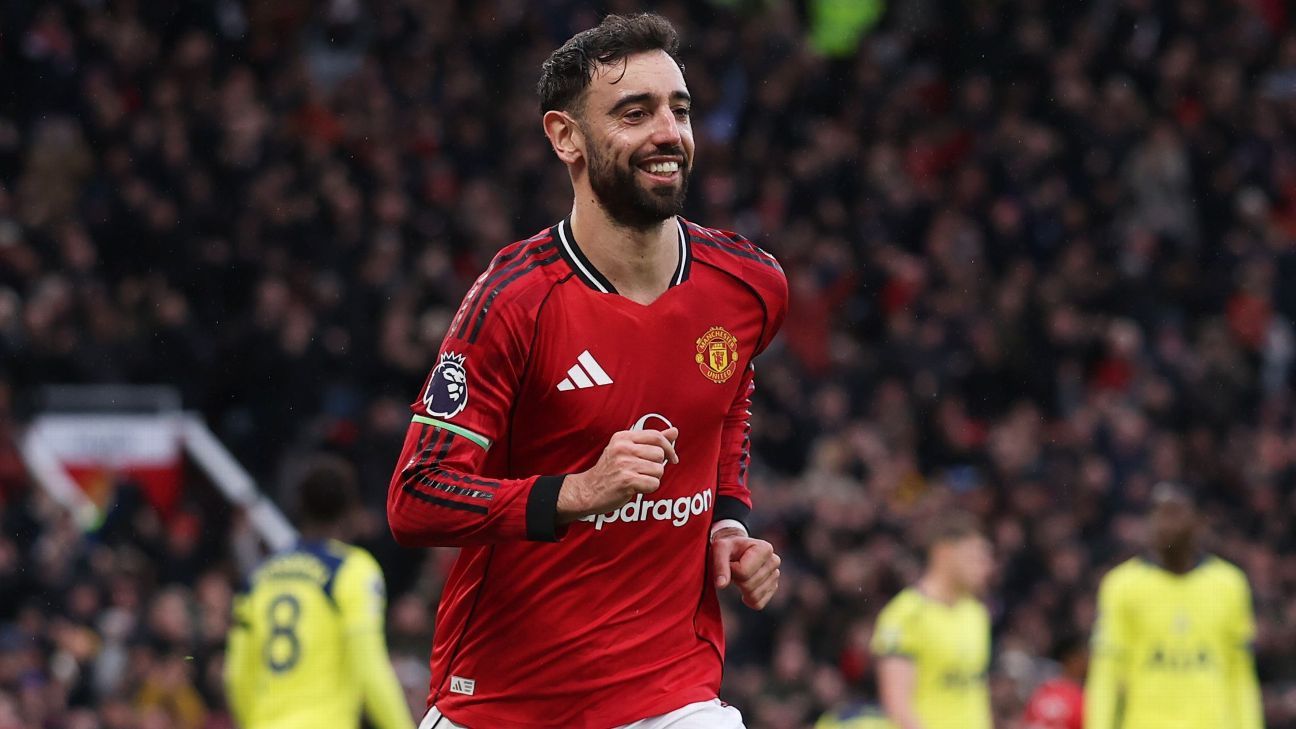
The influence of Bruno Fernandes on Manchester United since his arrival is undeniable. His performance in the March fixtures against Crystal Palace and Aston Villa exemplifies this impact. Both teams aimed to congest the midfield, but Fernandes turned the tide by contributing a goal and three assists in those matches. Some players seem to instinctively know what to do and are unafraid to act.
Coming onto the Premier League radar as a January acquisition in 2020, Fernandes was instrumental in securing United a spot in the UEFA Champions League by accumulating 15 goals and assists in just 14 matches. Under current manager Michael Carrick, he has continued to improve, consistently providing a reliable source of inspiration in challenging times, regardless of the turmoil in the management or locker room dynamics. Even during the difficult mid-season period under Ruben Amorim in 2024-25, he astonishingly managed to amass 19 goals and assists in the league.
A widely discussed notion is that some players excel away from the intense pressure of Old Trafford; look at Scott McTominay‘s development at Napoli or Antony‘s success at Real Betis. In contrast, Fernandes has always embraced that pressure, adapting to be whatever United requires.
– A big summer awaits Man United, with a focus on transfers
– The impact of missing Champions League on Premier League teams
– Harry Maguire’s journey: From struggles at Man United to a new deal
Fernandes’ 2025-26 season showcases two distinct roles: one under former coach Ruben Amorim and another under Carrick. The blend of these experiences has resulted in a Player of the Year-worthy campaign for him. No one anticipated United would perform so well under Carrick, and it’s no surprise that Fernandes’ personal-best season—a league-leading 16 assists—has coincided with his return to his preferred position, positively influencing the team’s performance.
Watching Fernandes in this rejuvenated Manchester United is a delight. Let’s explore how his role has transformed this season, why he might be at the pinnacle of his abilities, and why he merits the Player of the Year award.
Fernandes’ Transformation in 2025-26
Among the remnants of Amorim’s tenure may be the revelation of Fernandes’ adaptability as a deeper central midfielder in the “regista” role, consequently enhancing his overall game.
In this position, akin to how former Real Madrid midfielder Toni Kroos excelled, Fernandes was tasked with game management, tempo regulation, and initiating offensive plays rather than finishing them. This role blended his capacity to create significant opportunities with a new calmness and understanding of tempo.
However, positioning Fernandes deeper sometimes felt like underutilizing his exceptional creative talent. While he could deliver passes and locate forwards, none matched his instinct for making the right decisions in the final third.
Since returning to his natural position under Carrick, Fernandes has recorded six open-play assists, in contrast to just two during Amorim’s era. This indicates that the tactical adjustment has revitalized United by allowing Fernandes to perform what he excels at: generating chances from the run of play, something few players can do as well. A more stable midfield combination behind him, featuring Casemiro and Kobbie Mainoo, has also aided this transformation.
Under Carrick’s guidance, United operates as a “forward-first” outfit, focusing on outscoring their rivals with a wealth of attacking prowess.
During Amorim’s tenure, there were multiple games in which United struggled to penetrate well-organized defenses, reminiscent of the Europa League final or matches against a determined 10-man Everton. Thus, the decision to utilize Fernandes as a central midfielder seemed perplexing.
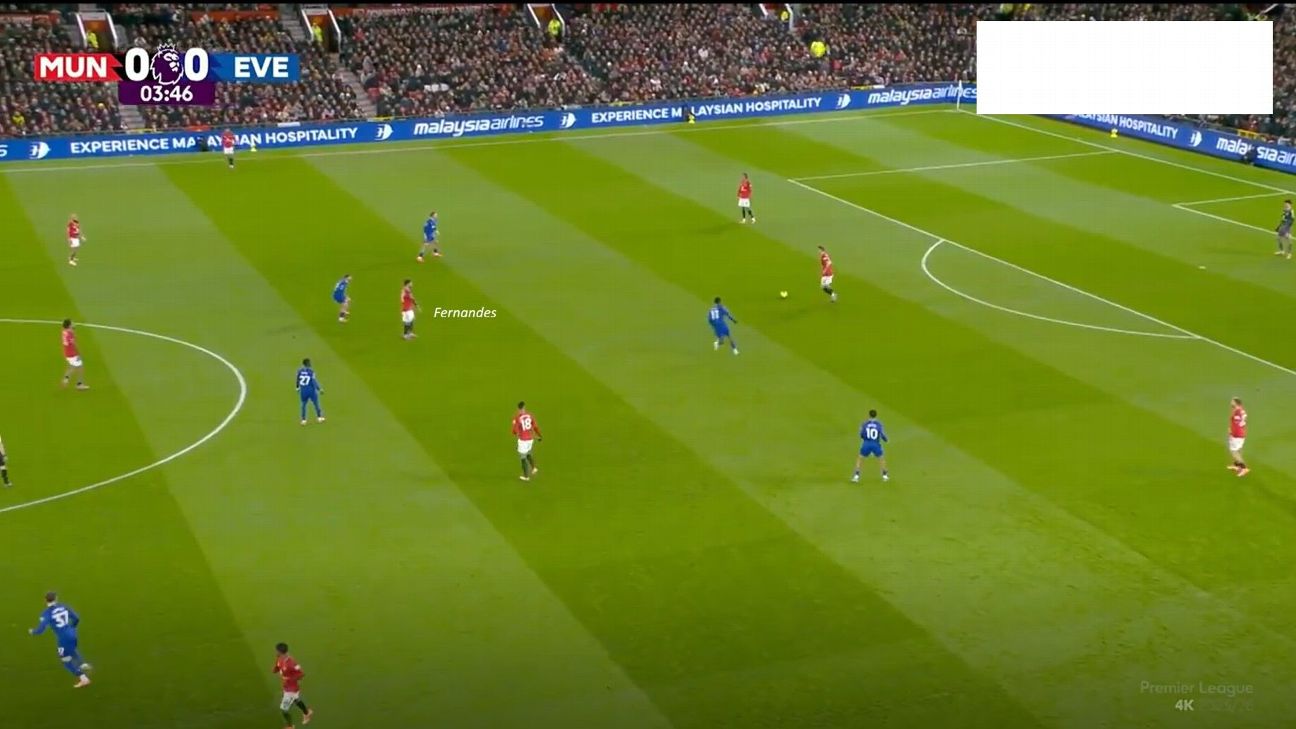
When Fernandes finds himself in scenarios like the one shown above, he often faces too much defensive pressure from Everton’s midfielders.
In contrast, his more advanced role against Bournemouth since Carrick arrived has proven effective. Even in congested spaces, Fernandes draws defenders, freeing up other attackers. His positioning is crucial, as he can utilize his quick thinking to deliver passes to teammates. Playing deeper increases the risk of losing possession near his own goal.
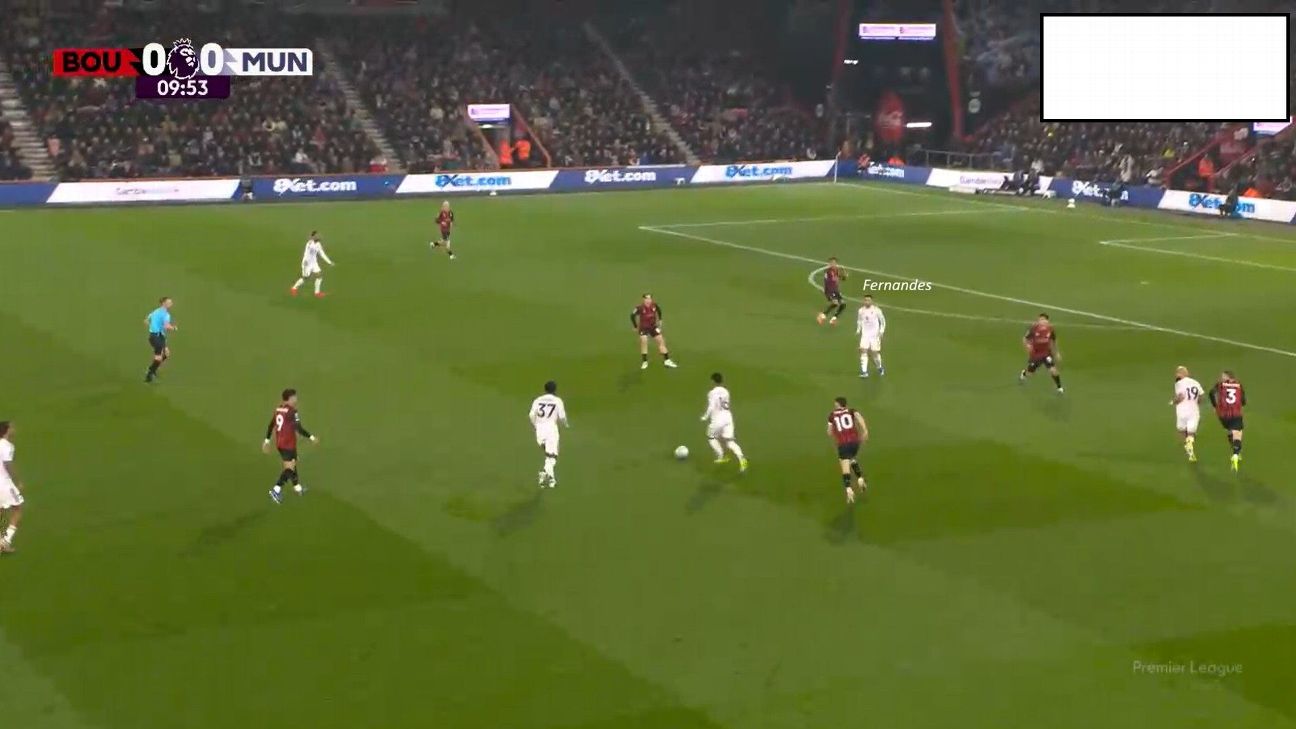
Could Amorim have pushed him higher up the pitch? Yes, but throughout the season, he made minimal adjustments to his 3-4-3 formation, primarily attempting to play more directly and focus on second balls, which did not align with Fernandes’ skill set.
Alongside Bryan Mbeumo, Matheus Cunha, and Fernandes in attack, the dynamic rotations among these forwards afford Fernandes the “free” role he thrives in.
The nature of his assists under Carrick reveals a common theme—he often finds Cunha behind the defense from wide areas.
This illustrates his unique abilities as opponents tend to underestimate him due to his positioning, thinking he’s far from the goal. This perception can lead to mismatches, as defenders hesitate to close him down in those awkward spaces.
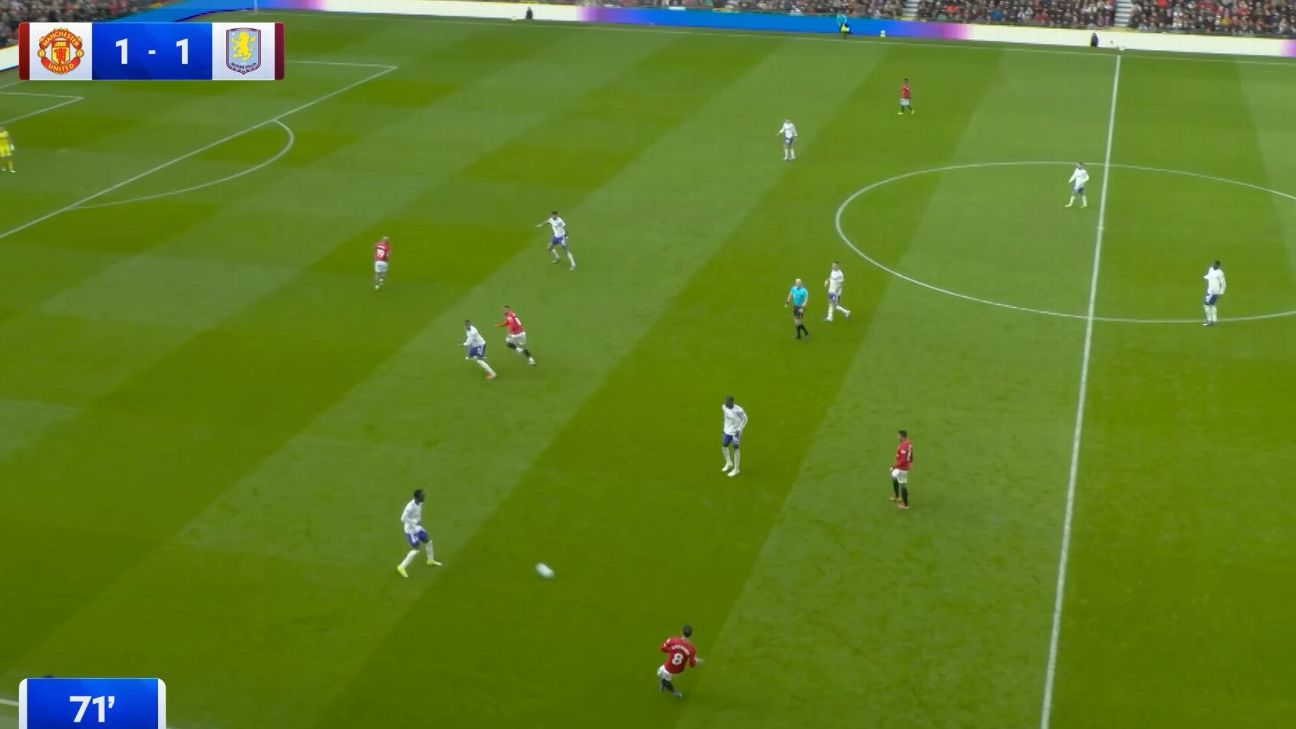
Even as Fernandes navigates through defenders, he remains undeterred in creating opportunities. When positioned further up the pitch, United benefits from his knack for unlocking moments of brilliance.
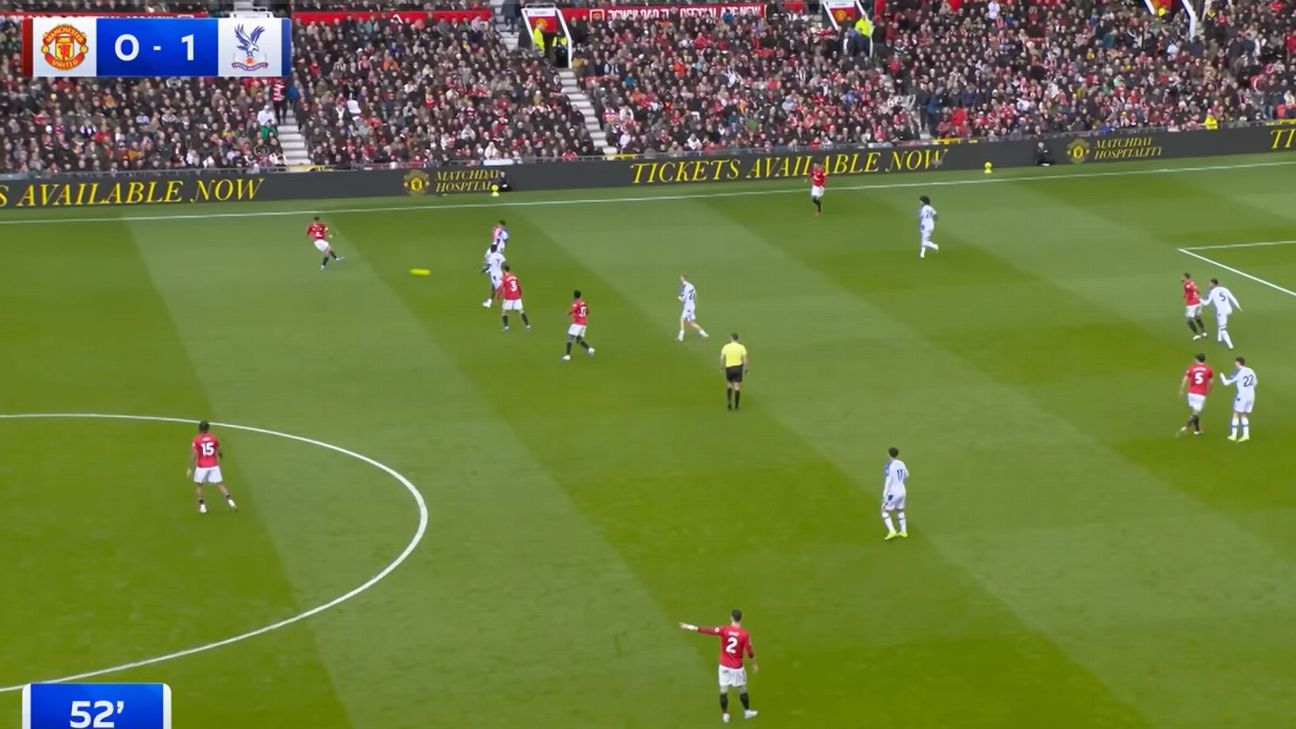
Previously, in his own half, he might have opted for a quick pass; now, following his experience in a deeper role, he’s more inclined to either pass wide or take an extra moment to maintain possession.
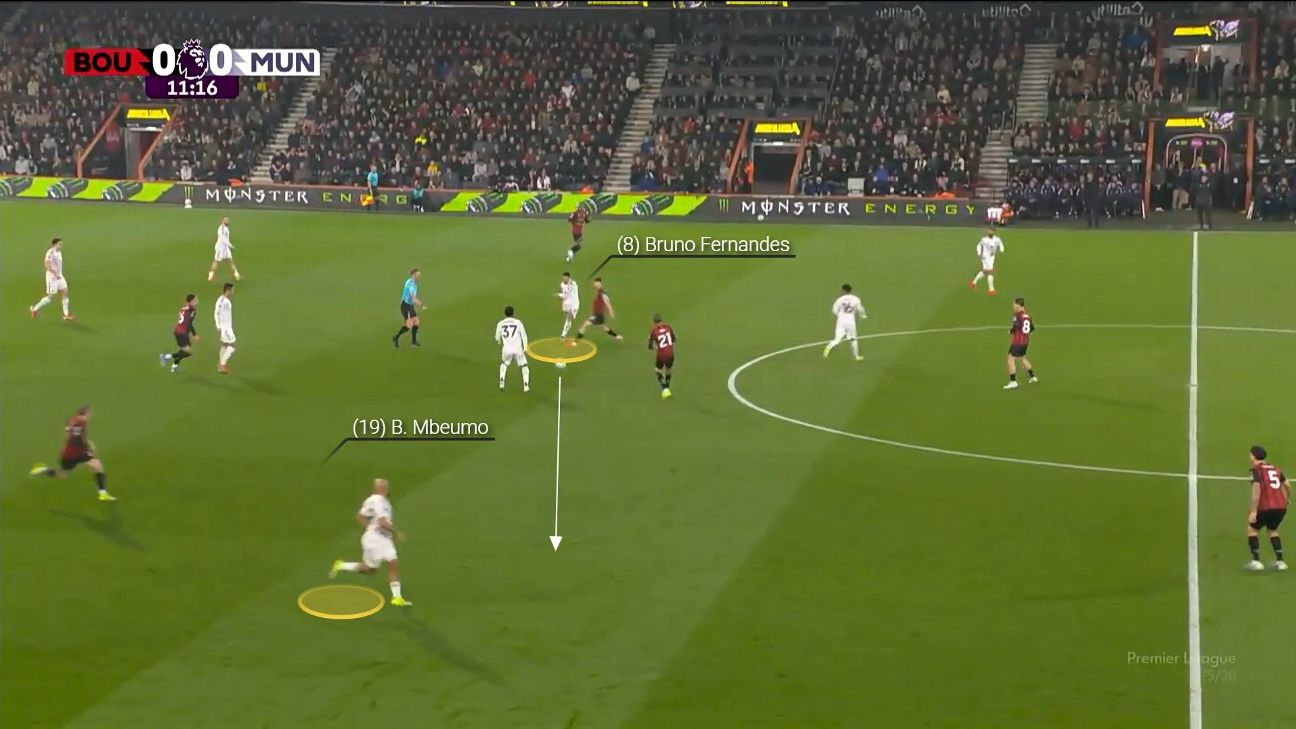
His development is evident, showcasing maturity gleaned from performing in both deeper and more advanced positions.
Why Fernandes Should Win Player of the Year
Understanding his evolution this season prompts us to reflect on his growth over the years. Is this his finest hour?
Statistically, it certainly seems so (per Opta).
He’s generating a career-best average of 1.3 big chances per 90 minutes, alongside 4.5 chances each game. This season also sees him achieving the highest percentage of successful passes into the final third, surpassing even his time under Ole Gunnar Solskjaer (2019-2021), which saw him record 45 goals and assists.
Interestingly, Fernandes is delivering more passes than ever into the box while experiencing his fewest touches since joining the club. With Cunha, Mbeumo, and Benjamin Sesko carrying more goal-scoring responsibility, this development makes sense.
He maintains a high volume of forward passes while achieving the most through balls of his career. The decrease in touches within the opposition box concurrent with an increase in assists per 90 (0.59) signifies that Fernandes is now supported by an attack he can effectively service.
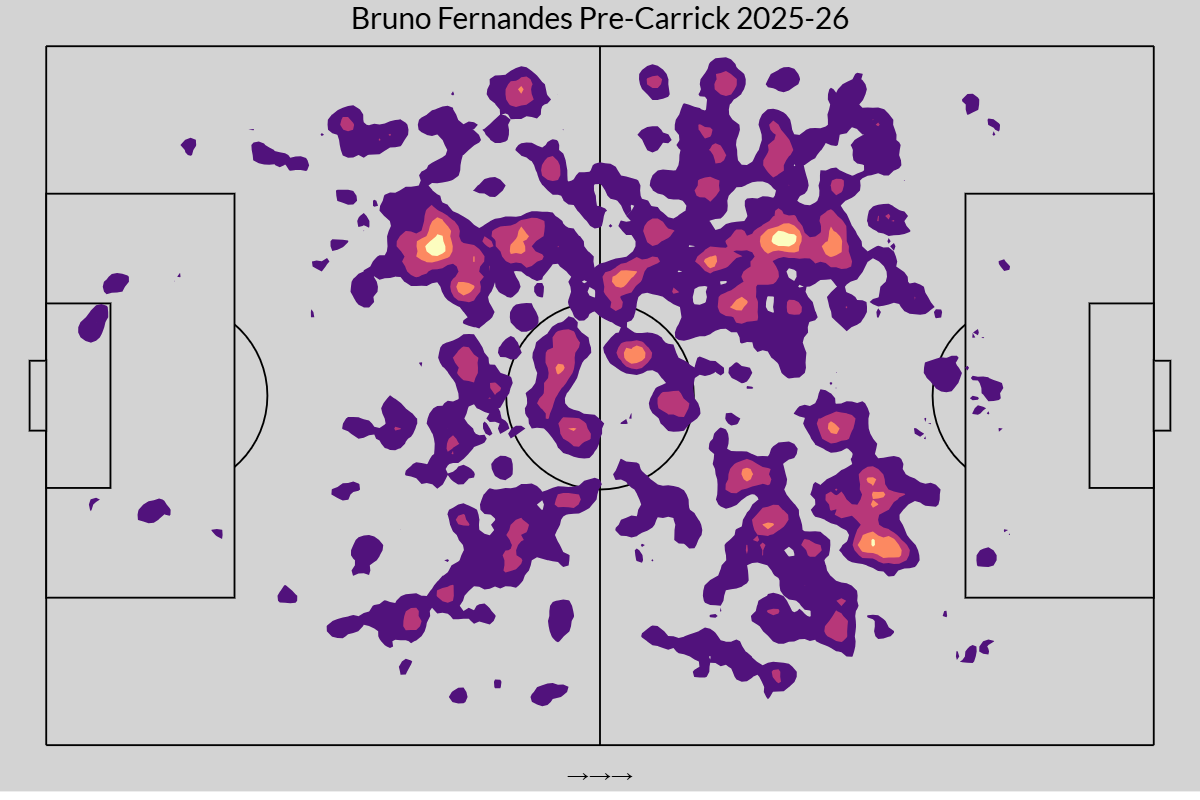
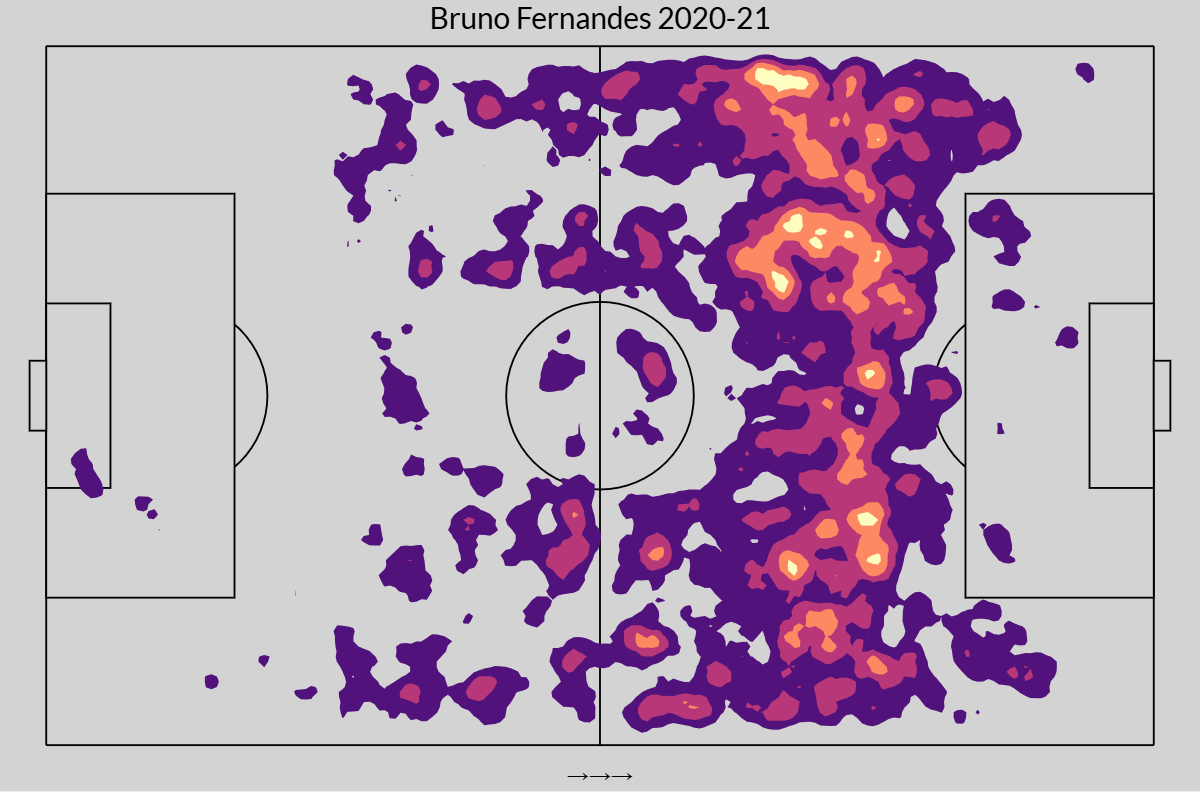
Predictably, his heatmap prior to Carrick’s appointment displayed a disorganized pattern.
Under Carrick, Fernandez’s favored attacking zones shine bright on the heatmap.
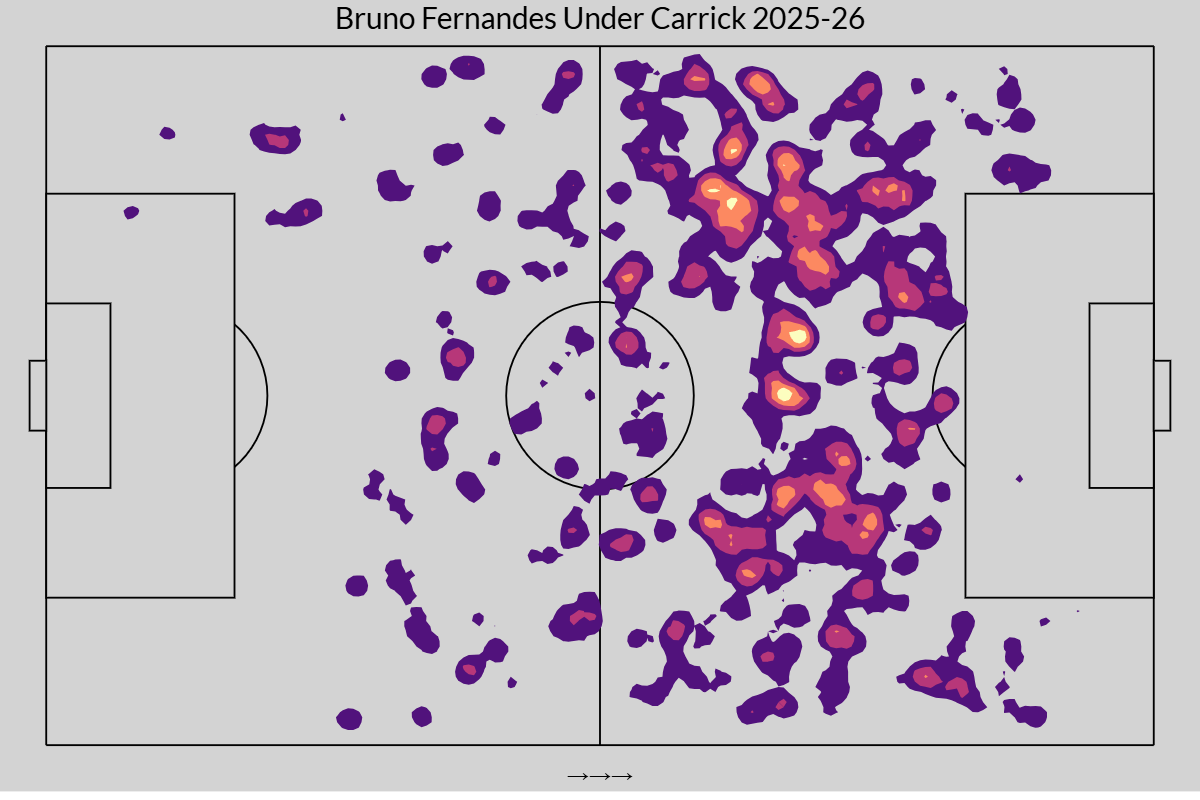
This pattern illustrates his tendency to drift left or right, adept at finding a forward in a prime scoring position—reminiscent of his standout season in 2020-21.
How does Fernandes measure up against other Player of the Year contenders? A comparison with notable players such as Dominik Szoboszlai, Declan Rice, and Martín Zubimendi showcases why Fernandes is a deserving candidate.
In terms of forward passes, opportunities created, and passes made into the box, Fernandes firmly leads the way. Only Manchester City‘s Rayan Cherki comes close to matching Fernandes’s creative statistics, but Cherki has seen only limited action, playing beyond 60 minutes in just 10 matches this season—well below Fernandes’ total minutes. Cherki’s contributions are also primarily from a right-wing position, limiting his involvement in build-up play compared to Fernandes.
It’s noteworthy that Fernandes was positioned further from the goal until Carrick’s arrival in January. Even after that, he has averaged more touches within the opposition box and more final third passes than his rivals.
The statistics highlight Fernandes at the peak of his creative prowess: generating more and higher quality chances than ever while improving his efficiency. He has become the linchpin of United’s dynamic attack.
Fernandes has consistently been a match-altering presence, undeterred by the occasion. Now, he also possesses the refined skill to control his striking precision. A little feint, a quick step-over, and in the blink of an eye, he creates space for a perfectly threaded pass.
He used to have a few “off” matches during a season, yet this newfound composure in his creative output has elevated him to be the standout performer in most of United’s fixtures.
The current season has shown that he can impact the game from various positions on the pitch, reinforcing why he is a prime candidate for Player of the Year.