




Football is facing a divisive issue reminiscent of generational disagreements, highlighted recently by the grim image of a former Tottenham and Germany player writhing on the ground in pain from a deep leg gash. This incident could challenge the prevailing trend towards smaller shin guards.
Traditionally, shin guards were substantial, often extending up to 9 inches in length, made from foam or rubber encased in a hard plastic shell. However, a growing number of players have opted for minimal protection, wearing only small foam pieces beneath their socks. It appears that a significant injury may be necessary to prompt a re-evaluation of this trend.
The injury to Lewis Holtby while playing for Dutch club NAC Breda against Fortuna Sittard in the Eredivisie on April 12, has seemingly concluded the season for the 35-year-old. The severity of the wound incurred from a challenge has ignited a debate regarding the adequacy of Holtby’s shin guards.
Breda’s coach, Carl Hoefkens, expressed frustration after the match, asserting, “I think it’s absurd that the referee [Jeroen Manschot] commented on it. In the tunnel, Manschot suggested Holtby should wear better shin guards. The referees check these items before the match, so they share responsibility too.”
La aparatosa lesión de Lewis Holtby este fin de semana. 😬
Vía ESPNnl/X pic.twitter.com/WgHl4PL5xo
— ESPN Deportes (@ESPNDeportes) April 14, 2026
Breda defender Denis Odoi commented on Holtby’s use of “small shin guards” and remarked, “You’re never too old to learn,” suggesting that perhaps players should reconsider wearing proper protection. ESPN NL analyst and former Ajax and PSV Eindhoven winger Kenneth Perez took a more critical stance.
“Players are opting for these tiny shin pads, almost like toilet paper, just to check the box,” Perez stated. “I have no sympathy for those who suffer injuries due to this choice.
“Clubs can simply mandate that their players wear proper shin guards.”
During high-level matches this season, many players display rolled-down socks that barely conceal their minimal shin guards. Everton‘s Jack Grealish and Tyler Dibling wear theirs low, while others prefer shin guards only half the size of a cellphone, such as Burnley midfielder Marcus Edwards, who recently played against West Ham. Arsenal forward Bukayo Saka has also expressed his preference for smaller shin guards, stating, “I prefer them; bulky pads aren’t for me.” On the other hand, Liverpool defender Virgil van Dijk takes a more cautious view regarding leg protection.
“If you get kicked on your shin while wearing shin pads the size of an AirPod, that’s obviously a significant concern,” Van Dijk noted.
Brighton forward Danny Welbeck revealed that younger teammates tease him for his traditional shin guards, saying, “They call me ‘Your shinnies are massive,'” but he believes in prioritizing safety. Similarly, Fulham winger Alex Iwobi favors lightweight guards because “I prefer not to have something heavy on my shins.”
Former England and Liverpool striker Peter Crouch has frequently discussed shin guard safety on his podcast, humorously branded “Make Shin Pads Great Again.” Fulham midfielder Harry Wilson mentioned that some teammates resort to using sponge cut from the physio’s supplies as makeshift protection.
If a prominent player suffers a significant injury due to inadequate shin guards—especially one that sidelines them from major competitions like the World Cup—the discourse about the decline of protective equipment will likely intensify.
The shift toward smaller shin guards—and away from the more protective, larger designs—is influenced by various factors. These include the evolution of the game, which has become less physical with fewer tackles, and players’ desire for a lighter feel to enhance their speed. Additionally, a change in the Laws of the Game in July 2024 placed the onus on players rather than match officials regarding shin guard size and protection.
Previously, referees were responsible for enforcing these rules, but players and clubs often disregarded them, leading to criticism aimed at referees, sometimes even resulting in legal action following player injuries. The Law now states that players must wear shin guards that are “covered entirely by the socks, made of suitable material (rubber, plastic, or similar substances), and provide a reasonable degree of protection,” but it lacks specific size requirements.
“We revised the Law because it is unfeasible to mandate a specific size for shin pads,” explained David Elleray, IFAB technical director and former Premier League referee. “Now the responsibility lies with the players to choose the level of protection they believe is suitable.
“We faced legal challenges when referees approved a shin guard, and then an injury occurred. By placing the responsibility on players, coaches, and, for younger athletes, their parents, we aim to encourage accountability.”
The shift in regulations has resulted in players prioritizing speed and aesthetics—many find larger shin pads cumbersome—over safety. Elleray admits the outcome has not necessarily fostered a responsible mindset among players and clubs.
“We hoped for a responsible approach from players, but some recent choices, like Marcus Edwards’ minimal padding, resemble something akin to a Band-Aid,” Elleray said. “The pressure must shift to players, coaches, and clubs to ensure adequate protection is in place because legislation can’t cover all scenarios.”
Pierluigi Collina, former head of FIFA referees’ committee, has called on players to choose shin guards with an eye toward their safety. “Ultimately, the shin pad regulations are designed for their protection,” Collina said, urging players to prioritize their own well-being.
Despite the alarming nature of Holtby’s injury, it garnered attention partly because such incidents are uncommon today. Severe cuts and fractures occur less often, with muscle tears and ligament injuries being more prevalent in today’s game.
Proponents of smaller shin guards argue that significant impact injuries have become less frequent, a point that may hold water. Notably, in a recent instance, Liverpool’s Alexander Isak suffered a leg fracture while wearing small—though not minimal—shin guards during a challenge against Tottenham’s Micky van de Ven. However, it’s difficult to claim that larger shin guards would have mitigated the severity of Isak’s injury.
Sources within the Professional Footballers’ Association (PFA) indicate that “safety decisions are primarily made by players in collaboration with their clubs and medical teams,” asserting that players have varying preferences regarding the shape and size of their shin pads. Currently, there is no movement within the sport pushing players to reconsider their shin guard choices.
Footballing preferences have indeed evolved since the era of bulky shin guards. The popular Umbro Armadillo from the early 2000s was a large plastic model complete with ankle protection, often worn by stars like Michael Owen and Alan Shearer. Likewise, Brazilian forward Ronaldo opted for Nike’s T90 model, both of which were significantly more substantial than today’s favored designs.
Modern young players lean towards smaller, lighter shin pads, a trend that prompted two brothers—Kaizer Chiefs midfielder Ethan Chislett and Zack, who plays for UAE-based Palm City—to create their Joga line of shin guards, which are smaller and lighter than traditional models. The Joga Shinpad Sleeve, utilized by Chelsea‘s João Pedro, consists of a soft pad about the size of a smartphone, fitted within a fabric sleeve for added concealment. Everton’s Grealish opts for Joga’s Breathe pads, measuring just 6cm x 10cm (2 inches x 4 inches).
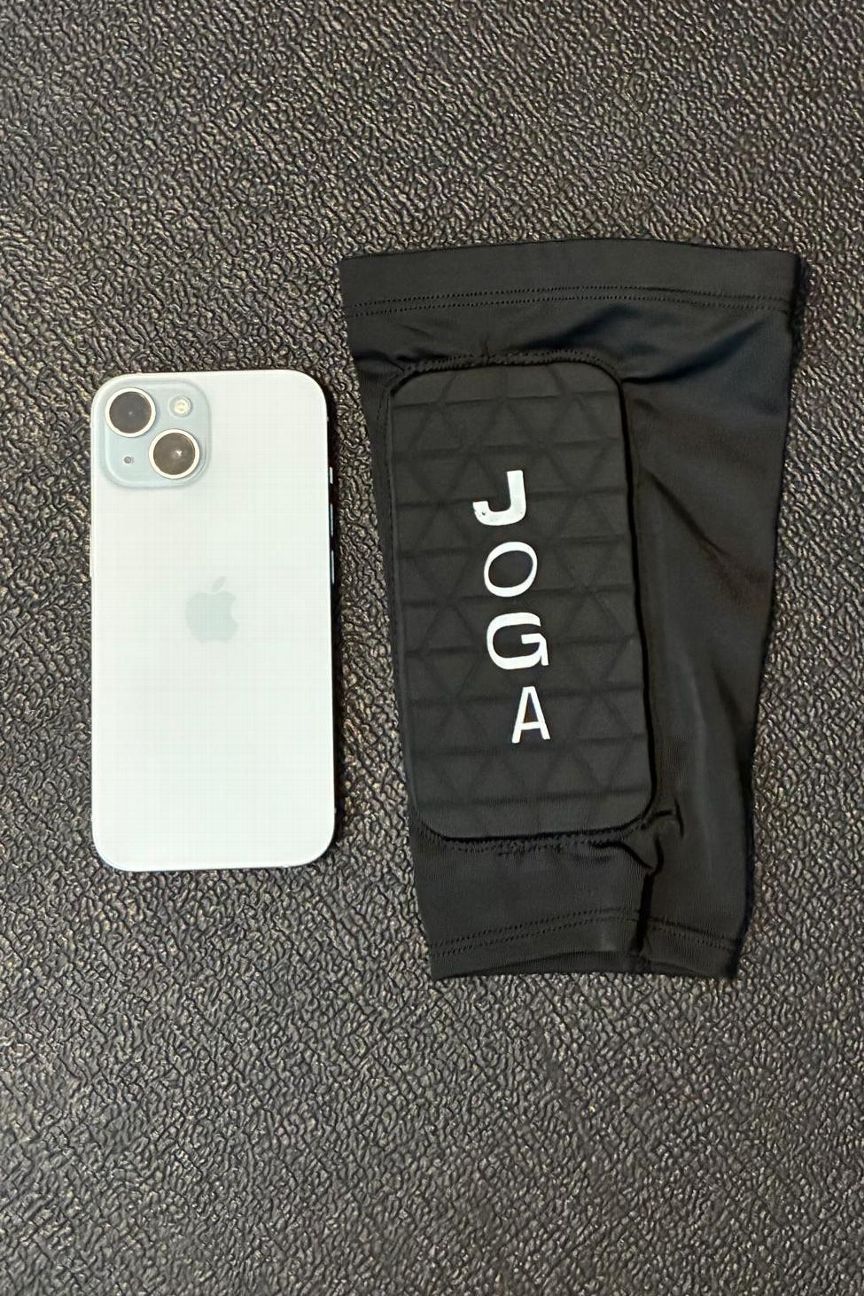
“We were the pioneers in creating a mini shin pad that was commercially available,” Zack Chislett shared with ESPN. “At that time, I was playing non-league football, while Ethan was at AFC Wimbledon, and we observed the trend towards smaller pads without any viable purchasing options. Clearly, the market demanded it.”
But what drives young players to prefer less protective shin guards?
“When you’ve trained all week without shin pads and then wear clunky ones with ankle protection on match day, it feels unnatural,” Zack observed. “While some players appreciate bigger pads, many younger, more attacking players prefer not to feel encumbered while playing.
“The game has definitely changed; tackles aren’t as fierce, and the physicality has decreased significantly. As a 23-year-old, my peers and I simply don’t want to wear oversized shin pads—it’s akin to wearing outdated leather boots. It’s just not going to happen.”
Players like Welbeck and Van Dijk are increasingly overshadowed by younger stars such as Saka, Iwobi, Grealish, and Joao Pedro regarding shin pad choices and protective equipment.
Holtby’s injury may prompt a reconsideration of the risks associated with inadequate protection, and a high-profile incident during this summer’s World Cup could push FIFA to enforce stricter regulations regarding player equipment. However, for the moment, players continue to prioritize speed and mobility, leading to a trend of increasingly smaller shin pads.