



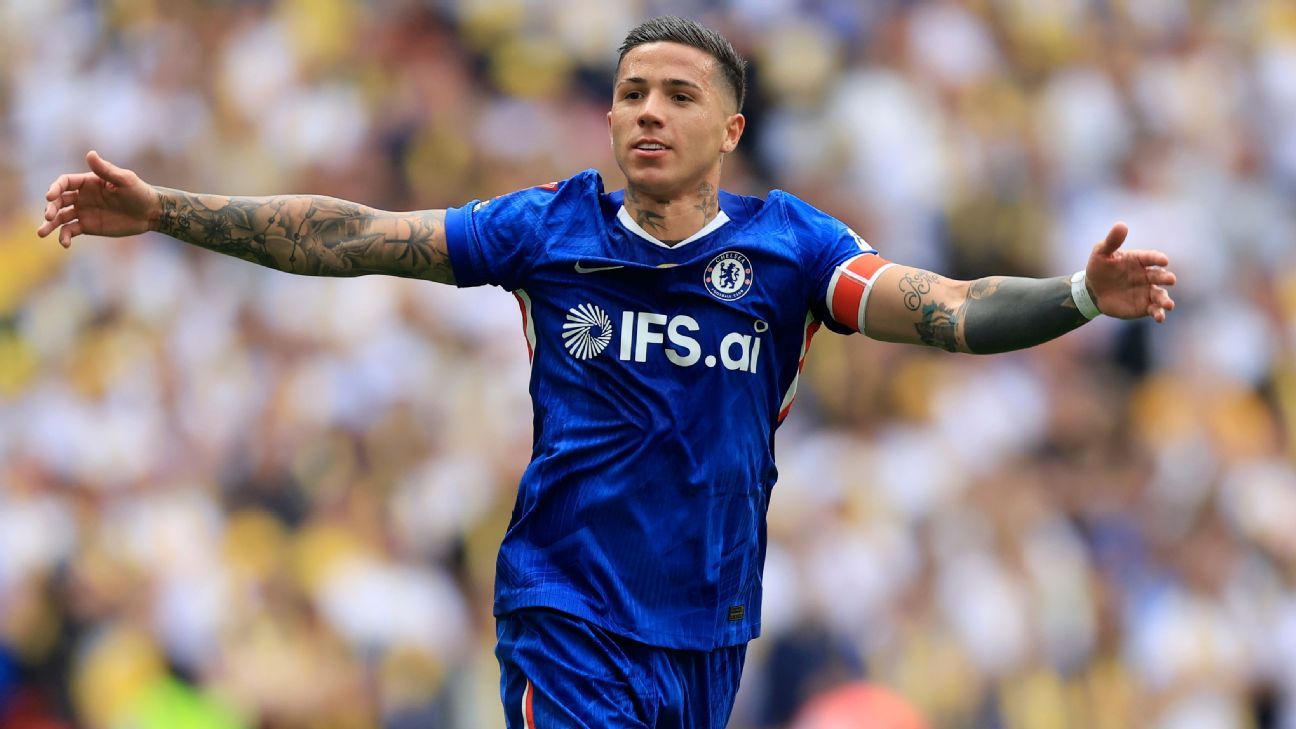
It was undoubtedly Enzo Fernández. No player represented Liam Rosenior’s disastrous three-month tenure as Chelsea manager quite like the Argentine midfielder, so it’s fitting that he emerged as the match-winner and driving force propelling the club to the FA Cup final.
A manifestation of one manager’s misfortune and another’s fortune, Fernández’s first-half goal secured interim coach Calum McFarlane a place in the cup final.
“What stands out about him [Fernández] is his fighting spirit,” McFarlane remarked. “Even when the game plan isn’t flawless, his willingness to run and compete can be the key difference.”
Rosenior, who was dismissed on Wednesday after just 106 days at the helm, might find that observation quite ironic.
It’s uncertain whether he caught glimpses of his former team defeating Leeds United in the semifinal, setting up a showdown with Pep Guardiola’s Manchester City next month. However, if he did, he likely wouldn’t recognize the performances of several former players during their 1-0 victory at Wembley.
At the top of that list is Enzo, the £106 million World Cup-winning midfielder who encapsulates both the immense potential and the frustrations of Chelsea’s lavishly assembled squad. He can be brilliant one moment and indifferent the next, often fading when the pressure mounts.
Rosenior struggled to alter that perception, and nobody likely exasperated him more than Fernández—a player whose standout qualities have sparked speculation about a possible summer transfer to Real Madrid or City.
Although the former Benfica star rarely exhibited the form expected of a Madrid or City player under Rosenior, he certainly did against Leeds in Chelsea’s first match since McFarlane took over as interim coach.
Rosenior’s decision to suspend Fernández for two games—against Port Vale and City—due to comments about a potential move to Madrid, as well as criticisms about Enzo Maresca’s sacking, only underscored his difficulties in maximizing his star midfielder’s potential.
However, much like his teammates, Fernández also fell short under Rosenior, both in terms of performance and attitude.
An unfortunate five-match Premier League losing streak, during which Chelsea failed to score, effectively extinguished their Champions League hopes and ultimately led to Rosenior’s departure. Yet Fernández, along with Cole Palmer, Marc Cucurella, João Pedro, and goalkeeper Robert Sánchez, all contributed to extending that dismal period.
This streak showcased Chelsea’s worst qualities—petulance, inexperience, and a lack of cohesion—yet they are undeniably a squad brimming with talent, as they demonstrated against Leeds.
Fernández was the most pivotal figure on the pitch. His 23rd-minute goal—a header from Pedro Neto’s cross—secured the victory, while Sánchez made crucial saves to maintain the clean sheet. However, Fernández’s contribution went beyond just scoring.
He dominated the midfield with his technical ability and tenacity, donned the captain’s armband, and played like the leader Rosenior’s team desperately needed.
Throughout Rosenior’s tenure (apart from those two matches suspended), Fernández failed to take on that leadership role, but under McFarlane, he stepped up.
While McFarlane was directing from the sidelines, it was Fernández who truly commanded the game.
This became apparent in the second half when he signaled to goalkeeper Sánchez to go down for treatment, allowing Chelsea to regroup and adapt their strategy after Leeds coach Daniel Farke shifted formations from a back three to a back four.
Fernández recognized the challenges his team faced adapting to Leeds’ new setup and took charge as any player of his caliber should—a stark contrast to his performance during Rosenior’s brief reign.
Chelsea’s ownership group, BlueCo, along with their five—yes, five!—sporting directors, opted to part ways with Rosenior last week in a desperate bid to salvage their season, and advancing to the FA Cup final will be seen as validation for this decision.
Whether they will be able to compete with Guardiola’s City, who are in pursuit of a domestic treble, remains to be seen, but it’s an occasion that Chelsea’s players will look forward to.
Despite their inconsistencies, they are still capable of rising to the occasion, reminiscent of the same group that defeated Paris Saint-Germain to clinch the FIFA Club World Cup last summer.
If they bring their best game, Chelsea can match up against any opponent, but a lingering question remains: when will they deliver, and when will they falter?
They certainly delivered against Leeds, with Fernández leading the way, so Guardiola may well be concerned about facing this version of Chelsea in the final.
On the other hand, if egos resurface and the players disengage, City could easily overpower Chelsea.
It’s up to McFarlane to ensure that the players perform at their peak, but as Rosenior discovered, achieving that is far more challenging than it should be.