



-

Jeff Kassouf
Multiple Authors
Shortly after Jen Millet took on the role of president for Denver Summit FC last summer, franchise owner Rob Cohen faced a pivotal question about the upcoming launch of their 2026 NWSL team. Cohen wondered: Would they be prepared, or should they delay the team’s debut?
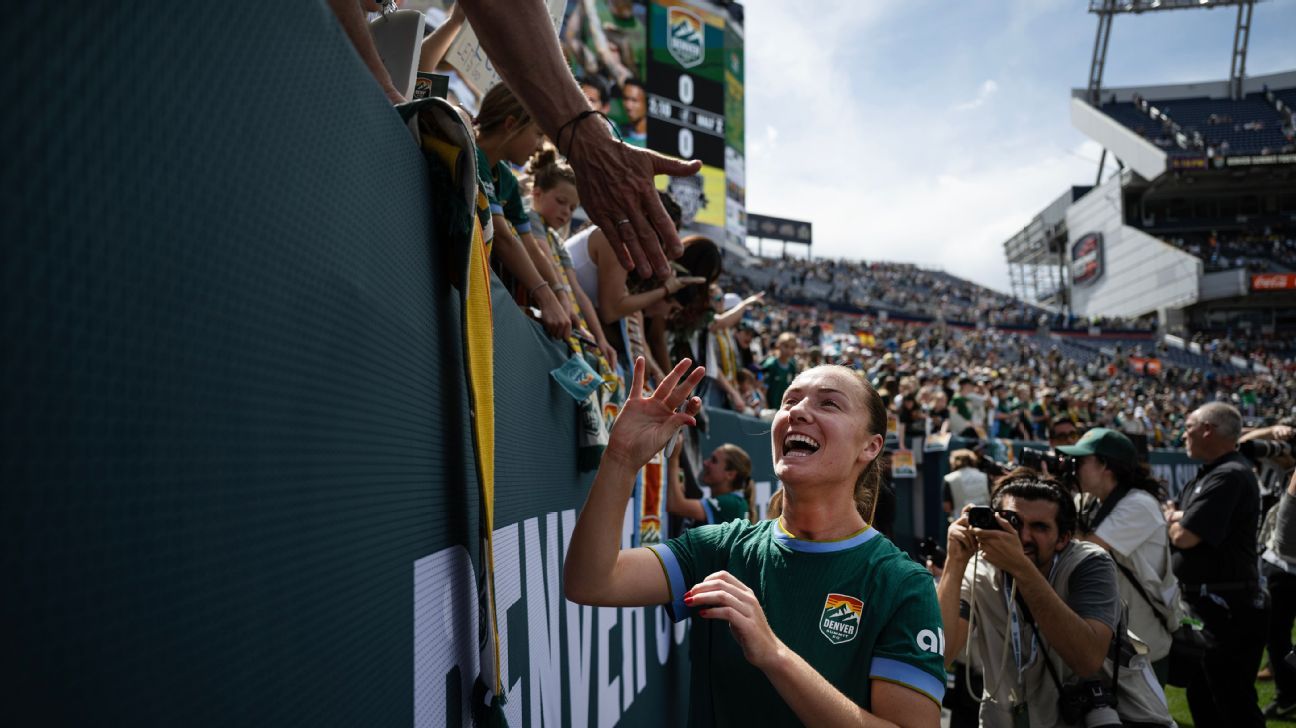
“We looked at each other and realized that the excitement around this club was palpable. The momentum was strong enough to push through any obstacles,” Millet recounted in an interview with ESPN at Empower Field at Mile High Stadium. Just a day later, a record-breaking 63,004 fans filled the stadium to witness the Summit face off against the Washington Spirit, ending in a scoreless draw.
Millet, who played a crucial role in launching Bay FC ahead of the 2024 season, emphasized that “the time was right” for a 2026 launch. Denver was officially confirmed as team No. 16 in January 2025.
In contrast, fellow expansion team for 2026, Boston Legacy FC, experienced the longest lead time in NWSL history, spanning over three years from their conditional approval in January 2023. Their journey, however, has come with more challenges.
With Denver and Boston entering the league, the NWSL has expanded to 16 teams, doubling the original eight that launched in 2013. The two sides will face off for the first time on Sunday at Gillette Stadium in Foxborough, Massachusetts, having had starkly different experiences leading up to their inaugural seasons.
Two NWSL expansion teams: One sprint, one stop-start
While Denver raced to prepare for its 2026 season, Boston’s path has been plagued with setbacks over its three-year timeline.
One notable incident was the controversial brand reveal in late 2024 when the team introduced itself as “BOS Nation FC” with a marketing campaign dubbed “Too Many Balls,” referencing male sports teams. This campaign faced widespread criticism and was promptly withdrawn, prompting a rebranding effort that included fan consultations—a process initially overlooked.
Although the rebranding to Legacy FC was effective, the franchise’s stadium issues have proven more complex. Their proposed home venue has become a focal point of local political contention, with escalating costs adding to the challenges ahead.
The Boston Legacy ownership has formed a public-private partnership with Boston Public Schools, sharing renovation expenses for the dilapidated White Stadium. While hailed as groundbreaking by both the team and NWSL commissioner Jessica Berman, it has encountered significant opposition from local advocacy groups, including a conservancy that has filed a lawsuit claiming the initiative constitutes the privatization of public parkland. Although Boston Legacy’s owners have successfully secured an initial ruling, the case is still being appealed.
Moreover, the projected budget for stadium renovations has skyrocketed over the past three years, with estimated taxpayer costs now nearly three times greater.
The renovation of White Stadium was crucial to the NWSL’s acceptance of Boston’s franchise; failure to play there in 2026 could jeopardize their league rights, according to court documents. Recently commenced vertical construction on the stadium is slated for completion in 2027, leaving the Legacy to share venues between Gillette Stadium—a 65,000-capacity NFL stadium—and Pawtucket, Rhode Island during their inaugural season.
“When we think about building infrastructure, it’s essential to have a viable interim solution that meets league standards,” Berman told ESPN in March from her New York City office. “Creating a dedicated facility, especially a stadium as compared to a training center, is inherently challenging. The Boston Legacy has navigated numerous obstacles quite capably.”
Boston’s inaugural match attracted 30,207 fans, setting a record for first home fixtures—until Denver eclipsed it two weeks later.
“Despite everything, standing here today feels like a victory,” said Legacy control owner Jennifer Epstein, whose family has past ownership ties to the Boston Celtics, after that match.
“I’m focusing on today and the celebration,” Epstein responded when asked about their challenging three years leading up to the game. “We’re achieving something significant and historic. Yes, it’s been a struggle—more challenging than expected—but I’m incredibly proud of our organization’s efforts. Today, I’m filled with pride and awe that we’ve made it to this point. We are performing in a world-class stadium.”
This year, Boston will debut a dedicated training facility south of the city, now a requirement for all NWSL expansion teams.
Denver, facing similar startup challenges but with clearer solutions, has secured a purpose-built home stadium slated for a 2028 opening, with no apparent bureaucratic hurdles to navigate as in Boston.
0:55
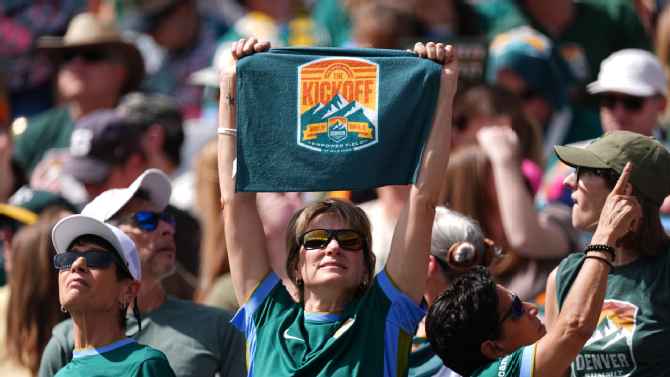
Denver Summit sets NWSL record with 63k fans
Jeff Kassouf reports on Denver breaking the league’s single-game attendance record in their inaugural home game.
Like Boston, Denver is also dealing with several temporary venues in their inaugural season. A nearly sold-out crowd of 16,932 witnessed their exciting matchup against San Diego in the team’s second home game at Dick’s Sporting Goods Park, home of MLS’s Colorado Rapids.
The Summit will return to Dick’s once more before transitioning to a temporary modular stadium located in Centennial, 15 miles south of downtown Denver, facing heavy traffic. This 12,000-seat venue’s construction was delayed due to shipping issues and tariffs, as it was built in China, disassembled, and then shipped to Colorado for reassembly. Construction on the stadium commenced in late March, adjacent to the team’s future training center and playing fields.
Denver will continue its training at this site, situated near the Denver Broncos practice facility and surrounded by industrial areas and residential buildings. The team will eventually sell portions of the stadium back to its designer, leaving a 4,000-seat space for Cherry Creek School District athletics.
The permanent stadium is expected to open in 2028 on a previously dormant site south of Denver’s vibrant arts district. Berman referred to the new venue as “the holy grail,” comprising a base of 14,500 seats and marking only the second stadium in the league and among the world’s few constructed specifically for a women’s team.
Cohen reflected on the rapid progress made, stating, “What we’ve accomplished in 15 months is almost unfathomable for a team.” He added, “Fifteen months ago, we had no staff, no performance center designs, no players, and no coaching staff. To be where we are now is nearly unbelievable.”
Different rosters, different results thus far
After Boston’s 2-0 loss to the Chicago Stars on Saturday, Denver surprisingly led 2-0 at halftime against the league’s leading San Diego Wave FC.
San Diego made a comeback, winning 3-2 in a thrilling early-season candidate for NWSL game of the year. This loss served as a harsh reminder for the Summit, though it showcased their competitive potential as an expansion team.
Denver’s roster includes experienced NWSL players, including revitalized goalkeeper Abby Smith, defender Kaleigh Kurtz, and captain Janine Sonis. Top U.S. women’s national team player and NWSL MVP from 2018, Lindsey Heaps, is set to join the team from French club OL Lyonnes this summer.
The Summit have also made significant signings, including German forward Melissa Kössler, who has scored four goals in the current season, emerging as one of the league’s standout players. The team is coached by Nick Cushing, a former winner of trophies with Manchester City women’s team who also had a stint in MLS.
Defensively, Denver has been solid but show signs of inconsistency. They held the Washington Spirit—the league’s runner-up in the last two seasons—to a scoreless draw in their historic March game at Mile High Stadium, just days after defeating the defending champions, Gotham FC. Cushing noted positive signs of competitiveness following the draw with the Spirit.
In contrast, Boston’s roster, composed mainly of international players and those with little NWSL experience, has faced a steeper welcoming.
Saturday’s defeat to Chicago marked the Legacy’s fifth consecutive loss, with only one goal scored across those matches. ESPN Global Research indicates that despite taking 27 shots and generating 2.74 expected goals against Chicago, their performance was lackluster.
Filipa Patão, who joined the Legacy after a successful spell at Benfica, has implemented an adventurous 3-5-2 formation. Certain players, like forward Aissata Traoré and veteran winger Nichele Prince, have excelled, yet the team struggles to maintain rhythm and frequently appears sluggish in transition—a hallmark of NWSL play.
Boston finally earned their first point in a 2-2 draw with the North Carolina Courage, managing to score twice after previously netting just one goal in their opening five matches. However, losing a 2-0 lead within 13 minutes dampened the overall mood.
Expansion seasons are notoriously challenging across all leagues, and both Boston and Denver are the first to navigate this process without resorting to a college or expansion draft. Their roster-building approaches vastly differ; while Denver has found early success, sitting on six points, it isn’t enough for playoff contention yet.
Can Boston and Denver sustain success?
The forthcoming actions of each team hold greater significance than their limited initial match results and any hiccups experienced during their launches.
The rapid growth of the NWSL has welcomed ambitious ownership groups eager to elevate the league. Both Boston and Denver, alongside Atlanta and Columbus by 2028, must deliver on these aspirations. Attendance at weekend home games has averaged around 10,000 in Foxborough but has struggled due to the size of the NFL stadium. In contrast, White Stadium—within Boston’s limits—could comfortably accommodate these crowds.
0:53
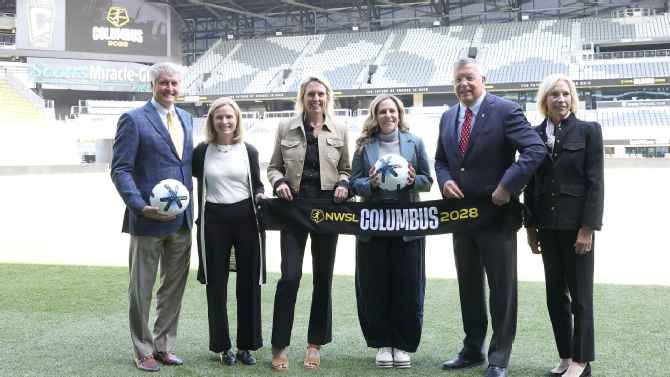
Columbus awarded latest NWSL expansion team
Jeff Kassouf reports on Columbus landing the NWSL’s 18th franchise with a record $205M expansion fee, set to join alongside Atlanta by 2028.
A spokesperson for the Boston Legacy shared with ESPN that by early April, they had surpassed 4,000 season-ticket memberships.
The Legacy aims to forge a new chapter in a city steeped in women’s soccer tradition, following the Boston Breakers, who competed in two previous professional leagues and within the NWSL before folding in January 2018 due to perennial financial issues and a lack of new ownership.
Meanwhile, Denver is welcoming its first foray into high-level women’s professional sports, and the reception has been overwhelmingly positive. They had to halt sales of season-ticket memberships at 8,200 to accommodate single-game sales at both their temporary and future home venues, with a waiting list of 7,500 individuals keen to secure season tickets as of late March.
Given the early stage of both teams’ seasons, it’s premature to draw substantial conclusions, and both clubs have considerable work ahead off the field. Boston’s initial blunders might fade, though “BOS Nation” will remain in the memory; the Legacy’s new branding has received a positive response. Successfully opening White Stadium and demonstrating that collaboration with local high school sports programs can work will be vital for the Legacy to overcome early challenges.
Denver, conversely, has quickly ingrained itself into the local sports culture, garnering awareness from their downtown offices to billboards across the city and visible “Heaps 10” jerseys on the streets. However, they need to continue gaining the community’s trust. The trajectory of San Diego, from a successful expansion in 2022 to struggles on and off the field, serves as a cautionary tale.
Already, several essential lessons have been learned. Berman mentioned that both the Legacy and the NWSL gleaned insights from the “BOS Nation” branding misstep. The league has now appointed an employee, Emma Schilling, who formerly assisted multiple expansion bidders, as a dedicated point of contact to help teams develop their sports and business operations, as well as their physical infrastructures.
“When we welcomed [Boston and Denver], at different times, we were aware of the ambitious undertaking they were embracing,” Berman stated. “This challenge has undoubtedly proven substantial. I’m proud of them and the league for setting ambitious yet attainable goals. It is a challenging, yet feasible objective.”
“Ultimately, our achievements will transform these communities and their cities for generations to come, and I’m immensely proud of that.”