



The Video Assistant Referee (VAR) generates debate week after week, whether in the Premier League, Champions League, or FA Cup. But how are these decisions made, and how accurate are they?
This season, we’ll dive into significant incidents to analyze and clarify the decision-making processes in accordance with VAR protocols and the Laws of the Game.
 Andy Davies (@andydaviesref) is a former Select Group referee with over 12 seasons on the elite list, officiating in both the Premier League and Championship. With vast experience at the highest level, he has worked within the VAR framework in the Premier League, providing valuable insights into the rationale and protocols applied during matchdays.
Referee: Stuart Attwell
VAR: Peter Bankes
Time: 88th minute
Incident: Possible red card for violent conduct.
Bruno Fernandes wanted a red 🟥
Nilson Angulo caught him in the face but VAR said there was no violent conduct at play 🙅 pic.twitter.com/oedzNcvTVO
— Match of the Day (@BBCMOTD) May 9, 2026
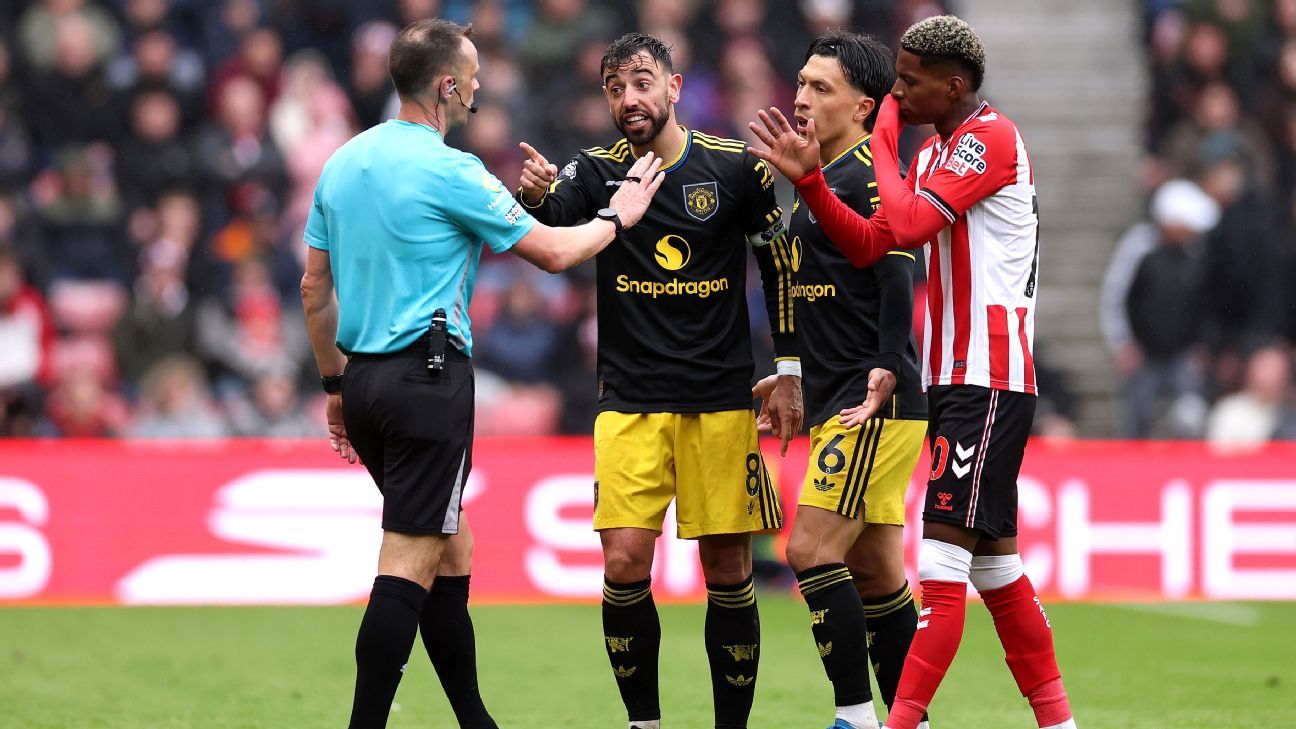
What transpired: Sunderland’s Nilson Angulo hit Manchester United’s Bruno Fernandes with a late challenge, seemingly catching Fernandes’ face with his forearm. However, Attwell opted not to penalize the incident, much to Fernandes’ frustration.
VAR assessment: The VAR team believed that Angulo’s challenge did not satisfy the criteria for a red card, thus upholding Attwell’s on-field decision as correct.
Conclusion: In my view, while Angulo’s use of his arm was reckless, it did not constitute violent conduct. He was indeed careless, and the contact with Fernandes was minimal. For an incident to be classified as a red card offense, the referee and VAR look for significant force, a swinging motion resulting in contact, or contact that reflects violence or brutality. It is surprising that Attwell did not recognize this as reckless, as I believe a yellow card was warranted. I would expect such an incident to be identified on the field.