



-

Jeff Kassouf
Multiple Authors
The National Women’s Soccer League has moved beyond its initial start-up phase. In terms of Silicon Valley terminology—often adopted by the NWSL—the league is now straddling the line between growth and expansion stages of its rapid development.
Both rapid growth and commercialization are crucial for the NWSL’s long-term success, yet these very traits pose challenges to the league’s core identity. This Catch-22 is a common phenomenon in successful sports leagues and businesses; however, the current decisions made by NWSL leadership revolve around a fundamental question: What does the NWSL aspire to become?
This is an important question, not in the existential sense that it once was when previous professional women’s soccer leagues folded or when the NWSL was launched in 2013 on modest budgets. Fears of the league’s collapse are a thing of the past; the NWSL today is a significant business with many billionaires on its board.
Rather, the focus of the NWSL’s identity struggle now lies in growing to a larger, more influential entity that resonates broadly without losing the essence of what has driven its success to this point.
This challenge isn’t necessarily negative.
Any loyal supporter from the league’s inception knows that the NWSL’s mere continuation after 13 years is a remarkable achievement. The league has doubled in size, offers million-dollar player contracts, and draws 63,000 attendees at an NFL stadium for inaugural matches. Such metrics were hardly imaginable for even the most optimistic fans just five years ago.
The NWSL’s growth phase embodies a dream realized for many—from players and fans to long-standing executives. Women’s soccer has become widely acknowledged as an integral part of the sports landscape, standing alongside leagues like the NBA and NFL. While the NWSL hasn’t reached parity with these men’s leagues in terms of revenue, league leaders are confident that such a future is attainable.
However, reaching that goal necessitates attracting a broader audience beyond the league’s most devoted fans, who have played a crucial role in the NWSL’s success over the last 13 years. The league’s attempts to expand its reach have, at times, alienated these loyal supporters.
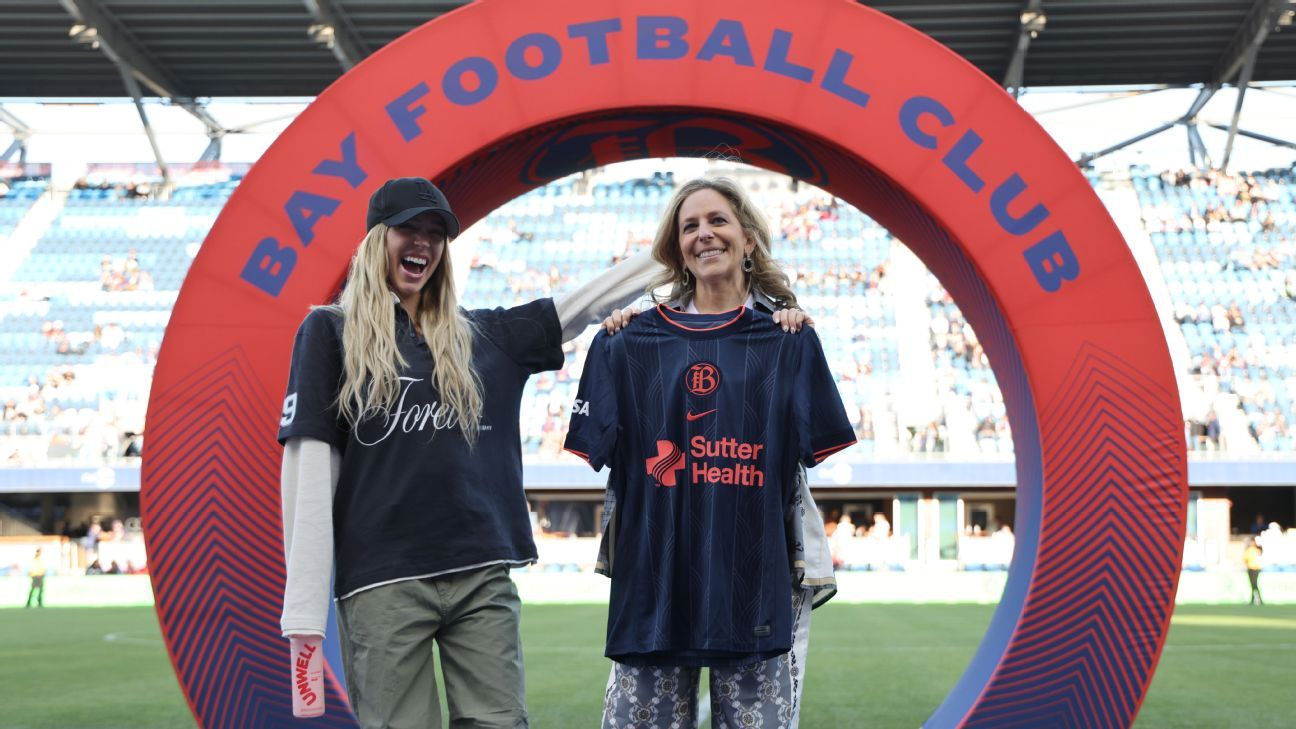
For example, the partnership with the recovery drink company “Unwell,” launched last year, aimed to attract Gen Z fans as emphasized by NWSL commissioner Jessica Berman. Yet, the execution of the deal was clumsy. It included an effort to create an “Unwell FC” branded fan zone at select matches, a concept rejected forcefully by independent supporters, who simply found it to be inappropriate and offensive—especially given the timing following a critical situation involving player Savy King.
The partnership with Unwell, which was meant to be “multi-year,” has quietly ended; the brand is no longer featured on the NWSL’s partner page, nor is it promoted at games. A league spokesperson confirmed to ESPN that Unwell is no longer a sponsor.
Unwell was not the first bold sponsorship that the NWSL has pursued. In December 2021, the league partnered with cryptocurrency company Voyager, which promised crypto-based accounts and educational resources for players. However, Voyager declared bankruptcy just six months later, leaving those promises unfulfilled.
As the NWSL continues to expand, it has seen an influx of fresh funding, which brings its own set of political challenges. This year, the Boston Legacy made its debut after three years of political negotiations delayed stadium renovations initially planned for an earlier date. Some residents opposed to the venue’s privatization have voiced their concerns, while Berman and Legacy ownership hailed their collaboration with Boston Public Schools as innovative.
Looking back a few years, it would have been hard to envision an NWSL team stadium becoming a focal point in a mayoral race within a significant U.S. city. Next year, the NWSL will return to Boston after the Breakers’ closure in early 2018, boasting a newly renovated stadium for one of its teams.
In a more contentious move, the NWSL recently awarded its 18th franchise to Columbus shortly after a city council meeting endorsed a land sale for a training facility. The land was previously earmarked for adaptive use in an underserved neighborhood, but residents expressed frustration at its transfer to wealthy owners.
Berman commented to ESPN that strong public-private partnerships are essential for determining expansion teams.
“It’s essential to remember that communities and the public have long supported men’s teams,” Berman noted. “This historical investment has significantly contributed to the success of men’s teams in the U.S.”
1:31
Kassouf: Racing Louisville’s goal is to ‘find further investment’
Similar to MLS, the NWSL’s expansion is relentless driven by economic factors. The entry fee has skyrocketed from $2 million in 2021 to $205 million this year, which surged an additional $40 million in just five months between the 17th and 18th teams, both of which will debut in 2028.
Commercialization is apparent in simpler aspects that directly affect fans. The NWSL recently severed ties with Parkside, the smaller trading card company that initially catered to the league’s niche market, and has signed with Panini, a global leader in the collectibles industry.
Panini’s extensive distribution network positions the NWSL and its players alongside other top-tier athletes globally. However, this shift comes at a price: the cost of trading cards has increased five-fold due to the new licensing agreement.
While there are valid complaints among dedicated NWSL fans regarding such changes, progress is essential for growth. Stagnation won’t lead to success.
The league’s most notable advancements are tied to its business expansion efforts. The era of $6,000 annual salaries—during the NWSL’s inception—is over. Players now earn better, more sustainable wages.
Teams are developing their own stadiums and achieving sell-out crowds. The NWSL boasts some of the most vibrant women’s soccer environments globally, spearheaded by the Kansas City Current, whose custom stadium and training facilities exemplify a dramatic shift from when the league’s first match occurred on a high school football field.
Fans can now easily watch live games, a stark contrast to the low-resolution YouTube streams with poor production quality that characterized the league’s early days. In its infancy, even when the NWSL secured media deals, the broadcasts often resulted in frustration for viewers.
Berman has faced criticism from fans for her remarks about being “aligned with stakeholder incentives” and serving as a “steward of capital,” but her role is undeniably significant. She and the NWSL Board of Governors oversee the entire league’s business operations. As new investors with dollar signs in their eyes seek to join, it raises ongoing ethical considerations and potential compromises both real and perceived.
Private equity isn’t going away. The pervasiveness of gambling in sports continues, and the allure of cryptocurrencies will return. There will continuously be enticing new opportunities and trends for the league to consider.
To echo familiar Silicon Valley terminology, exciting opportunities and challenges abound. The NWSL can broaden its appeal to consumer segments unaware of its existence. In the long run, these initiatives could help elevate average attendance from 10,000 to 20,000 fans or consistently reach millions in television audiences.
If growth doesn’t occur, the ceiling on the NWSL’s potential remains disappointingly low—too low to entice billionaires envisioning enduring growth. Yet, devoted fans who survived the league’s challenging years also don’t want to hinder its expansion; doing so contradicts their belief in the product. Therefore, there exists a natural tension as the NWSL embraces the philosophy that “what brought you here won’t take you further.”
For the NWSL, “there”—a destination with heightened profits, enlarged audiences, fresh sponsorships, and additional teams—continually tests the limits of a historically progressive fan base. For those already on board, the pressing question remains: At what cost?
Fans will undoubtedly voice their opposition to changes, but they must also recognize that some transformation is essential. The NWSL once resembled an indie band performing at intimate venues, appealing to a niche audience. Now, it’s attracting mainstream attention, scheduling performances in expansive stadiums.
Some fans will continue to attend and proudly claim their status as “OGs” (original fans), while others may perceive these changes as selling out. Both perspectives hold value. The NWSL requires these pop culture engagements just as it values its hardcore supporters—they simply cannot disregard one group while courting the other.
This reality is acknowledged by all league leaders. For the NWSL to succeed as a major league and cultural influence, it needs the dedication of both die-hard fans and casual supporters. Balancing the interests of both factions will undoubtedly lead to uncomfortable growing pains.