



CHARLOTTE, N.C. — The dress rehearsal for the U.S. men’s national team against Senegal was somewhat chaotic.
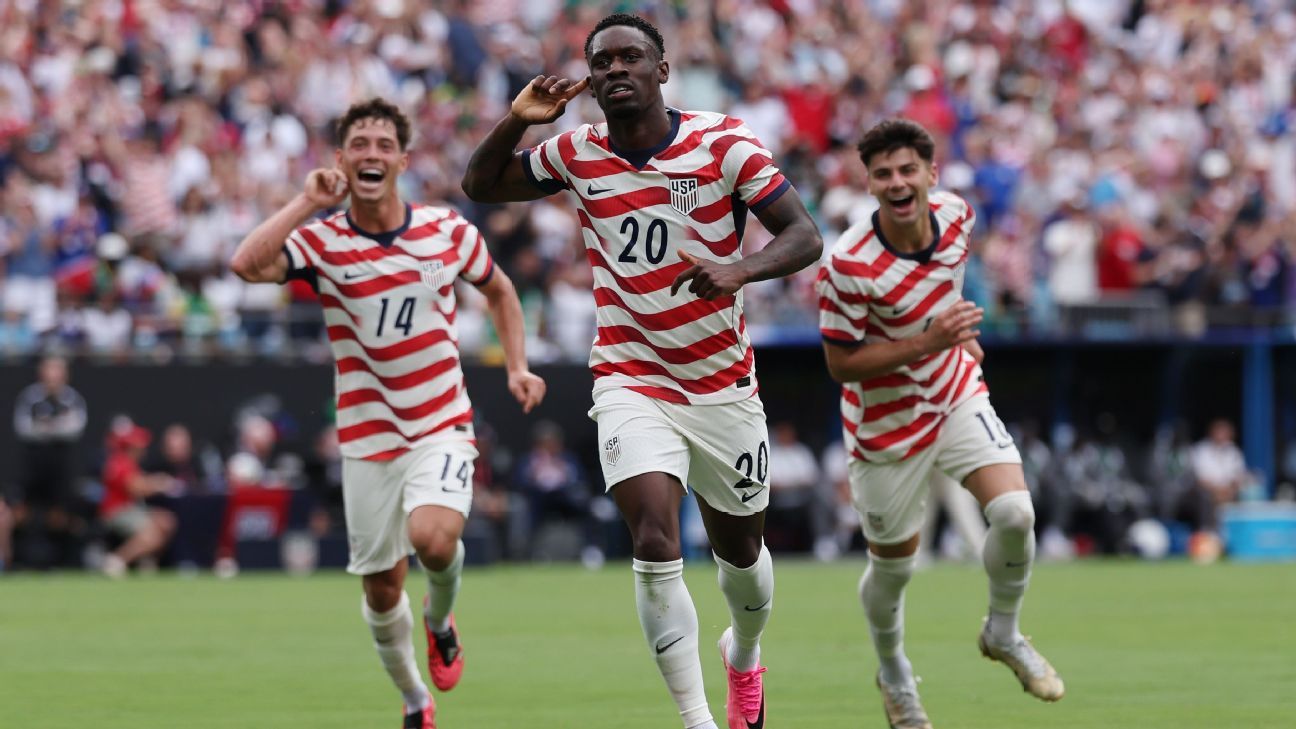
Initially, the U.S. took the lead with two goals from Sergiño Dest and Christian Pulisic. However, Sadio Mané, benefiting from some questionable U.S. defending, equalized with two goals of his own. It was up to substitute Folarin Balogun to restore the lead for the U.S., converting Timothy Weah‘s cross in the 63rd minute, securing a 3-2 victory.
Is the outcome significant? Not particularly, but for U.S. manager Mauricio Pochettino, it’s preferable to learn from wins rather than losses. Following a March window marred by two significant defeats, this uptick in morale is welcome.
“It’s crucial to leave with positive feelings; we still have work to do in our preparation, but we’re moving in the right direction,” said Pochettino after the match.
There’s also the pressing concern of player health, which has been difficult for the team to maintain. The goal is for everyone to be fit by June 12, rather than by May 31. Thankfully, it appears the U.S. emerged from the match without any serious injuries.
Overall, Pochettino will be looking for the team to establish good habits. There were several positives in attack, but defensive inconsistencies surfaced at times.
Here are some key questions that were addressed, along with a few that still linger.
Is Pulisic returning to form?
Absolutely. Pulisic’s struggle to find the back of the net has been a hot topic within U.S. circles for months. The statistics supported the narrative: he hadn’t scored for club or country since December 28, spanning 21 matches. Yet, during media interviews this week, Pulisic remained unfazed, exuding confidence about breaking the drought.
And indeed he did.
Pulisic set the tone early in the seventh minute, receiving a pass from Ricardo Pepi down the left flank, leading to Dest’s initial goal. Later, in the 20th minute, Pulisic doubled the U.S. advantage, skillfully maneuvering around goalkeeper Mory Diaw and finishing from a tight angle after another exquisite pass from Pepi.
His celebration, an emotional roar followed by dropping to his knees, revealed just how much the goal meant to him.
“I felt fantastic. I was thrilled,” he reflected post-match. “It was a relief to get that goal, and I’m looking forward to a significant summer ahead.”
What changed for Pulisic? Much of his previous struggle with AC Milan stemmed from being isolated in attack with limited chemistry alongside Rafael Leão. Playing alongside a forward like Pepi, who actively sought to engage with him, made a significant difference.
Positioning Pulisic in the left pocket also proved effective, as his rapport with left back Antonee Robinson was evident.
While this performance doesn’t ensure success come FIFA World Cup time, it marks a substantial improvement for Pulisic.
How did the defense perform?
The U.S. backline has raised concerns during the build-up to the World Cup, especially following shaky outings in March. This led to speculation about whether Pochettino would adopt a five- or four-man defensive setup.
Pochettino opted for a four-man defense with Dest playing as a pure winger, which proved effective, particularly in the first half. The center-back pairing of Mark McKenzie and Tim Ream held their ground reasonably well, except in one crucial area: defending during transitions.
Many of Senegal’s opportunities arose from errors higher up the field due to poor positioning and giveaways. Mané’s first-half goal, for example, resulted from Robinson losing possession. In those moments, the lack of pace in the defense became evident.
While McKenzie and Ream were competent, the second-half defensive pairing of Auston Trusty and Miles Robinson was less reassuring. McKenzie, in particular, was solid overall. Unfortunately, Robinson’s careless turnover in the 52nd minute led directly to Mané’s second goal of the match—a mistake that cannot occur at this level.
Pochettino acknowledged, “Of course, they have quality and excellent players, but I believe the chances we conceded stemmed from our inability to read the game better. We need to focus on avoiding such errors, and we will work hard in the coming week to improve.”
A troubling statistic: According to ESPN Global Research, the U.S. has conceded at least one goal in its last seven games across all competitions (totaling 13 goals against), marking the team’s most extended stretch since 2015 under Jürgen Klinsmann (also seven matches).
Chris Richards, who was absent due to an ankle injury, is needed back as soon as possible.
Did Dest solidify his position on the wing?
It certainly appears that way.
The U.S. formation allowed Dest to serve as a traditional winger, and although he typically plays as a full-back, he appeared comfortable and effective in the attacking role. The long-standing criticism of Dest has been his defensive capabilities at the international level. Positioned as a winger, especially with Alex Freeman supporting him from behind, highlighted Dest’s strengths while concealing his defensive weaknesses.
This strategy worked well on this occasion. His aggressive runs into the box allowed him to capitalize on Pulisic’s delivery and score. Dest consistently found himself in dangerous positions throughout the match.
The U.S. has historically struggled with chance creation and unpredictability. Utilizing Dest higher up the pitch could help alleviate those long-standing issues.
Who should partner Adams in midfield?
With Tanner Tessmann omitted from the U.S. roster, a key question arose regarding who would play alongside Tyler Adams in midfield. This concern revolved around whether there was enough defensive strength to shield the U.S. backline.
Pochettino’s choice to field Sebastian Berhalter alongside Adams resulted in some clever plays but did little to dispel concerns regarding his defensive capabilities.
At times, Berhalter struggled against physical challenges and exhibited lapses in awareness while in possession, including one turnover in the 36th minute deep in his own territory that forced Matt Turner to make a critical save from Iliman Ndiaye.
Adams was substituted at halftime, along with 10 other U.S. players. Given this performance, it seems unlikely that Berhalter will see significant playing time at the World Cup.
Do we have a clearer picture of Pochettino’s best XI?
Not yet, but it’s becoming clearer.
Weston McKennie‘s impactful second-half entrance, which helped set the stage for Balogun’s goal, indicates he should be paired with Adams. The defensive lineup from the first half is expected to take the field again in the next friendly against Germany.
Pepi made a strong case for inclusion in the World Cup squad, yet Balogun is still the likely starter. Dest and Pulisic should hold the wing positions, with Pulisic given a free role to drift inside.
This leads to the question of who should occupy the attacking midfielder role. Gio Reyna performed well in 45 minutes in that position, but it will be interesting to see if Malik Tillman or Alejandro Zendejas will get an opportunity to play centrally more than they did on Sunday.
The goalkeeper position appears more competitive than it did before the match, as Turner made several impressive saves. Meanwhile, Chris Brady made his debut but hesitated momentarily during the sequence leading to Mané’s second goal. The status of Matt Freese, who was rested, remains uncertain.
Pochettino’s strategic vision will further emerge during the upcoming friendly against Germany.