



-

Jeff Kassouf
Multiple Authors
The USL Super League will transition to a spring-to-fall schedule starting in 2027, aligning its season with the NWSL. Both leagues have been sanctioned by U.S. Soccer as first divisions.
Amanda Vandervort, president of the USL Super League, informed ESPN that this shift aims to foster collaboration and synchronize with other North American leagues, especially ahead of the 2031 World Cup expected in the United States.
“The marketplace has evolved, and we want to integrate into that,” Vandervort stated. “Our goal has always been to lead in global soccer, and with the World Cup approaching, this format adjustment is essential to our strategy.”
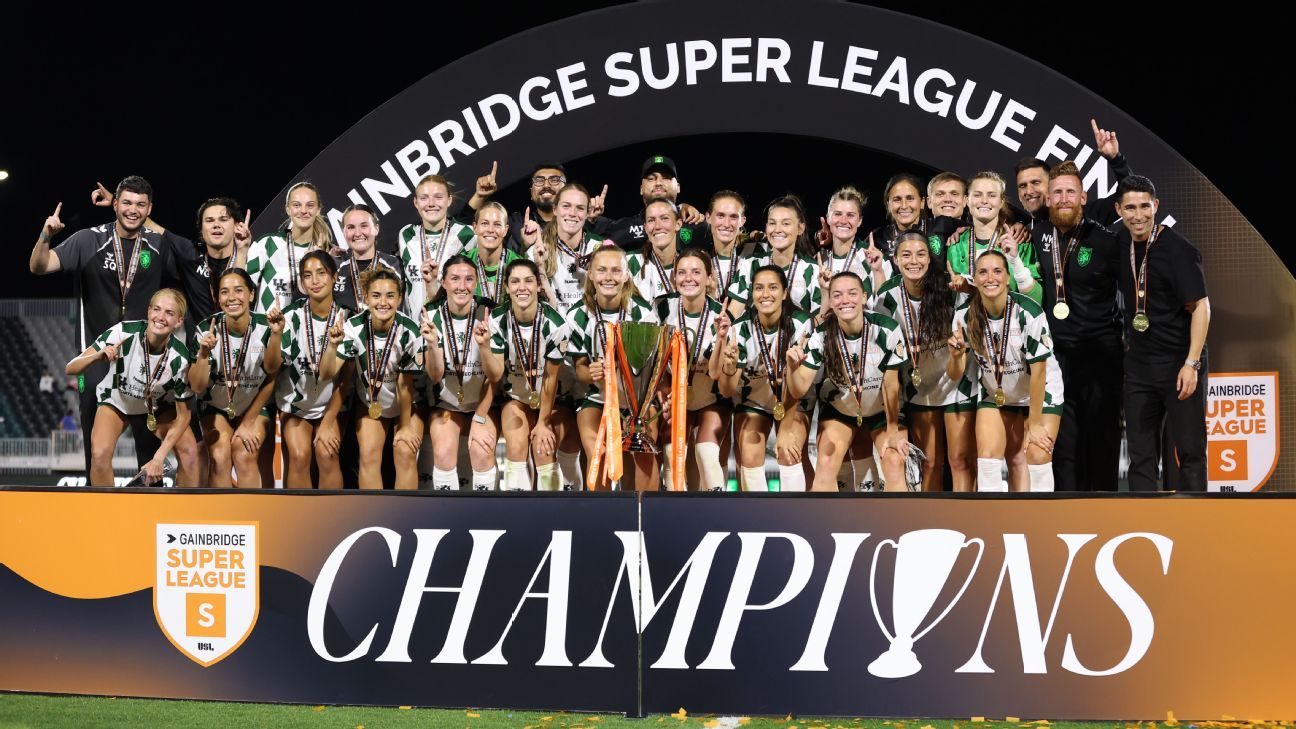
The Super League initially launched in August 2024 as a fall-to-spring league to facilitate global player transfers and international tournaments. Its latest season concluded recently, with Lexington SC triumphing in the final after extra time.
A shorter fall season in 2026 will serve as a transition to the new schedule.
This announcement follows an ESPN report indicating that the NWSL had considered a calendar change that would involve moving in the opposite direction. However, the NWSL Board of Governors decided against a vote on this change due to significant player opposition, affirming their commitment to the current spring-to-fall schedule at least through 2030.
Aligning with the NWSL could offer substantial advantages for the USL Super League.
ESPN previously reported that U.S. Soccer has been in talks with leaders from the NWSL, USL, and the upcoming WPSL Pro second division regarding a potential inter-league cup competition slated to begin as early as 2028.
This upcoming competition may provide a qualification route for the Concacaf W Champions Cup, a regional tournament in which the Super League aims to have participation.
Concacaf recently announced a new format for this competition, which will take place within a single calendar year starting in 2027. U.S. Soccer collaborates with Concacaf to determine team qualifications for the tournament, with decisions regarding the 2027 edition still pending.
Vandervort mentioned that U.S. Soccer leadership, including CEO JT Batson and president Cindy Parlow Cone, has played a role in broader talks aimed at achieving alignment within the U.S. women’s soccer ecosystem.
“U.S. Soccer is focused on collaboration in this space,” she noted. “They’ve brought us together to discuss ways to work in tandem and to shape the future of women’s soccer in the United States collaboratively.”
Vandervort emphasized that the calendar change reflects the USL’s own strategy rather than being influenced by the NWSL.
However, sources noted that this alignment with the NWSL will reduce complications regarding player loan agreements. Additionally, college players will have the opportunity to sign with teams at the beginning of the season instead of midway through.
“Our mission continues to be increasing access to soccer in more communities,” Vandervort stated. “We’re dedicated to creating opportunities for women in cities and regions that lack access.”
In a statement to ESPN, the USL Players’ Association acknowledged its involvement in discussions about the calendar as part of collective bargaining negotiations.
“The USLPA and the League have been actively engaged in collective bargaining discussions since December 2025, working towards an agreement that promotes sustainable success for all stakeholders. Recently, negotiations have gained momentum to align with the League’s scheduling plans and aim for a contract before the upcoming fall sprint season,” the statement said.
“The USLPA is committed to ensuring professional standards that empower players in the Super League, both now and in the future, and looks forward to successfully concluding negotiations.”
Eight teams will participate in the USL Super League’s shortened fall season, which kicks off on August 15 and culminates in a championship match on December 12.
Spokane Zephyr FC disbanded in late May following two seasons in the league, although the same ownership will continue operating their USL men’s team.
Vandervort indicated that she could not comment on future expansion for 2027 just yet. The USL had already announced several potential teams for Super League expansion, pending approval of their stadium projects.
“I believe our clubs and ownership groups are collectively committed to ongoing growth and development within the league,” Vandervort remarked. “They’re excited about the future, including the 2028 Olympics, the path ahead, and the expansion of women’s soccer. They are aware that they play an integral role in the evolution of the sport.”