



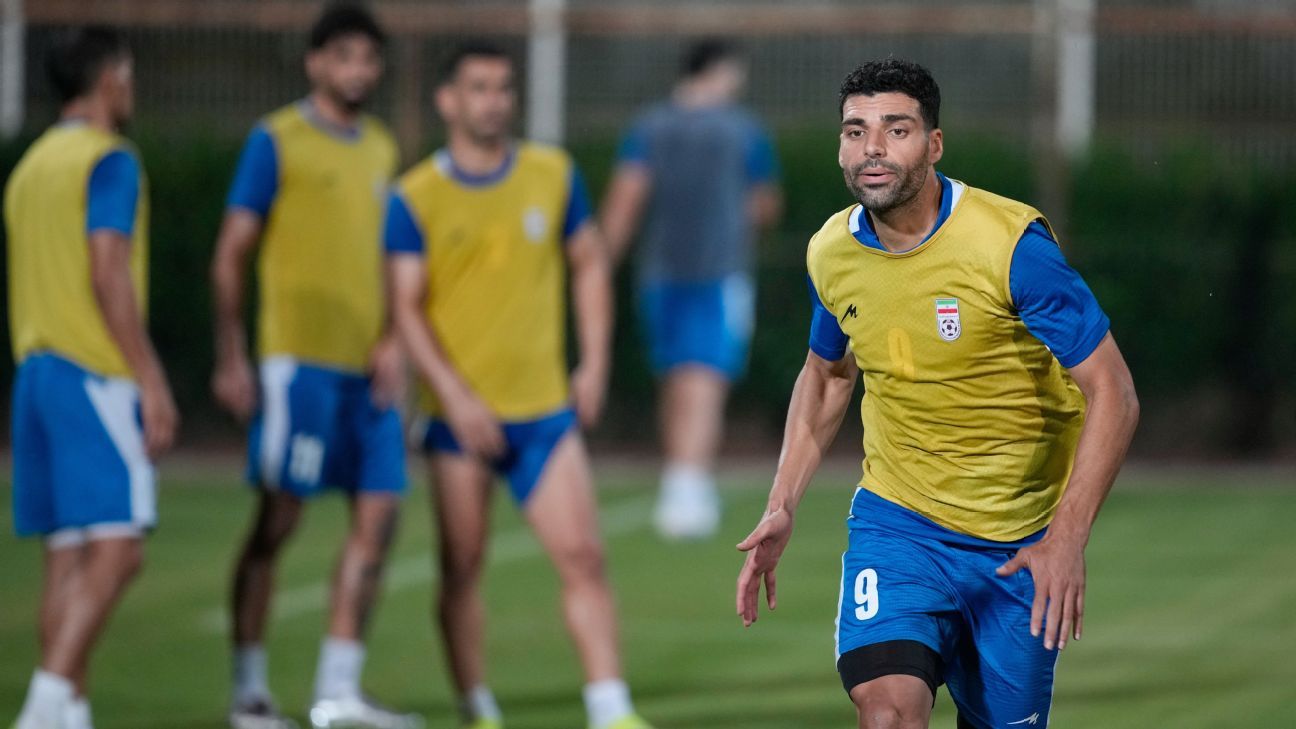
TIJUANA, Mexico — Mehdi Taremi, forward for the Iran national team, expressed concerns that recent U.S. government actions, specifically the denial of visas and the restriction of a Somali referee from entering the country, are damaging Iran’s image and causing “a lot of tension” surrounding the upcoming World Cup.
As the tournament kicks off on Thursday, which will be co-hosted by the United States, Mexico, and Canada, Iran’s preparations have been affected by the ongoing conflict in the region.
The team arrived in Tijuana from Antalya, Turkey, on Sunday morning aboard a private jet.
Initially, Iran planned to set up its World Cup training camp in Tucson, Arizona, but at FIFA’s request, they relocated to Tijuana.
Although the move permitted the entire team to reach Mexico, 14 members of the coaching staff were still unable to obtain visas for the U.S.
All three of Iran’s opening group stage matches will take place in the United States.
“I’ve attended three World Cups, and there’s always a unique atmosphere of warmth and global unity when you arrive in the host country,” Taremi, who played for Inter Milan in last season’s Champions League final, told ESPN through a translator. “Regrettably, I don’t feel that here. There’s a palpable tension in the air due to factors like [visa refusals], and unfortunately, that’s just my feeling.”
Iran will play its first two matches in Inglewood, California, against New Zealand on June 14 and Belgium on June 20. They will then travel to Seattle for a match against Egypt on June 26.
If both Iran and the U.S. finish second in their respective groups, they could meet in the round of 32 on July 3 in Arlington, Texas.
Mehdi Mohammed Nabi, the vice president of the Iran Football Federation, was among those denied visas. He informed ESPN through a translator that they were still working with FIFA to address the visa issues.
“The team consists of players and coaches, but also technical staff and management. We all represent one unit,” he stated. “FIFA acknowledges this and we are working diligently to resolve the visa problems. There should be no discrimination in sports; everyone deserves equal treatment, and we hope for a swift resolution.”
A spokesperson from the U.S. State Department addressed the visa situation for the Iranian team: “Visas necessary for Iran to participate in the World Cup, including for athletes and essential support staff, have been granted. We will not allow the Iranian team to misuse this system to potentially infiltrate terrorists into the U.S. under false pretenses.”
The statement continued: “Because of visa record confidentiality, we cannot comment on specific cases. The State Department processes applications for visas that permit foreign nationals to enter the U.S., while the Customs and Border Protection agency determines eligibility for entry.”
ESPN has reached out to FIFA for comments regarding the status of the remaining visas.
Iran’s World Cup preparations have faced significant disruptions due to the war that began on February 28, with Israel and the U.S. carrying out airstrikes against Iran. In retaliation, Iran has targeted U.S. military installations in the region and critical infrastructure in several neighboring countries.
The war led to the suspension of Iran’s domestic league, forcing the national team to train in neighboring Türkiye. Despite concerns affecting their participation in the World Cup, FIFA has consistently affirmed Iran’s eligibility to compete. Nabi emphasized that the team remains sharply focused on their World Cup objectives.
“We ensure our players do not get distracted. They concentrate on their training regimen and program, staying undistracted by external events,” Nabi stated.
However, forward Alireza Jahanbakhsh acknowledged the challenges posed by the war in maintaining focus on the tournament. “It’s been exceptionally challenging for all of us amidst the turmoil,” he said. “You continually check on your family and loved ones back home, which inevitably affects the team environment.”
Jahanbakhsh also expressed a desire to bring joy to their compatriots during these tough times. The Los Angeles area has a substantial population of around 140,000 Iranian expatriates. Taremi hoped that the community would support Team Melli and emphasized that the players are representing all Iranians.
“There may be some who oppose the government, but we are all Iranian,” Taremi stated in English. “We stand united and seek peace. I believe they will come out to support us, and we wish to bring them happiness.”
In addition to the visa dispute, the Iran Football Federation announced on Tuesday that FIFA has also canceled the ticket allocation for Iranian fans at the upcoming matches in the U.S. Their allocated tickets, originally accounting for 8% of stadium capacity, have been impacted by the U.S. sanctions against Iran, preventing U.S.-based entities from processing transactions involving Iranian residents.
FIFA is striving to help Iranian fans residing outside Iran gain access to tickets intended for them. “FIFA is collaborating with the Iranian Football Federation to find compliant solutions that maximize opportunities for Iranian supporters to attend the matches,” stated FIFA.
A U.S. official confirmed to ABC News last week that all players on the Iranian team have received visa approval. However, reports indicated that some individuals associated with the team were rejected due to presenting applications labeled “under false pretenses.”
These officials spoke on the condition of anonymity as they were not authorized to disclose visa details publicly. U.S. Secretary of State Marco Rubio noted last week that the Iranian delegation would be closely monitored for any connections to the Islamic Revolutionary Guard Corps.
“We have no issues with the athletes or their support staff, as we’ve previously stated,” Rubio said during a House Appropriations subcommittee hearing. “However, we will not tolerate individuals with non-athletic ties to the IRGC being included in their delegation.”
Iran’s ambassador to Mexico stated on Saturday that the squad had been informed that, based on their visa conditions, they must enter and exit U.S. territory on the same day as their matches. However, a spokesperson for the Iran Football Federation disagreed with that assertion.
For their opening match against New Zealand, the team will arrive in Los Angeles on June 14 and leave the day after the game. Similar arrangements are in place for Iran’s subsequent group matches.
This report includes information from The Associated Press and ABC News.