



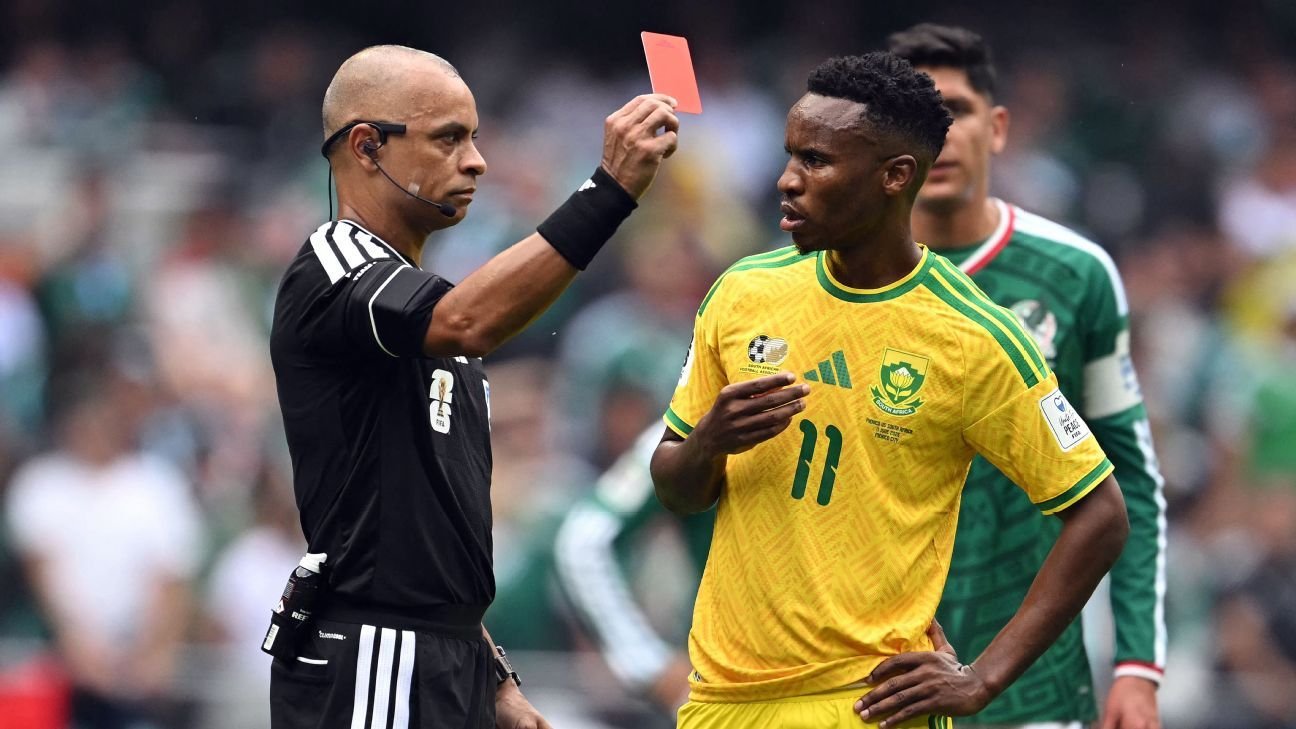
The video assistant referee (VAR) has sparked debate each week in leagues such as the Premier League, Champions League, and FA Cup. Now, with a vast 104-game FIFA Men’s World Cup on the horizon, we’re analyzing the decision-making process this summer and how accurate it has been.
Throughout the tournament, we will review significant incidents to clarify the VAR protocols and the applicable laws of the game.
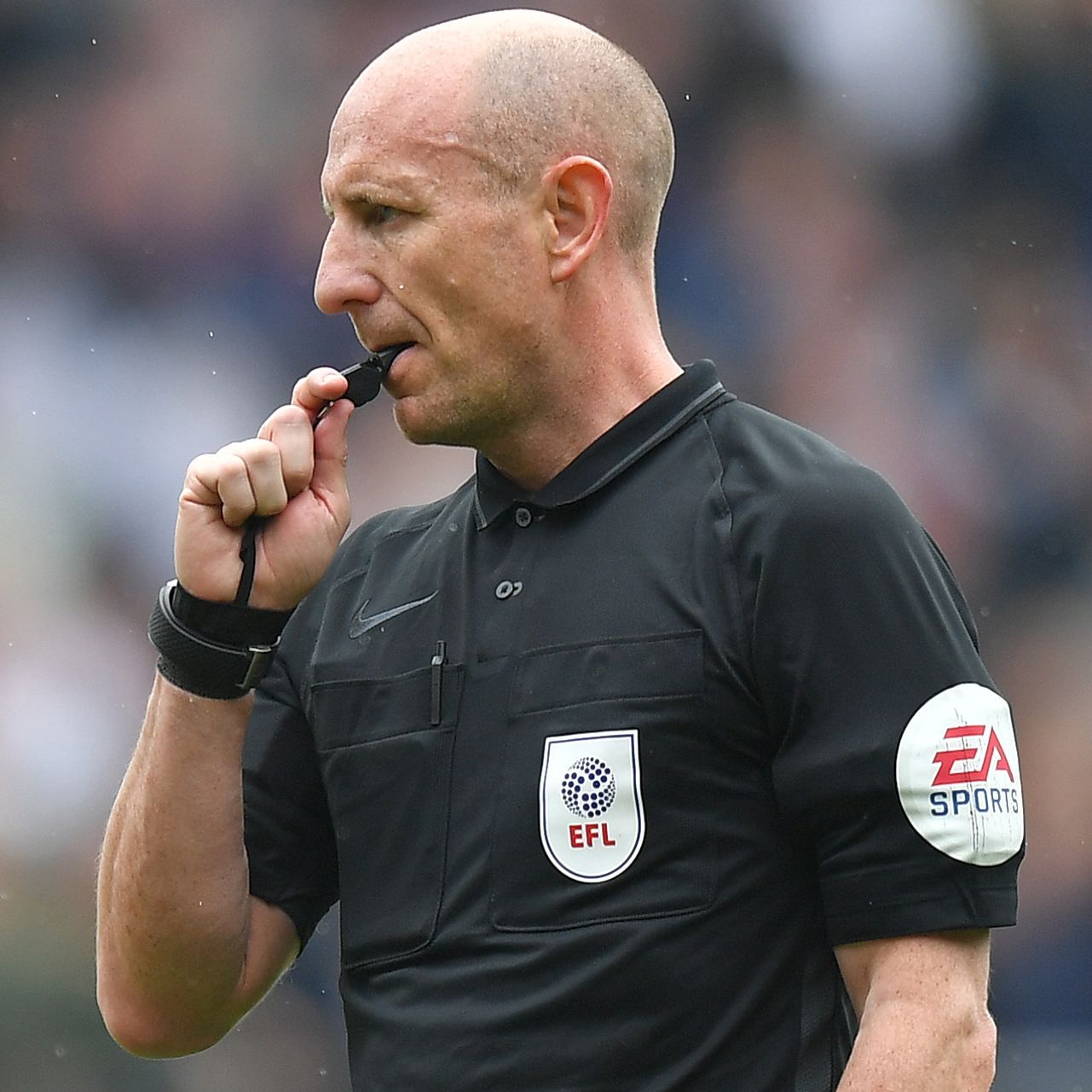
Andy Davies (@andydaviesref) is a former Select Group referee with over 12 years of experience officiating at the elite level, including in the Premier League and Championship. His extensive experience within VAR at the Premier League level provides valuable insights into the processes, reasoning, and protocols utilized during World Cup matchdays.


Referee: Wilton Pereira Sampaio
VAR: Nicolás Gallo Barragán
Time: 49 minutes
Incident: Red card for South Africa‘s Sphephelo Sithole due to denial of a goal-scoring opportunity (DOGSO).
What happened: Trailing 1-0, South Africa was reduced to 10 players shortly after the second half began when Sithole was issued a red card for fouling Mexico‘s Brian Gutiérrez, who was on a clear path to goal. The VAR review confirmed the decision was correct.
Verdict: Sithole became the first player to receive a red card in this World Cup, making it a straightforward decision. Gutiérrez had a definitive scoring opportunity, so the red card was justified.
South Africa is shown a red card and is down to 10 men! 🟥 pic.twitter.com/HnPqExqTRq
— FOX Sports (@FOXSports) June 11, 2026
Time: 84 minutes
Incident: Red card for South Africa’s Themba Zwane for violent conduct after striking an opponent.
What happened: When attempting to evade Mexico’s Roberto Alvarado, Zwane inadvertently hit Alvarado in the face. The referee did not initially show a red card but later issued one after VAR review.
Verdict: This decision seemed harsh; the contact did not appear to warrant a red card for “violent conduct.” Striking an opponent can lead to a dismissal, especially if it involves the face. The amount of time the referee spent at the monitor suggests he may not have been entirely convinced it was a violent act. However, after reviewing the VAR’s assessment, he likely felt pressured to take action.
South Africa is down to 9 players after a second red card 🟥 pic.twitter.com/uS87sjfQlI
— FOX Sports (@FOXSports) June 11, 2026
Time: 90+2 minutes
Incident: Red card for Mexico’s César Montes for denying a goal-scoring opportunity (DOGSO).
What happened: South Africa countered with four players against three as Khuliso Mudau advanced toward the penalty area. Montes clipped him just outside the box, prompting an immediate red card from the referee. VAR reviewed and deemed the call correct.
Verdict: I was surprised by the on-field decision to hand out a red card, as it did not obviously constitute a goal-scoring opportunity. For DOGSO, it’s crucial the referee believes the attacker’s next move will clearly be a shot on goal. In this case, the attacker seemed more likely to cross rather than shoot, suggesting it was a possible but not obvious goal-scoring situation. Given the subjective nature of the incident, VAR likely wouldn’t intervene as it didn’t qualify as a “clear and obvious” error.
César Montes is sent off 🟥
This is the first time 3 players have been shown a red card in a FIFA World Cup opening match pic.twitter.com/GCC20sv3gz
— FOX Sports (@FOXSports) June 11, 2026