



-
Sam Borden

Multiple Authors
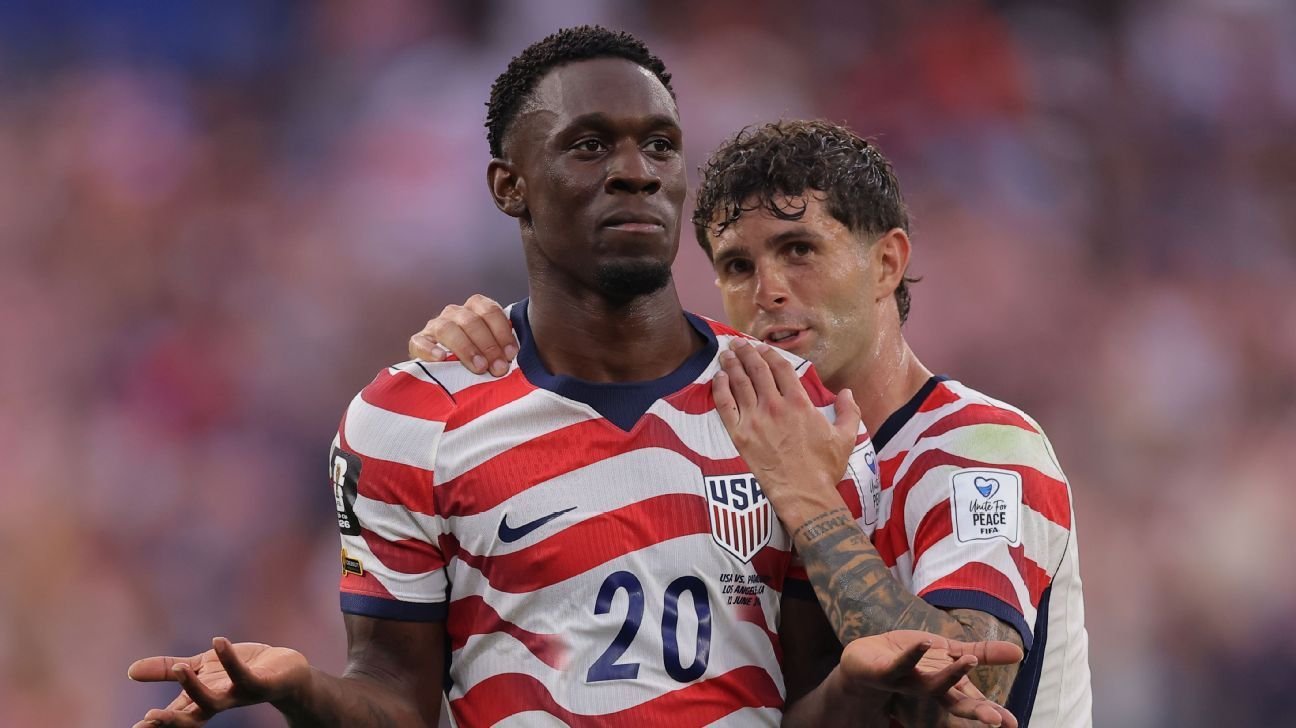
The U.S. men’s national soccer team could not have wished for a more ideal beginning to their 2026 FIFA World Cup journey. Their impressive 4-1 victory over Paraguay on Friday places them at the forefront of a highly competitive Group D with a goal difference of plus-3.
This stark reality hardly captures just how flawless the initial 90 minutes were for Mauricio Pochettino’s squad. The four goals scored represent the highest tally for the U.S. in a World Cup match. They vastly outperformed Paraguay in key statistics: possession (65% to 35%), pass attempts (598 to 319), chances created (12 to 7), and shots taken (16 to 9).
Throughout the press area, across the concourse, and at watch parties nationwide, one question resonated: Was this the best the U.S. has ever looked?
To explore this question, ESPN consulted USMNT analysts Jeff Carlisle, Sam Borden, and Cesar Hernandez.
How much did the USMNT surpass expectations against Paraguay?
Borden: It’s vital to contextualize the U.S. team’s performance on Friday night. Yes, Paraguay appeared rattled, especially in the first half and notably after the own goal. However, it’s essential to remember that this was one of the strongest defenses in South American qualifying, having defeated Argentina and Brazil in earlier matches.
For the U.S. to make Paraguay look as ineffective as it did is a remarkable achievement, reflecting not only Pochettino’s strategies but also the players’ exceptional execution. Christian Pulisic was in outstanding form, Malik Tillman was a revelation, and Folarin Balogun exemplified what the U.S. has long desired in a striker.
I expected a tough, scrappy performance from the Americans, more of a struggle than a display of skill. Instead, we witnessed creativity, flair, and aggressive play—much like Weston McKennie described, it felt as if the U.S. was “playing pickup.” That’s not usually associated with this team. Moving forward, if the U.S. can replicate that level of enjoyment in their upcoming matches, it will capture the nation’s enthusiasm as envisioned.
Hernandez: I wouldn’t say the Americans drastically exceeded expectations, but it was still significant. Notably, the U.S. continued to push forward rather than play defensively after taking an early lead. In the past, the USMNT may have adopted a more conservative approach with a 1-0 lead, but that wasn’t true on Friday.
Many criticized Pochettino for not settling on a consistent starting eleven prior to the World Cup, yet this concern was quickly put aside by the team’s immediate chemistry and their proactive play, especially in the first half. While it’s premature to make sweeping declarations, Pochettino certainly deserves substantial credit.
Carlisle: I believe the Americans significantly surpassed expectations, as their margin of victory matched the largest in program history, dating back to 1930! The key was not just the scoreline but the manner in which they achieved it. The USMNT dominated from the outset, maintaining control for most of the match, aside from a few moments in the second half.
As Sam noted, this performance came against a tough opponent that had conceded a mere 10 goals in 18 matches. For the U.S. to assert themselves so dominantly was a remarkable feat that few anticipated.
The U.S.’s finishing was exceptional, highlighted by their xG of 1.42, and yet they netted four goals—something that isn’t likely replicable. What can be maintained, however, is the team’s aggressive pressing and consistent attack, which bodes well for the U.S. in the tournament ahead.
Was this the greatest performance in USMNT history?
Borden: In my view, the answer is “yes.” I recognize that recency bias is a genuine consideration, and at the core, this was a group stage win—not a decisive knockout game. These are reasonable points, especially when comparing it to the pivotal win against Mexico in 2002.
Nevertheless, when evaluating the performances, I think about it in this way: Although the stakes of that 2002 match were higher, the artistry and completeness of Friday’s victory were far more striking.
The win against Mexico required American resolve and resilience, absorbing El Tri‘s attack and responding with striking precision. Javier Aguirre—now back coaching Mexico—was adamant that Mexico should defeat the U.S. that day. Bruce Arena’s squad skillfully turned that energy against their rivals.
On Friday, the U.S. had to assert themselves to win the game. Historically, this program has struggled with maintaining control in such situations. However, even against a formidable defense, they achieved that aim effortlessly—an indication of what American fans hope to see moving forward.
Hernandez: The 2009 victory over Spain in the Confederations Cup remains my benchmark for the USMNT. Heading into that semifinal, Spain had a stunning 35-game unbeaten streak and held the top spot in the FIFA rankings. The match featured legends such as Sergio Ramos, Carles Puyol, Xabi Alonso, and Fernando Torres.
Friday night will be historic for the USMNT. Scoring four goals, particularly against a robust CONMEBOL side, is an impressive feat and should be celebrated. Nonetheless, defeating Spain in the knockout round of a major competition holds a slight edge over a group stage victory. However, if the U.S. maintains the performance level displayed in the opener, we may soon witness a result that surpasses the 2009 claim.
Carlisle: The interpretation of “best ever” can vary. In the context of significant victories, there have indeed been more impactful wins. The 2002 World Cup round-of-16 triumph over Mexico stands tall given the associated stakes and the rivalry it represented. I also concur with Cesar that the 2009 semifinal win against Spain, which ended their 35-match unbeaten run, was monumental. There is also an argument to be made that the team performed even better in the competition’s final, where they narrowly lost to Brazil.
However, if we’re discussing the most aesthetically pleasing win in USMNT history, the match against Paraguay will be hard to surpass. The U.S. created 12 opportunities and completed over 500 passes—not through aimless possession, but with relentless attacking intent and innovative play. The U.S. will be looking to build on this momentum in their upcoming matches.