



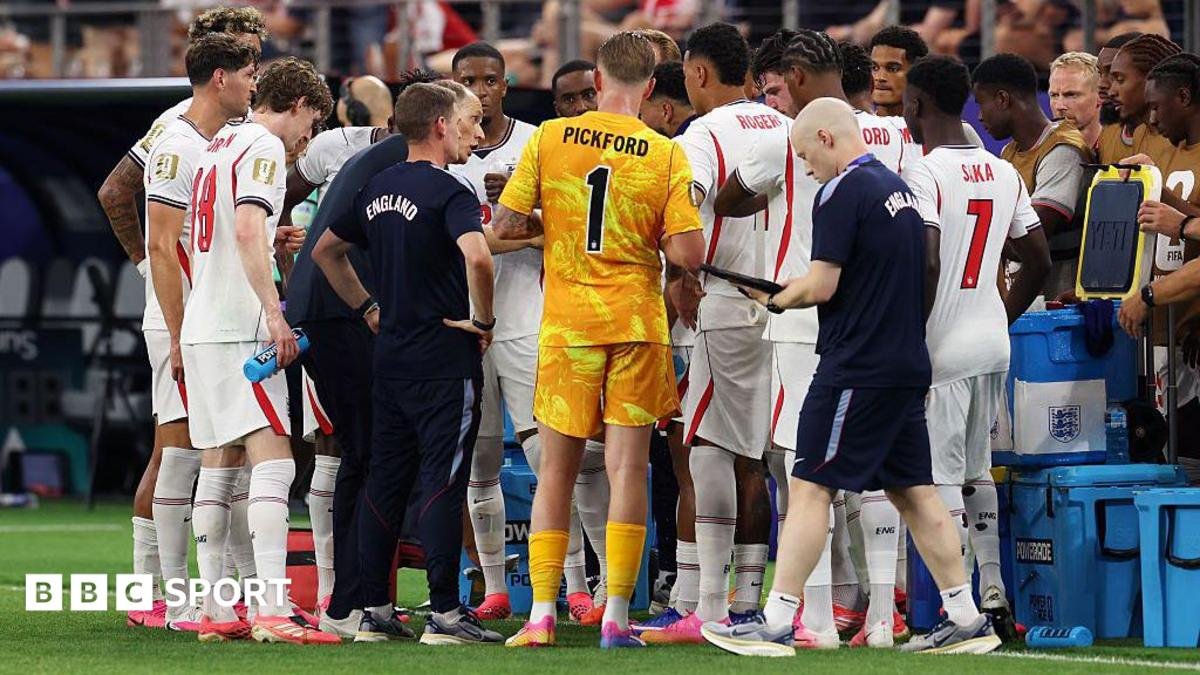
Rob di Gisi, a sport management lecturer at the University of Pennsylvania’s Wharton School, said Americans have been accustomed to in-game advertising for four to five decades, so it fits naturally with the culture.
He added that there is little resistance in the U.S., and tweaks that make the game more Americanised are likely to be accepted with barely any notice.
Telemundo, the Spanish-language U.S. broadcaster aimed at Latino audiences, is among the few that have opted not to show ads during those pauses.
During Canada’s opening match last week, a Telemundo commentator said they preferred the traditional approach, arguing viewers should be able to watch what the players are doing.
They added that the focus should be on fans enjoying themselves, not on a corporate vision of football.
BBC Sport has asked Fox Sports and Telemundo for comment.
Similar ads are being used in other major markets, including Mexico, Canada, France, Germany, Italy, Spain, China, Japan, India, Australia, the Middle East and Sub-Saharan Africa.
Broadcasters in those regions won’t command Fox Sports’ rates, and some aren’t using the full permitted duration, but the total revenue will still be substantial.
Di Gisi estimated that, when scaled worldwide, hydration-break ads could bring in about $1 billion (£756m).
However, simply putting products in front of viewers during in-game breaks doesn’t guarantee effectiveness.
T. Bettina Cornwell, head of marketing at the University of Oregon, questioned whether fan discontent might erode the value of such advertising.
She noted that when brands disrupt the expected experience—here, the flow of the game—fans can react negatively.