



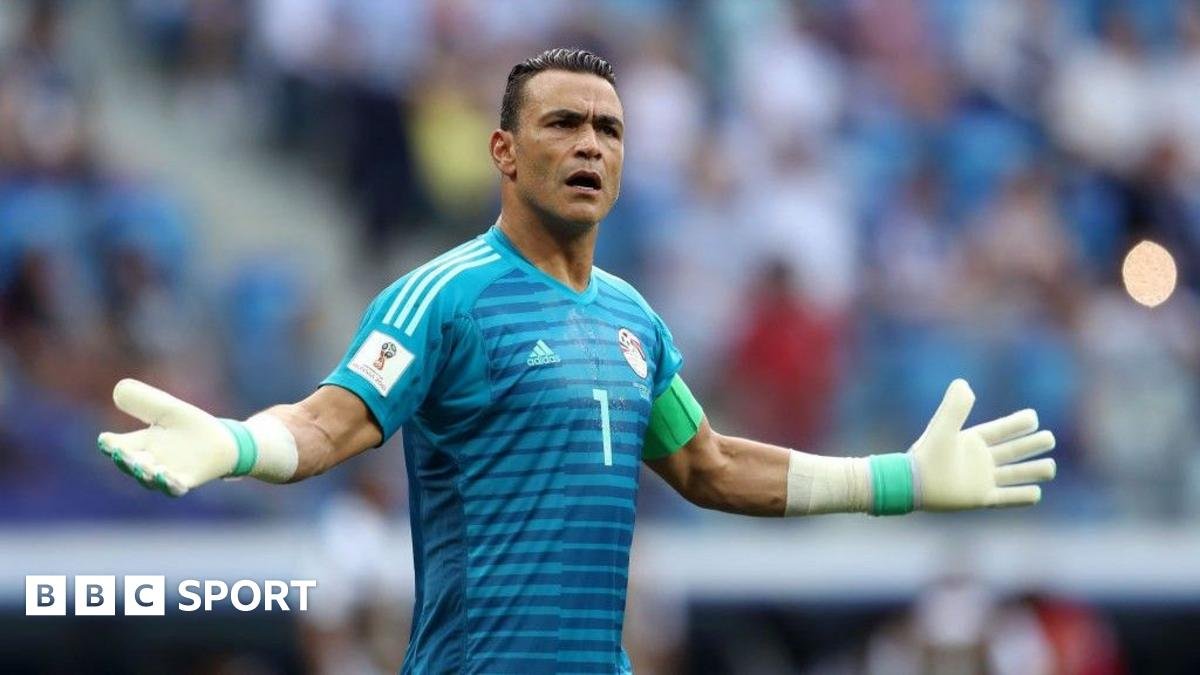
Across the men’s World Cup’s 96-year history, only nine players aged 40 or older have taken the field—and two of them have done so at this year’s tournament.
Egypt’s Essam El Hadary remains the oldest player ever to appear in a World Cup match, at 45 years and 161 days. He set the mark with a single outing at the 2018 tournament, a 2-1 group-stage loss to Saudi Arabia, extending the previous record by more than two years.
That benchmark looks secure this year. Scotland goalkeeper Craig Gordon, 43, is the oldest player named in any full squad. If he plays this summer—Scotland’s first World Cup in 28 years—the Hearts veteran would become the second-oldest player in World Cup history.
Portugal captain Cristiano Ronaldo could also join the small group to have played at 41 or older if he features in what would be his record sixth World Cup. To date, only El Hadary, Colombia’s Faryd Mondragón, Cameroon legend Roger Milla and Northern Ireland great Pat Jennings have appeared at 41-plus.
Germany’s Manuel Neuer is the first 40-year-old to feature at the 2026 World Cup; by starting a 7-1 win over Curaçao, he became the seventh-oldest World Cup player ever. Less than a day later, Cape Verde’s Vozinha started against Spain, 12 days after turning 40.
Also in the United States, Canada and Mexico are fellow 40-something goalkeepers Guillermo Ochoa (Mexico) and Fernando Muslera (Uruguay), both selected for their national teams. Muslera played against Saudi Arabia on 15 June, the day before his 40th birthday—placing him among the 10 oldest World Cup participants—and if he appears again this tournament, he would become the 10th player aged over 40 to do so.
Bosnia and Herzegovina striker Edin Džeko and Croatia midfielder Luka Modrić have both crossed the 40 mark and are expected to be involved in the tournament.