



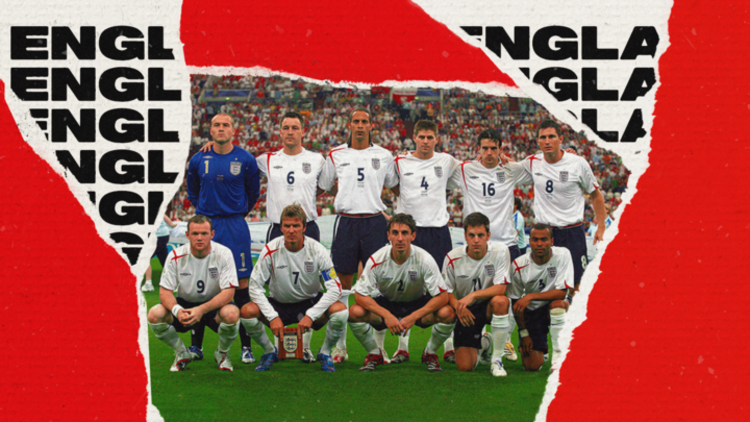
Two weeks after the Beckhams’ party, the squad flew to Germany, where hundreds of supporters welcomed them before they were taken to a secluded, castle-style five-star hotel in the Black Forest.
Down in central Baden-Baden, the arrival of their partners created an even bigger buzz.
Some were famous in their own right; others were everyday professionals suddenly thrust into a glamorous spotlight. All were grouped together under the label “WAGs” — a term later criticised as sexist — and their shopping trips, nights out, and sunbathing were tracked obsessively.
Showbiz reporter Clemmie Moodie says her assignment was to forget the football and focus on what the WAGs were doing, a task made easier because the FA put them in the same hotel as many journalists.
A lot of the attention centred on Garibaldi’s, a glass-fronted Italian restaurant in Baden-Baden, where, according to Moodie, around 22 WAGs and their entourages splashed out on limoncello shots and cocktails. She adds that Victoria Beckham described this as her “look-at-me” phase.
This was the pre-Instagram, pre-X era, when celebrity magazines and newspapers dominated — getting pictured was a route to building a public profile, and this all unfolded before the Leveson Inquiry into media practices. Journalist Alison Kervin recalls hotel staff erecting screens to shield the pool area, only for one WAG to remove them.
Not all the players were impressed. Rio Ferdinand later described Baden-Baden as chaotic — a media circus — and questioned why outsiders seemed intent on disrupting time with their families.
When results dipped on the pitch, some blamed the WAGs’ presence as a distraction. Former FA executive director David Davies called that idea absurd, noting that eventual champions Italy also had partners at the tournament. England, he argued, had more fundamental problems of their own.