



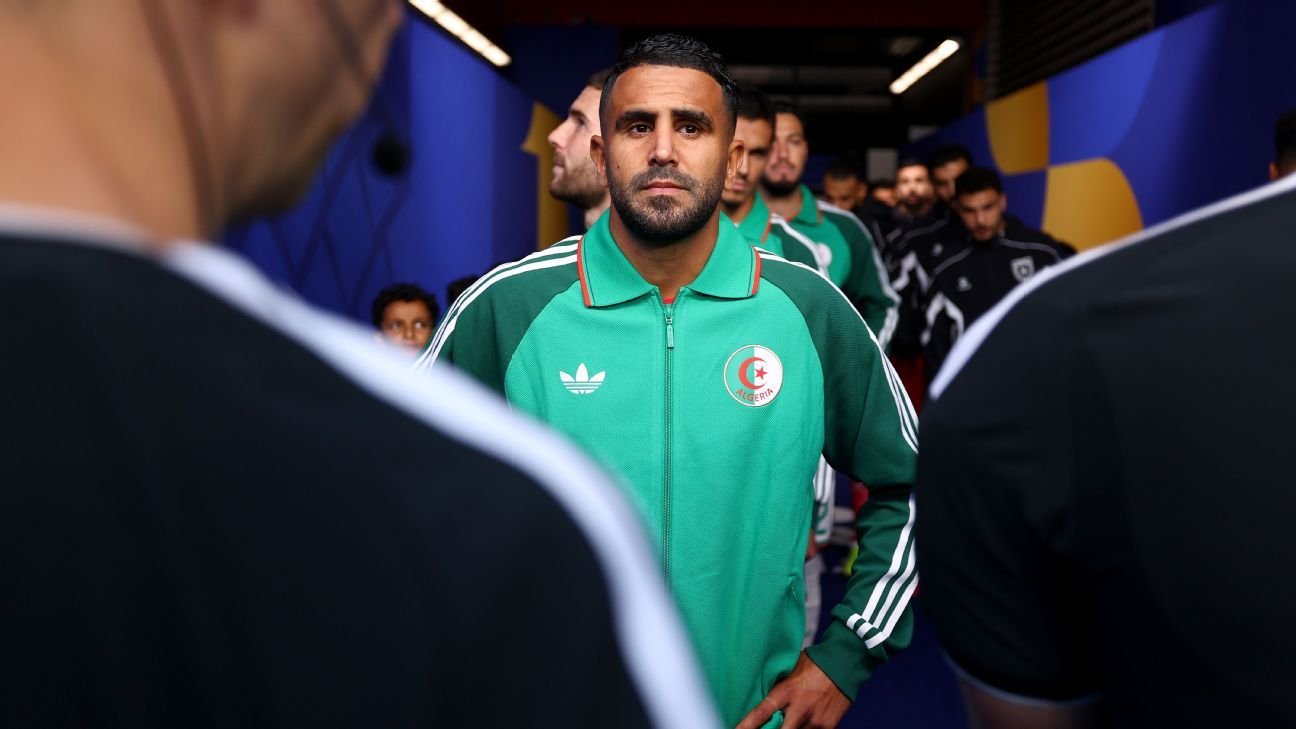
Group J of the 2026 FIFA World Cup is unfolding as anticipated. Argentina leads the group with six points heading into the final matches, where they are favored to secure another victory against the already eliminated Jordan.
The lingering question is whether Austria or Algeria, both with three points, will secure second place – and if either team even desires that spot. With the tournament bracket in play, the runner-up appears poised for a challenging match against Spain in the round of 32.
It may seem odd to suggest that a team on soccer’s grandest stage might not be fully inclined to win. But for Austria, this wouldn’t be unprecedented.
– How can teams qualify for knockout rounds of World Cup?
– The 2026 World Cup’s biggest winners and losers so far
– Why every round-of-32 team will, won’t win World Cup
At the 1982 World Cup held in Spain, Austria infamously accepted a 1-0 loss to West Germany in their final group match at El Molinón in Gijón. This result allowed both teams to advance at the expense of Algeria, changing the World Cup narrative forever.
This match became known as the “Disgrace of Gijón.”
Background of Gijón
Initially, Algeria’s journey in Spain was quite uplifting. In their debut competition, the Desert Warriors stunned everyone by defeating 1974 champions West Germany 2-1, which is remembered as one of the great World Cup upsets. Despite losing 2-0 to Austria in their second match, their prospects of advancing still looked encouraging.
After both European teams recorded victories over Chile (1-0 for Austria, 4-1 for West Germany), Algeria headed into the final matchday with two points (a win awarded two points and a draw one at that time). Austria topped the group with four points, while West Germany lingered in second place with two points, only ahead due to a better goal difference.
Algeria’s last group match against Chile took place in Oviedo on June 24, the day prior to the West Germany-Austria encounter. After building a three-goal lead in the first half, they ultimately secured a 3-2 win against Chile, leveling their points with Austria at four.
However, those two late goals conceded had significant consequences. They meant that for West Germany to proceed, they needed to beat Austria; a win by either one or two goals would ensure that both teams advanced and send Algeria home.
The Disgrace of Gijón
West Germany started aggressively, dominating play and occupying the Austrian half. Their efforts yielded a goal in the 10th minute, when Horst Hrubesch converted a left flank cross from Pierre Littbarski, granting them the lead they required.
A common misconception suggests that the match lost its competitive edge right after the goal. However, it remained a contest until approximately the 30-minute mark. By then, Eberhard Stanjek, who was commentating for West German TV, noted, “I am beginning to sense that both teams have become more cautious. The Austrians are reluctant to concede another goal for fear of being eliminated. They would face exit with a 3-0 loss. Meanwhile, our guys do not want to allow an equalizer.”
At this juncture, Scottish referee Bob Valentine also sensed something was off. Speaking to The Scotsman in 2011, he stated: “It took about 30 minutes for me to realize that the game had become stagnant. I just focused on refereeing, as that was all I could do.”
Fans quickly caught on to the situation and expressed their displeasure, whistling at every sideways or backward pass. Anger rose among the crowd, with some even waving white handkerchiefs — symbols of protest in Spain. Stanjek, the commentator, recognized their frustration: “The atmosphere is souring, and I understand why.”
As both teams stalled the game at a snail’s pace, completing over 90% of their passes with only one shot on target attempted post-goal, Stanjek ultimately denounced the circumstances in play. “What is unfolding here is shameful,” he declared. “There’s no other way to describe it.”
His Austrian counterpart, ORF commentator Robert Seeger, urged viewers to switch off their TVs in outrage — a comment that caused several players to demand his resignation — expressing shame over the Austrian team’s performance.
With Karl-Heinz Rummenigge’s long-distance shot in the 54th minute marking the last goal attempt of the match, nothing changed until Valentine signaled the end, resulting in a 1-0 victory for West Germany. This outcome allowed both them and Austria to advance while sending Algeria home.
Gijón’s Legacy
The match incited outrage in Algeria and rippled across the globe. Lacking concrete evidence of collusion and no violation of established rules, FIFA had to allow the result to stand, but promptly altered the competition structure. Since then, the final two matches in each group have always been held simultaneously. This practice has also been adopted in club football, with final matchdays in the UEFA Champions League and Premier League all taking place concurrently.
Fast forward 44 years, and it’s undeniably ironic that Algeria and Austria meet again in the final round of a World Cup group stage. The circumstances seem eerily similar, with both teams potentially benefiting from a loss.
When they step onto the field at Kansas City Stadium on June 28 as the last match of the group stage, the outcomes of all other groups will already be known. Spain’s status in Group H will be secure, and both Austria (with better goal difference) and Algeria will understand the implications of finishing as runners-up against reigning European champions in the round of 32 — a topic heavily discussed in media prior to the tournament.
Austrian journalist Martin Schauhuber wrote in a piece for Der Standard: “It’s absurd but true: in theory, Austria’s easiest path to the World Cup title may involve narrow defeats to Argentina and Algeria, provided they win decisively against Jordan in their opening match.”
He continued, “If the descendants of both the Gijón ‘perpetrators and victims’ effectively play to avoid a victory, it would represent the most absurd twist of fate in football history.”
However, Algerian journalist Rafik Tadjer believes such a situation is improbable. In an article for Tout sur l’Algérie, he stated: “Can this scenario actually happen? Upon closer inspection, it seems virtually impossible. For one, only eight of the best third-placed teams will reach the next round, and three points may not suffice.”
Furthermore, he asserts that the Desert Warriors have higher ambitions, saying, “Unlike Austria, involved in the ‘Match of Shame’ back in 1982, Algeria has never resorted to such tactics throughout its history. [Algeria] will approach their three matches in the 2026 World Cup aiming solely for victory, with no calculations. … If they face Spain in the second round, they will have everything to gain: either advancing, which would be historic, or falling with pride as they did against Germany in 2014.”
The clash 12 years ago, in which the champions were taken to extra time before winning 2-1, marked Algeria’s first chance for vengeance over 1982. Now, they stand at the brink of revenge against Austria. While the younger players on the current roster may not recall Gijón, they have certainly grown up recognizing its significance. For the older generations, a triumph would symbolize justice served.