



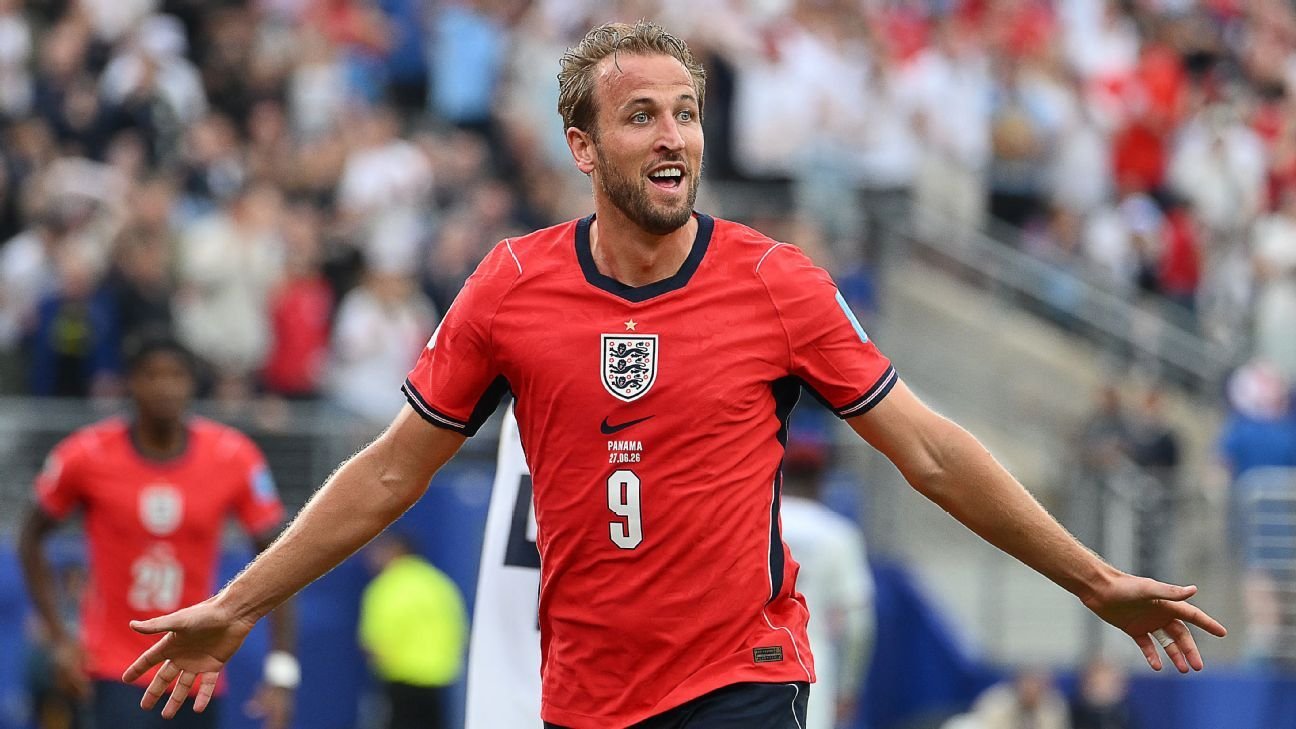
England has been in the United States for nearly a month, yet in some ways, they remain on the outskirts of truly arriving.
Securing the top spot in their group should never be assumed at a FIFA World Cup, yet many anticipated this from the moment the draw for 2026 paired them with Croatia, Ghana, and Panama. This confidence stems from the advancements made under former coach Gareth Southgate.
The transition from Southgate to Thomas Tuchel was driven by a desire to harness England’s individual talents into a potent collective force, led by a world-class manager adept at influencing crucial matches.
Glimpses of this potential were evident, particularly in their thrilling 4-2 victory over Croatia. The second half showcased a blend of risk, intent, and energy that overwhelmed Croatia, offering hope for a promising future.
However, the momentum waned with a frustrating 0-0 stalemate against Ghana, followed by a labored 2-0 win over Panama. As England gears up to face Congo DR in Atlanta on Wednesday, what is their current state?
– Uninspiring England avoid nightmare World Cup knockout scenario
– World Cup 2026 Power Rankings after group stage: Who’s No. 1?
– Why every round-of-32 team will, won’t win the 2026 World Cup
What kind of team is England?
England reached the final of Euro 2024, but their performances were lackluster. Tuchel himself noted their need for an “identity,” suggesting that Southgate’s side played more cautiously, fearing defeat rather than embracing the excitement of winning. His challenge has been to carve out that winning identity, and the group stage has shown that this process is still ongoing. With seven points from nine, topping Group L is commendable—only three World Cup winners have achieved a perfect record in group stages, and none since Brazil in 2002—yet their disjointed play contrasts sharply with the fluidity exhibited by many other contenders.
Context matters: these aren’t the matches England were designed for. Tuchel has chosen a squad suited to a counter-attacking style, favoring swift wingers who can energize around Harry Kane, rather than opting for more technical options like Cole Palmer, Phil Foden, or Morgan Gibbs-White. England performed well against Croatia, who pressed high, allowing Tuchel’s team to exploit their strengths; however, they struggled against Ghana’s defensive setup and looked disjointed against Panama, who surprised them with a more aggressive approach.
Tuchel has pinpointed issues from past performances and addressed them. Yet he also emphasized the need for players to have belief and be brave with the ball—a recurring shortcoming for England that Southgate mitigated but couldn’t completely resolve. Balancing control and freedom of expression is vital for England to become a formidable opponent. They must refine their ball retention and utilization; despite Ghana and Panama’s more defensive strategies, they needed to create more scoring opportunities. Tuchel’s claim that “the bigger the games get, the better we will be” may hold true, but for now, it’s a statement taken on faith.
0:16
‘Sorry Gary’ – Kane sends message to Gary Lineker after breaking his goal record
When will England face the heat?
England arrived in the U.S. on June 1, intending to acclimatize to the heat. However, their training camp in West Palm Beach was frequently interrupted by inclement weather, and their first match was played in Dallas’ air-conditioned stadium. The next match took place in the cooler environment of Foxborough Stadium, with rainy conditions during their victory against Panama in New York. Atlanta’s stadium also features air conditioning, which may shield them from the heat; however, their prospective quarterfinal in Mexico City, situated 2,240 meters above sea level, could pose a significant challenge. While forecasts can be unpredictable, they could once again be fortunate regarding the heat.
Current forecasts for next Sunday at Azteca Stadium predict a high of 73 degrees Fahrenheit (23 degrees Celsius). Sources reveal that England plans to travel to Mexico two days before the match—one day earlier than customary—prioritizing recovery in Kansas City over acclimatization to altitude (which, in fairness, experts suggest is a lengthy process). They will return to Kansas City from Atlanta on Wednesday and, if successful, will head to Mexico City on Friday. The true test may arise in Miami during a potential semifinal against Argentina, but thus far, England has been relatively unscathed by heat concerns.
What’s the injury situation for England?
Tuchel excels in media interactions, but it was a miscalculation to claim that the well-known hamstring-injury-prone defender Reece James suffering that same injury was unexpected. The consensus was that James would struggle to participate in eight tournament matches, and after losing Tino Livramento shortly before the tournament, his decision not to call up a specialist right-back appears to have worsened the situation. Jarell Quansah is not a natural right-back, which may leave England facing Congo DR with only Djed Spence and Nico O’Reilly as viable options on the flanks. Ezri Konsa could also be switched to right-back, with John Stones coming in; however, Stones is significantly lacking match fitness, having not played at all against Ghana or Panama.
Additionally, Bukayo Saka is evidently struggling with an Achilles problem. Sources indicate he is willing to play through the pain, yet England’s staff are concerned about his effectiveness in his current state. Moreover, Rice is dealing with a hamstring issue; he often appears indestructible, but having played 64 matches for club and country this season, some wear and tear is expected. Elliot Anderson has tightness in his glute yet managed to play 84 minutes against Panama. Many players are feeling the effects of a lengthy season, a challenge that many teams share; however, Tuchel has expressed optimism about James’s return while managing Rice’s workload against Panama as a precaution, suggesting that the injury situation is currently manageable.
0:42
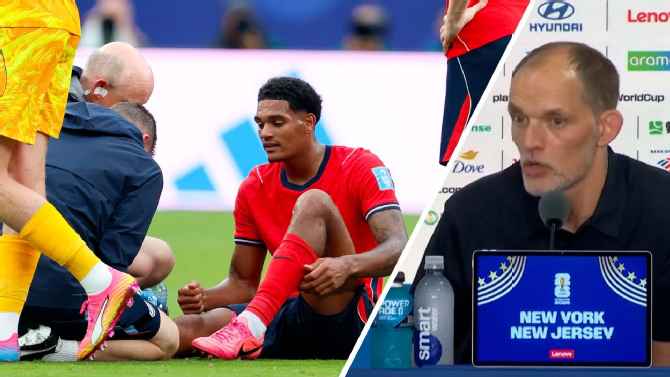
Tuchel concerned by England’s right-back injury crisis
Jude Bellingham’s emergence
Bellingham has emerged as a major positive thus far. Reports indicate there were tensions between him and several squad members during Euro 2024. The 22-year-old hinted at off-pitch discord in a June 12 interview, acknowledging that “we got some things a little bit wrong off the pitch— I don’t feel like the group connected as well as it could have for various reasons.” Southgate’s strategy involved integrating Bellingham into the leadership group.
In contrast, Tuchel adopted a more assertive stance, openly describing parts of Bellingham’s behavior as “repulsive” and having dropped him in October. Yet, Bellingham has responded well, making a significant impact in this World Cup: with two goals, one assist, and playing a crucial role in England’s victory over Panama.
“I’m not sure if it’s a reaction, but it is what we want from him,” Tuchel commented on Saturday. “He has been very positive since the first day in camp. He is fully engaged with everything we expect from him as a team player and showcases his individual talents to decide games.”
The discussion regarding whether Bellingham or Morgan Rogers should be part of the starting XI is settled, and Tuchel deserves credit for how he has navigated this situation. The pressure will undoubtedly increase in the knockout rounds, but Bellingham currently appears to be in fine form and ready to make a substantial impact.
How stable is the England starting XI?
The remaining selection dilemmas revolve around the wings and center-back positions. Marcus Rashford showed determination and resolve in his first start against Panama but struggled to have an impact in the final third. His challenge of converting impactful, brief appearances off the bench into consistent performances is a defining aspect of his England journey. Meanwhile, Anthony Gordon did not perform to his full potential in the initial two matches and may not be guaranteed a spot in the lineup. On the opposite flank, Noni Madueke must enhance his end product, and there’s a belief that Tuchel will allow Saka every opportunity to demonstrate his fitness in the upcoming days.
Defensively, Stones was initially selected for the tournament with minimal match time, playing just 439 minutes in the Premier League for Manchester City. His ball-playing ability is esteemed by Tuchel, yet with Konsa and Marc Guéhi showing reliability during qualification, they may now offer the most dependable options. The ongoing perception is that England’s defense remains vulnerable—despite Panama exiting the tournament without any points or goals, they still managed to cause issues for England. Superior teams will likely see openings. Nevertheless, Tuchel remarked on Sunday that “the tournament starts now.”
If England raises their gameplay as anticipated, the global football community will have to take note.