



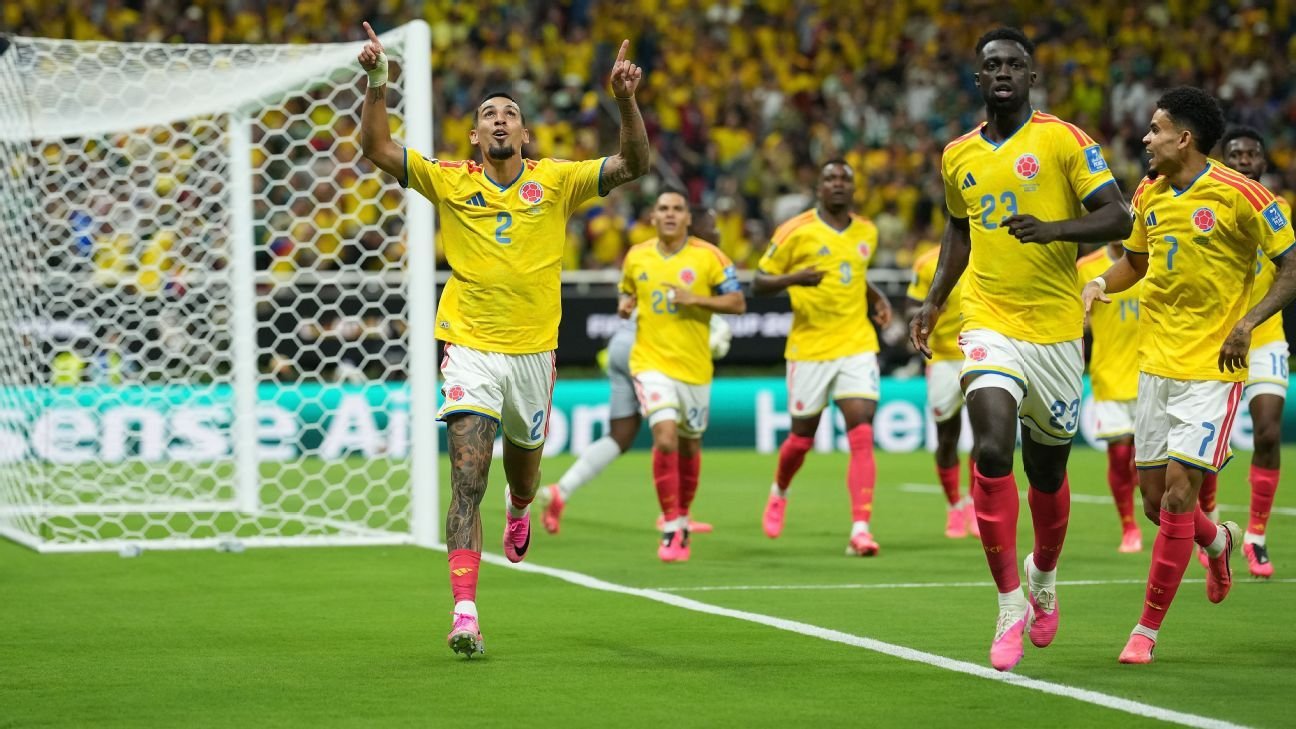
Last Saturday night, Miami Gardens, which has a vibrant Colombian community, was alive with excitement as Colombia went head-to-head with Portugal in a thrilling match that, despite ending in a goalless tie, kept fans on the edge of their seats.
Although the stakes were not particularly high, with Colombia having already secured a spot in the knockout stage of the 2026 World Cup after victories against Uzbekistan and Congo DR, a loss to Portugal would have meant a matchup in Toronto against Croatia. A favorable outcome could set the stage for a clash with Ghana in Kansas City.
Colombia opted to play at full strength, motivated by the team’s recent history and their own performance trends over the past two years.
Under the guidance of Argentine coach Néstor Lorenzo, Colombia enjoyed a significant unbeaten streak that tragically concluded in July 2024 at the same stadium in Miami Gardens. They were narrowly defeated by Argentina in the final of the Copa América, a loss that appeared to dent their confidence.
While some defeats can be easily forgotten, this one seemed to linger, shaking the players’ belief. As World Cup qualification resumed, Colombia struggled, with four losses in five games and going six matches without a victory, which invoked painful memories of their failure to qualify for Qatar four years earlier. This time, however, they countered their doubts with wins against Bolivia and Venezuela in the final rounds.
Yet lingering concerns exploded during international friendly matches at the end of March, where they faced European teams. After narrowly losing 2-1 to Croatia in a match that could have gone either way, they endured a significant setback against France, falling 3-1 to a side that had just triumphed over Brazil. France’s reserves dominated the game, easily outplaying Colombia, which left Lorenzo to rethink his strategies heading into the World Cup.
Lorenzo faced a critical question: was his tactical framework still effective? He had cultivated a system over the past three years, but as they prepared for the World Cup, could it still hold up?
Luis Díaz would spearhead attacks from the left, supported by either Luis Suárez or Jhon Córdoba, while veteran playmaker James Rodríguez remained pivotal.
Rodríguez, who emerged as a star during the 2014 World Cup and subsequently joined Real Madrid for a substantial fee, has faced challenges in maintaining his form in various clubs. Despite these setbacks, he has remained integral to Lorenzo’s strategies, particularly in his synergy with Díaz and through precise set pieces.
However, deploying two strikers alongside a seasoned playmaker places immense pressure on the supportive midfield trio of Jefferson Lerma, Richard Ríos, and Jhon Arias. They were outclassed against the French reserves.
Lorenzo was thus faced with an important dilemma: either completely reconfigure his team structure in a short span or make tactical adjustments to preserve his original vision, making the game against Portugal crucial.
Colombia began their World Cup journey with a victory over Uzbekistan. While the performance was underwhelming, they secured the three points, easing pressure and lifting spirits.
They followed this up with a strong performance against Congo DR, achieving another victory that further boosted their confidence. However, the real challenge lay ahead as Portugal represented the first top-tier opponent since their match against France.
Colombia needed to showcase that their tactics could withstand the pressure from high-level competition. After dominating stretches of the match, Lorenzo had plenty of reasons to feel optimistic about the team’s adaptability.
One of Lorenzo’s directives was for Rodríguez to contribute more defensively, in contrast to the luxury afforded to players like Lionel Messi. Rodríguez’s high work rate would likely prevent him from lasting the full 90 minutes, leading to routine substitutions during the matches.
Colombia has viable alternatives; Juan Fernando Quintero can provide a similar playmaking role, while Jaminton Campaz adds pace for counterattacks. The decision to substitute the team captain in later stages hasn’t caused friction, showcasing a mutual understanding between the coach and the player regarding the team’s needs.
Changes have also been made in the midfield, with the dynamic play of Ríos being replaced by the industrious Gustavo Puerta, contributing to a more solid defensive unit. Availing this adjustment has also granted Jhon Arias the freedom to advance effectively.
With their strong display against Portugal, expectations began to rise regarding Colombia’s potential tournament success. Although suggestions of them securing the title may be premature due to concerns about their lacking a top-tier center forward, they certainly exceeded expectations following the earlier loss to France.
In fact, the setback against France is now viewed as a pivotal moment for the team’s development as they prepare for the tournament.
However, managing excitement has not traditionally been Colombia’s strong suit, and this will be tested against Ghana in Kansas, facilitated by a reunion with Carlos Queiroz, the Portuguese coach previously at the helm during Colombia’s Qatar qualification campaign.
Queiroz possesses an impressive World Cup pedigree, demonstrating remarkable defensive acumen with teams like Iran, and he now has the means to engage in a tactical duel against Colombia.
If Colombia’s balance falters, Queiroz will certainly expose the vulnerabilities. Nevertheless, Colombia will remain hopeful that the lessons learned from their earlier defeat will aid them in their quest for glory this July.