



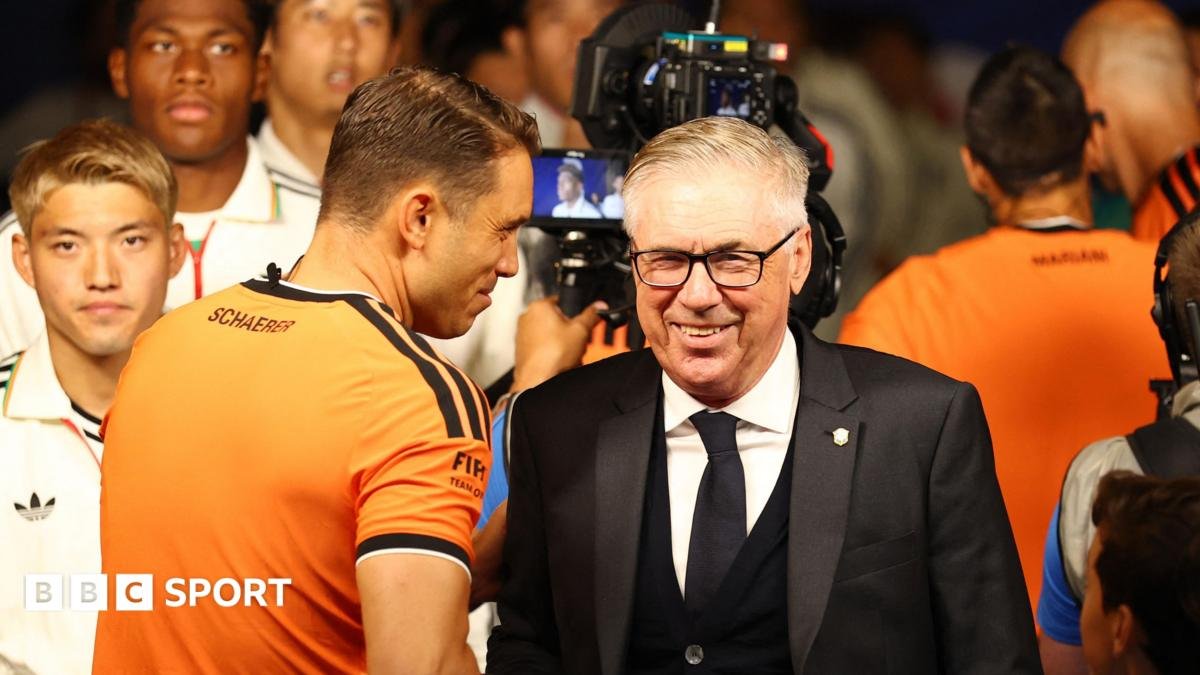
The lineup barely changed, but Brazil looked like a different team after the break.
They played with greater purpose and intensity, aided by several tactical tweaks—most notably a readiness to deliver more balls into the box.
Brazil sent in 12 crosses in the first half, yet largely tried to unlock Japan’s stubborn defense with the intricate short passing typical of the South American side.
After halftime, that approach was set aside as they launched 28 crosses. Even with six minutes of stoppage time, that worked out to roughly one delivery every two minutes.
With runners arriving on defenders’ blindside at the back post, Japan struggled to cope, and it was no surprise that Casemiro’s equaliser came from this simple yet effective tactic.
“Half-time adjustments from Carlo Ancelotti were decisive,” former England full-back Stephen Warnock told BBC Radio 5 Live. “Japan couldn’t handle the deliveries into the area.”
Ex-Celtic striker Chris Sutton added: “It’s about finding solutions. With all their experience, Brazil had enough in the tank to knock an excellent Japanese team out of the World Cup.”
There’s a romantic view of Brazil as a side rich in attacking flair and carefree football, and Ancelotti won’t suppress that—but he also understands that winning sometimes calls for a different route.
“The only acceptable outcome is victory. Is a style of play enough? We can never be satisfied with just that,” he said.
“Was it a step forward? This was our most complete game. We had more problems in the first half because Japan came at us strongly. In the second half we overcame it.
“I believe this is definitely evolution. We struggled to find space at first, but we solved that problem very well.”