



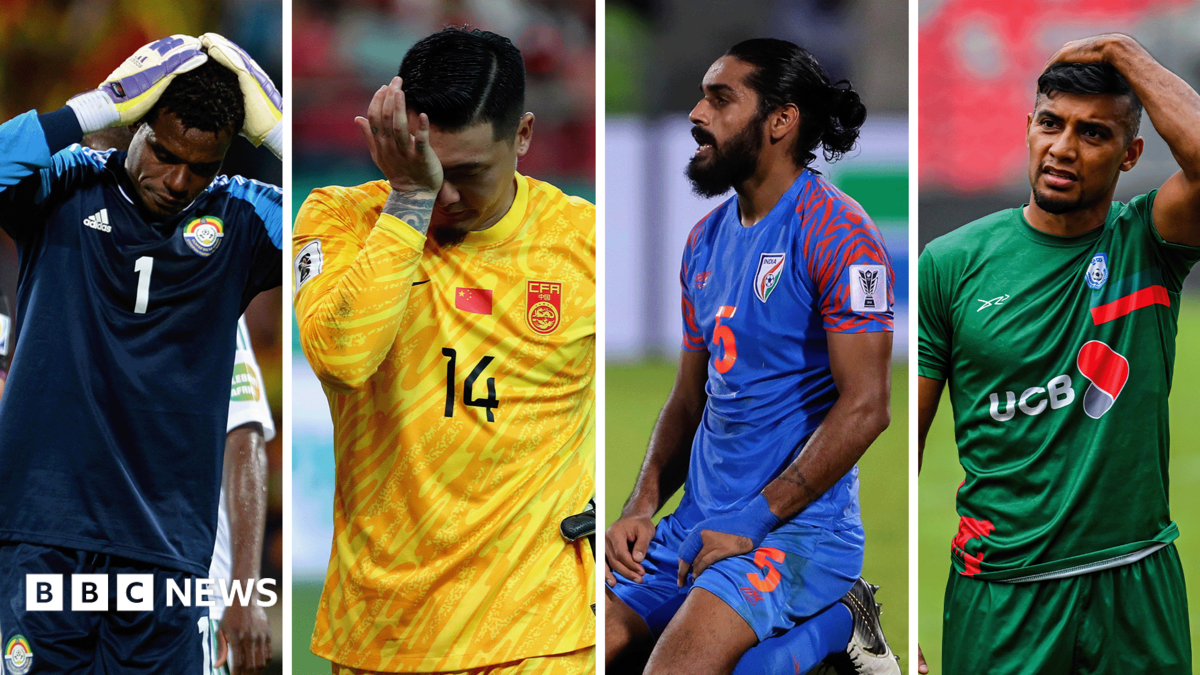
China presents a curious contrast. Over recent decades it has become one of the most successful nations in Olympic history, yet its men’s football has not achieved comparable results.
“In principle, there’s no reason China can’t develop world-class footballers,” says Mark Dreyer, a Beijing-based expert on Chinese football.
“The core problem is that everything is state-controlled and top-down. Football decisions should be made by football people, but there’s far too much political interference.”
Despite heavy investment since the 2010s—including bringing in numerous high-profile South American and European players to raise domestic standards—China has not returned to the World Cup since 2002.
Like China, Indonesia has appeared at the World Cup only once—back in 1938, when it competed as the Dutch East Indies, then under Dutch colonial rule.
The Southeast Asian side enjoyed a strong run in the 2026 campaign, reaching the final round of qualifying.
That success may be better attributed to recruiting European players with Indonesian heritage rather than relying solely on locally developed talent.
“At times, eight or nine European-born players were in Indonesia’s starting XI,” notes Jerome Wirawan, News Editor at the BBC’s Indonesian service.
Pakistan and Bangladesh exited the Asian qualifiers at the group stage without a win in six matches. Pakistan was also suspended from international football three times by FIFA between 2017 and 2025 due to political infighting within its federation.