



Uefa drew a fresh battle line on Tuesday by condemning the Balogun ruling, calling Fifa’s move a step too far and an extraordinary, baffling, and indefensible act.
This is hardly their first clash. In May 2025, Uefa president Aleksander Ceferin led European delegates in walking out during a break at the Fifa Congress. Gianni Infantino had turned up two hours and 17 minutes late after a diplomatic trip in the Middle East with Donald Trump.
Uefa has also sought to make political statements during the World Cup. No sooner had Artan returned to Somalia last month than Uefa revealed he’d been invited to referee the Uefa Super Cup between Paris St‑Germain and Aston Villa on 12 August. Throughout the year it has highlighted how Euro 2028 tickets are cheaper than World Cup seats, and it will not bring in hydration breaks or send off players for covering their mouths.
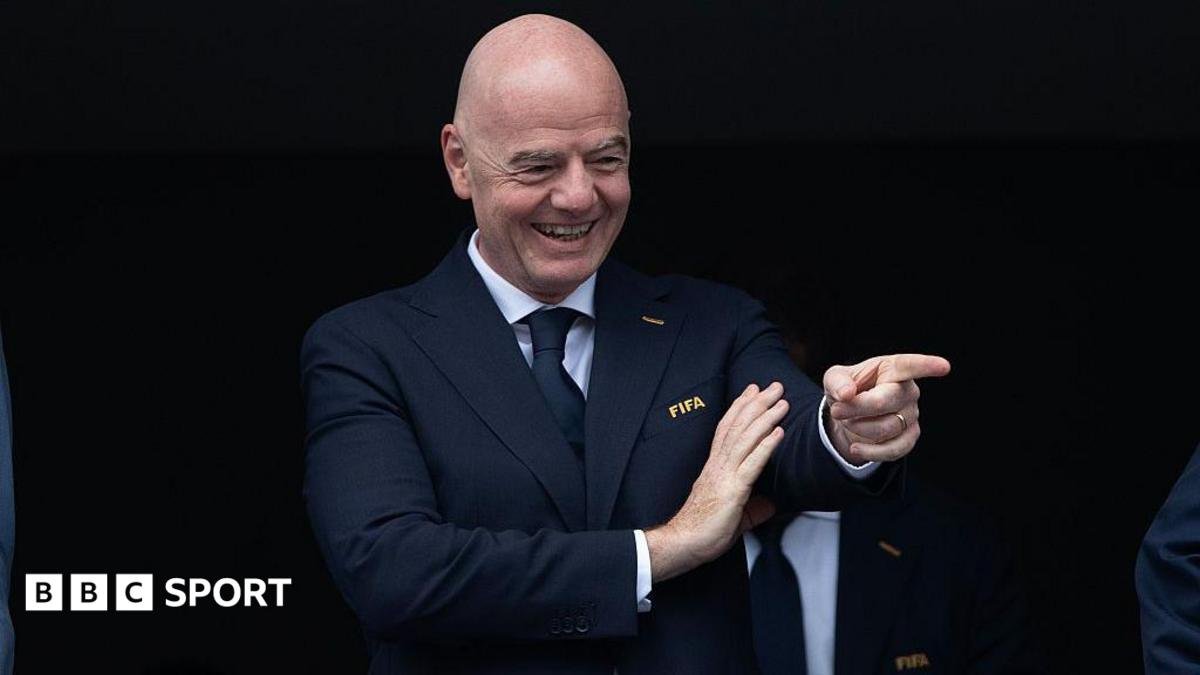
Infantino, once a Uefa insider and familiar face at Champions League draws, is no longer exactly welcome, even if he addressed Uefa’s Congress in February. Tensions are plain. So is his job at risk? Quite the opposite. He retains broad global backing, largely thanks to Fifa’s development work.
Through the Fifa Forward programme, projects have been funded worldwide, and the expanded World Cup has created new pathways. Sixteen extra slots now exist, most allocated to regions with less depth; Europe received only three. This World Cup has underlined how much Asia and Concacaf must improve below the elite tier, yet Infantino has offered hope to countries such as Cape Verde, Curaçao, Jordan and Uzbekistan. The 48‑team format made Cape Verde’s dream possible and should help emerging nations grow stronger—surely a win for the global game.
The trade-off is that mega-events and high ticket prices bankroll these initiatives. Fifa is projected to generate $9bn (£7.9bn) this year. Uefa may resist much of Infantino’s agenda, but European football is wealthy enough to self-fund; many others are not, and they rely on Fifa’s money.
Fifa has 211 members, with 106 votes needed to win the presidency. The arithmetic already favours Infantino. In April, Conmebol’s 10 associations pledged support. Three weeks later, Caf’s 54 members did the same. Soon after, the Asian Football Confederation’s 47 nations followed. That’s 111 votes—already over the line. Even if Uefa could unite behind a challenger, the outcome appears settled. Infantino ran unopposed in 2019 and 2023; it would take something extraordinary for anyone to stand against him—let alone defeat him—in 2027.