



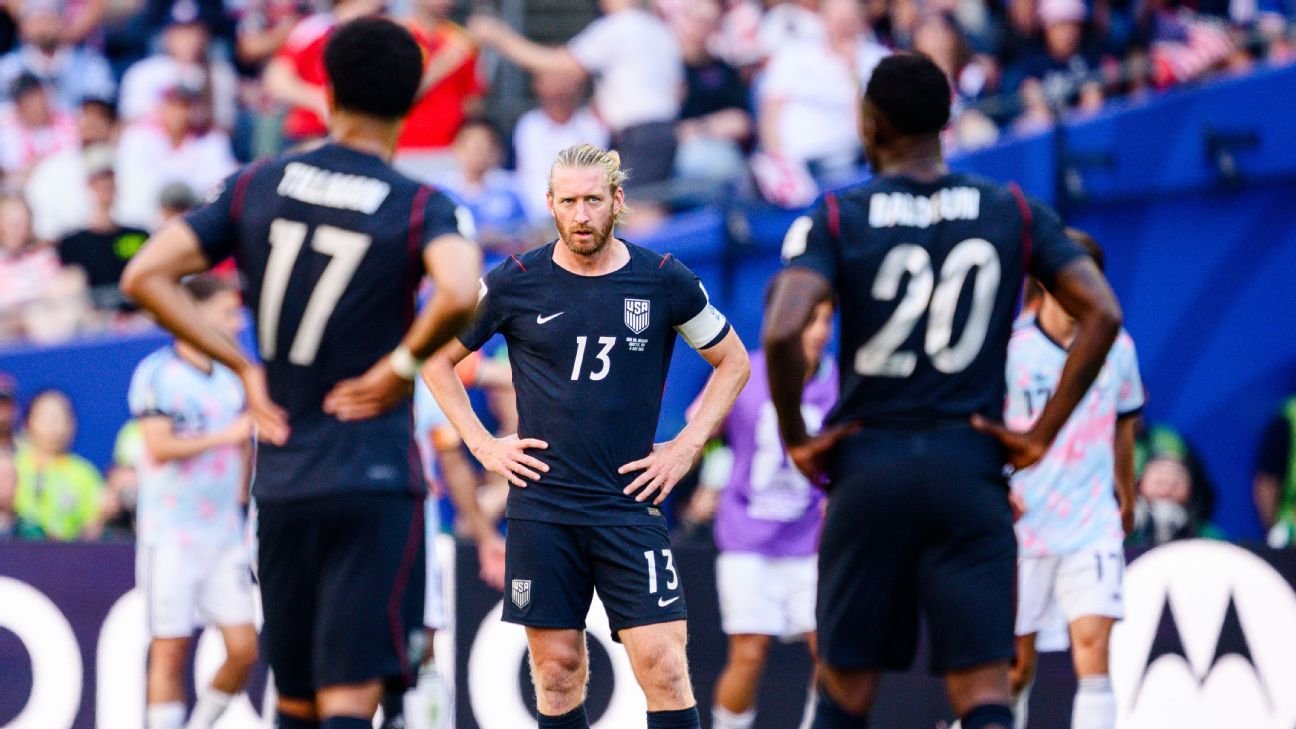
The trajectory of the U.S. men’s national team at this FIFA World Cup has been nothing short of a rollercoaster. The campaign began on a high note with a dominant 4-1 victory over Paraguay. The team followed up with solid wins against Australia in the group stage and Bosnia-Herzegovina in the round of 32. However, a loss to Türkiye, which had no impact on the standings, raised eyebrows, especially due to the numerous changes made by coach Mauricio Pochettino to his lineup.
Then came a devastating defeat in the round of 16, where the U.S. suffered a 4-1 loss to Belgium. It was as disappointing as it was shocking, akin to completing all homework and then faltering on the final exam.
Thus, assessing the team’s performance largely hinges on the weight given to that final outcome. Here’s how the USMNT’s report card looks.
– O’Hanlon: The truth of the U.S. failure lies with the players
– Borden: A missed opportunity for the U.S. at the World Cup
– Reaction: Belgium delivers a reality check for the U.S.
PHYSICALITY: B+
By most metrics, the USMNT emerged as one of the fittest teams in the World Cup up until the round of 16. Of course, various factors played a role: the U.S. benefitted from ideal weather conditions, with games held in the comfortable climates of the Los Angeles area and Seattle, where SoFi Stadium’s roof shielded players from the harsh sun.
Moreover, the U.S. did not face adverse weather comprising heavy rain or altitude challenges, which can be difficult for players. Their high-pressure playing style, determined by Pochettino, required significant running, corroborated by FIFA’s data showing that the U.S. ranked fourth out of 48 teams in average speed at 6.23 km/hour, while also placing eighth in both the distance covered per match (118,979 meters) and average sprints (489.2).
Belgium, however, surpassed the U.S. in all these categories, highlighting that although the U.S. was athletic, they were at a disadvantage in this respect against the Red Devils, particularly in midfield, where they faced off against players such as Dodi Lukébakio and the injured Amadou Onana. As one anonymous source observed, “When better teams match or exceed your work rate, you’re sunk.”
Overall, the U.S. showed strong athletic performance, even against robust teams like Australia and Bosnia. Yet the match against Belgium exposed areas needing improvement.
TACTICAL APPROACH: B+
Pochettino’s high-press strategy, influenced by Marcelo Bielsa and Gerardo “Tata” Martino, is his signature style. Although the implementation took some time, the players ultimately embraced his concepts.
There are few criticisms regarding Pochettino’s roster choices. While there were initial concerns that the midfield lacked depth, lineup selections in this area were not overly strained.
Offensively, alongside the pressing, wing play was a focal point, aligning with the team’s strengths. Christian Pulisic clearly remained the team’s top attacking asset, and pushing Sergiño Dest further up the pitch was a sensible decision given his defensive limitations.
Defensively, Pochettino utilized Alex Freeman in a hybrid role, serving as a center back when in possession and as an outside back when the team was defending. Freeman added crucial athleticism to the defense (he was one of the few players to earn some credit following the Belgium match), allowing Antonee Robinson on the opposite flank to push forward.
Although Pochettino’s tactics faced some hurdles against the more skilled Belgium side, the rationale behind his decisions was sound.
TACTICAL EXECUTION: C+
At first glance, the U.S. approach seemed effective. The USMNT netted 11 goals, shattering the previous record of seven goals scored in a single World Cup, and their three victories were also unprecedented. This aggressive and confident demeanor appeared emblematic of American soccer.
On defense, the U.S. posted an impressive 10.15 passes allowed per defensive action (PPDA), ranking sixth in the tournament through the round of 16, indicating successful ball recovery and effective pressing early on. The first four games showcased some thrilling performances.
“Starting the World Cup strong, creating chances and scoring goals is massive for momentum,” stated former USMNT manager Bob Bradley to ESPN. “It generated tremendous excitement in the country during the hosting of the World Cup.”
However, this success also masked several issues. The U.S. benefitted from two own goals, which, while a product of their aggressive play, illustrated a reliance on fortunate breaks. Out of the 11 goals, five came from set pieces, and post-Paraguay, the team had only one goal from open play, courtesy of Folarin Balogun against Bosnia.
According to Bradley, “While we displayed good play, our ability to create chances from open play and explore various avenues to penetrate the opposition’s defense was still a concern.” He also pointed out moments from friendlies against Germany and Senegal where lapses in the defensive connection and lapses in concentration raised alarms about their future performances against better teams.
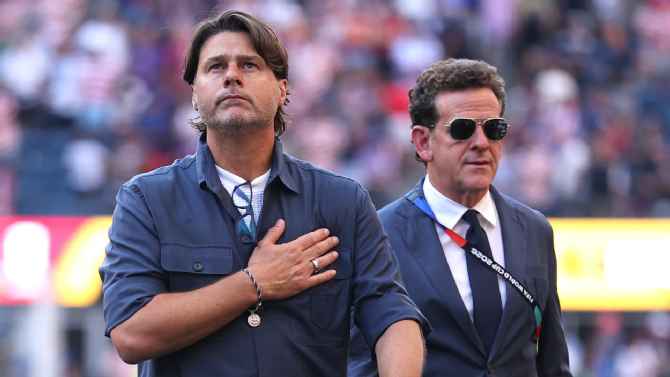
1:59
What’s next for Pochettino and the USMNT?
These concerns materialized and are evident in the statistics. The U.S. averaged 1.2 expected goals (xG) per game, ranking them 23rd out of 48 teams. Against Belgium, a lack of intensity in their defensive third allowed the Red Devils to find the net twice in the first half.
Belgium’s direct gameplay often bypassed the U.S. midfield, undermining the effectiveness of their press, while the Americans struggled in duels, managing to win only 44.4% in the first half. In light of the athletic Belgian team on the pitch, the U.S. found themselves at a disadvantage.
This serves as a reminder that while tactics are crucial, they are not a catch-all solution.
PSYCHOLOGICAL PREP: C
This aspect can be viewed in two segments: the pre-Belgium phase and everything that followed.
Firstly, credit goes to Pochettino for cultivating a strong team spirit, evidenced by players enjoying training sessions and fighting back to secure a 2-0 victory over Bosnia, even when down to 10 men for the last 35 minutes.
U.S. captain Tim Ream praised Pochettino’s ability to unify the squad, stating, “He genuinely cares about the players and the group as a whole… He connects with each player by understanding their body language and ensuring we’re in a good place mentally, physically, and emotionally.”
But then came the match against Belgium.
While Belgium performed exceptionally well and coach Rudi Garcia executed a strong game plan, speculation arose that the uproar surrounding Balogun’s postponed red-card suspension motivated the Belgian team and weighed heavily on the Americans.
Despite players and staff denying that incident played a role in their performance, observations suggested otherwise.
As pointed out by a former MLS manager who wished to remain anonymous, “Switching to Balogun at the last moment, especially with all the controversy, surely impacted everyone’s focus.” Moreover, it was clear that the team’s body language reflected unease—exhibiting a passive demeanor as if waiting for something to unfold rather than actively making it happen.
“The warm-up was the worst I’ve ever seen. Everything felt off—no energy, no enthusiasm,” recalled another source present at the game.
This points to mental factors and emotional burdens that weighed on the team, indicating a rapid collapse post-Belgium that does not reflect well on the USMNT and will linger in the memories of those involved.
OVERALL FINAL GRADE: C+
Leading up to the World Cup, one common question circulated: What constitutes success for the USMNT? The team’s performance offers no clear-cut answer.
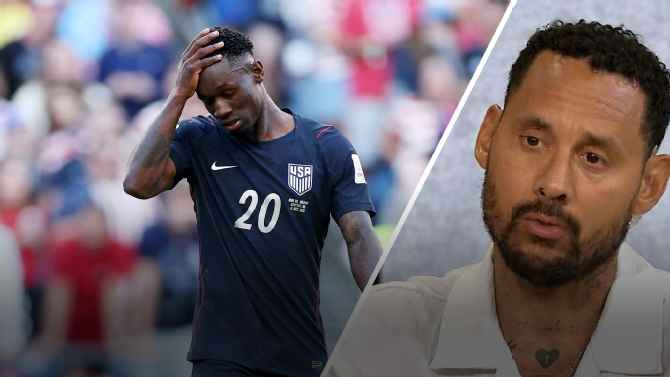
2:04
Jones: USMNT didn’t meet expectations
For a period, the USMNT captured national attention. Undeniably, the sport gained from the increased exposure during the month-long tournament, with the USMNT fuelling that enthusiasm. Additionally, finishing in the round of 16 holds no shame. In a nutshell, the U.S. met expectations, but Belgium proved superior.
Nonetheless, the manner of the U.S. exit stings deeply.
In contrast, other co-hosts like Mexico and Canada left fighting. Mexico displayed valiant effort despite their defeat against England, while Canada showcased heart against Morocco, with the final score perhaps being kinder to the winners. The lasting impression for the U.S. is of a team that stood together in a midfield huddle after the game, questioning where it all went wrong.
Now, the USMNT must regroup and reassess as they aim to ascend the international ladder.