



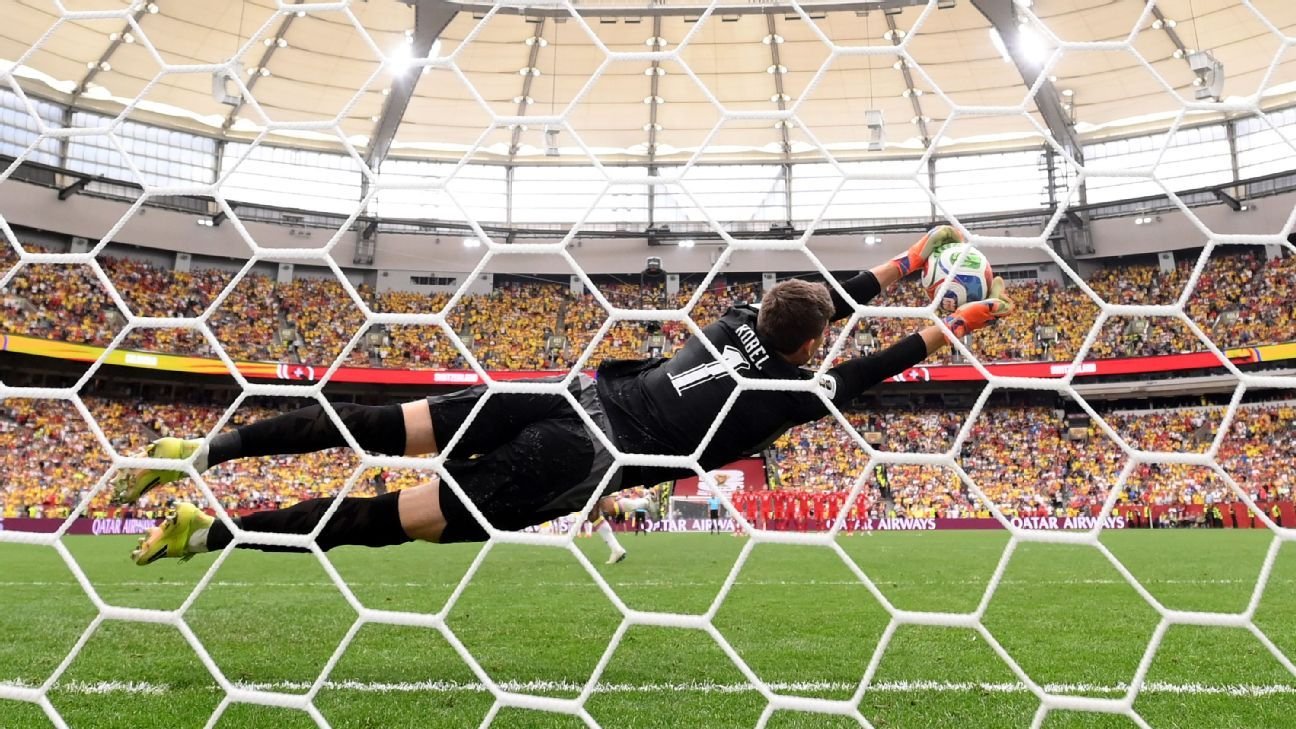
DALLAS — Since the inaugural World Cup penalty shootout in Spain in 1982, there have been a total of 39 knockout matches decided by penalties. This includes five semifinals and three finals, with four shootouts already taking place this summer, resulting in victories for Paraguay, Morocco, Egypt, and Switzerland.
As the teams prepare for potential penalties, the 2026 semifinalists—France, Spain, England, and Argentina—are gearing up for a crucial match on Sunday in New York. For the players, this could be one of the most high-pressure moments in their careers.
Argentina historically holds a strong track record in shootouts, having participated in seven World Cup penalty shootouts—the most of any team—winning six of them, including two en route to their triumph in Qatar four years ago.
– Preview: Essential details for the World Cup semifinals
– Tired of extra time and penalties? Meet the man trying to change it
– Connelly: Analyzing how the semifinalists score their goals
Lionel Messi shares the record for the most penalties scored in shootouts with three (in 2014 and twice in 2022), alongside Roberto Baggio and Luka Modric. However, he has missed two penalties in normal time during this tournament.
In contrast, Spain may not feel very secure going into a potential shootout against France, as they possess the unfortunate record of the most penalty shootout exits—four—tied with the Netherlands. They have been eliminated in the last two World Cups after falling short in shootouts against Russia in 2018 and Morocco in 2022.
Among the 2026 semifinalists, Argentina boasts the highest shootout success rate at 86%, while France (40%), England (25%), and Spain (20%) have struggled in this regard.
The United States appears to be an anomaly when it comes to penalty shootouts, having participated in a record eight World Cup knockout matches without facing a single shootout. Meanwhile, Croatia has been involved in four shootouts (two each in 2018 and 2022) without ever losing.
The odds of winning the World Cup without enduring at least one shootout stand at about 50%. Since the tournament began in 1982, five champions have faced at least one shootout in the knockout rounds.
Spain, France, England, and Argentina have all advanced to the semifinals without requiring penalty shootouts. However, analysts and coaching staff for these teams will be preparing their goalkeepers—Unai Simón, Mike Maignan, Jordan Pickford, and Emi Martinez—to ensure they are ready for any scenario. The preparation for each goalkeeper will vary based on the amount of information they wish to gather ahead of the match.
“The approach varies by goalkeeper and is influenced by how coaches and analysts strategize,” said Manchester United and England goalkeeper Tom Heaton. “Sometimes, it’s purely an instinctive choice for the goalkeeper in the moment. This is rare nowadays, but it still happens.
“On the other hand, extensive analysis is available on a taker’s past penalties—examining their preferred foot, shot placement, and any missed attempts. This analysis dives deep, often tracing back to youth levels.
“The wealth of information available leads to differing strategies. Personally, I prefer understanding the taker’s style. This process typically spans a couple of days leading up to a game—two days prior and the day before. Occasionally, it’s done on match day, but that’s less common.
“If the match reaches a shootout, we often revisit the research just before, sometimes jotting key points on a water bottle or a cheat sheet from the goalkeeper coach.”
1:22
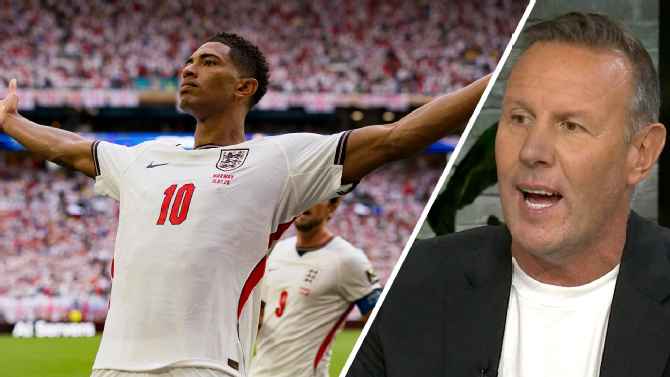
Burley: Bellingham believes ‘he can take England all the way’
In the first World Cup penalty shootout between West Germany and France 44 years ago, goalkeepers Toni Schumacher and Jean-Luc Ettori relied heavily on instinct. Today, the abundance of data available to kick takers suggests that knowledge significantly enhances a goalkeeper’s performance.
In earlier tournaments like 1982, 1986, and 1990, the success rate for shooters in shootouts exceeded 70%. But since 2018, that rate has declined below 67%. In the ongoing 2026 tournament, only 25 out of 40 penalties taken in shootouts have been successfully scored, representing a 63% success rate. Should any of the 2026 semifinals proceed to penalty kicks, it will be up to Simon, Maignan, Pickford, and Martinez to determine whether to rely on analytics or instinct.
“I personally prefer having some data at hand,” noted Heaton, who was part of England’s staff during Euro 2024. “Understanding the taker’s tendencies, such as their preferred foot and previous shot placement, is essential. This information helps inform the decision-making process.
“Ultimately, I like to encourage goalkeepers to make their own choices in the moment. Taking ownership of the decision leads to full commitment. If someone instructs you on where to dive, synchronizing that with full commitment can be challenging. Providing goalkeepers with information while allowing space to make real-time decisions strikes the best balance.”
As goalkeepers assess their next move, takers too must weigh their options.
Criticism has come Kylian Mbappé and Bruno Guimarães’ way after missing penalties due to their stuttered run-ups—an approach meant to induce the goalkeeper to move prematurely. However, if a goalkeeper resists and waits, it can leave the taker with little momentum to strike powerfully. Mbappé experienced this first-hand when Morocco’s Yassine Bounou easily saved his penalty kick in the quarterfinals.
“The stuttered run-up poses challenges for goalkeepers,” Heaton explained. “It limits the traditional penalty run-up style, which can tilt the odds in favor of the kicker if timed well. However, if a goalkeeper anticipates a stutter and the kicker opts for a conventional delivery instead, the timing becomes critical. Goalkeepers who successfully adapt between the two styles gain an advantage.
The stakes rise with each kick, as the data and preparation collide with the realities of pressure—an aspect that modern analytics cannot quantify.
The weight of a whole nation’s hopes resting on a single penalty kick is a significant burden. For some players—especially at this critical World Cup stage—success can define their careers. For those in the semifinals, the pressure to score is immense, but goalkeepers also feel the burden of expectations.
1:08
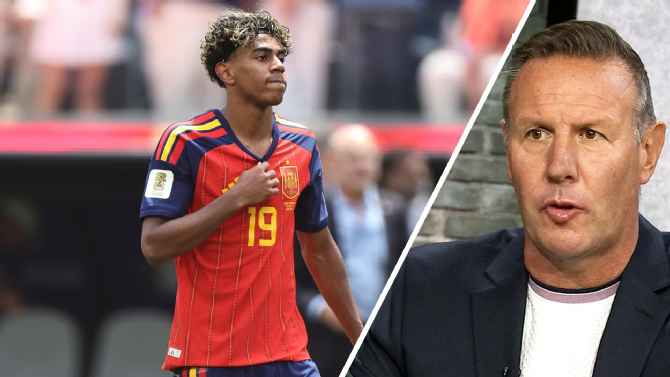
Burley: France will punish Spain if they don’t improve
In the lead-up to Australia’s shootout against Egypt in the round of 32, the team made the decision to replace their first-choice keeper, Patrick Beach, with Mat Ryan specifically for penalties. Unfortunately for Australia, Ryan failed to save any of Egypt’s attempts, resulting in their elimination—highlighting the risks of such decisions.
“Typically, the pressure is more on the player taking the penalty,” Heaton stated. “However, if the shootout extends and goals continue to be scored, the pressure can shift to the goalkeeper, who may feel compelled to make a save.”
“Initially, the onus is on the kicker to convert, but as the shootout progresses, this burden can gradually move to the goalkeeper.”
World Cup semifinals have a history of creating heroes and villains, particularly when they culminate in penalties. As Spain, France, Argentina, and England prepare for their anticipated matches, both takers and goalkeepers face an unparalleled level of pressure.