



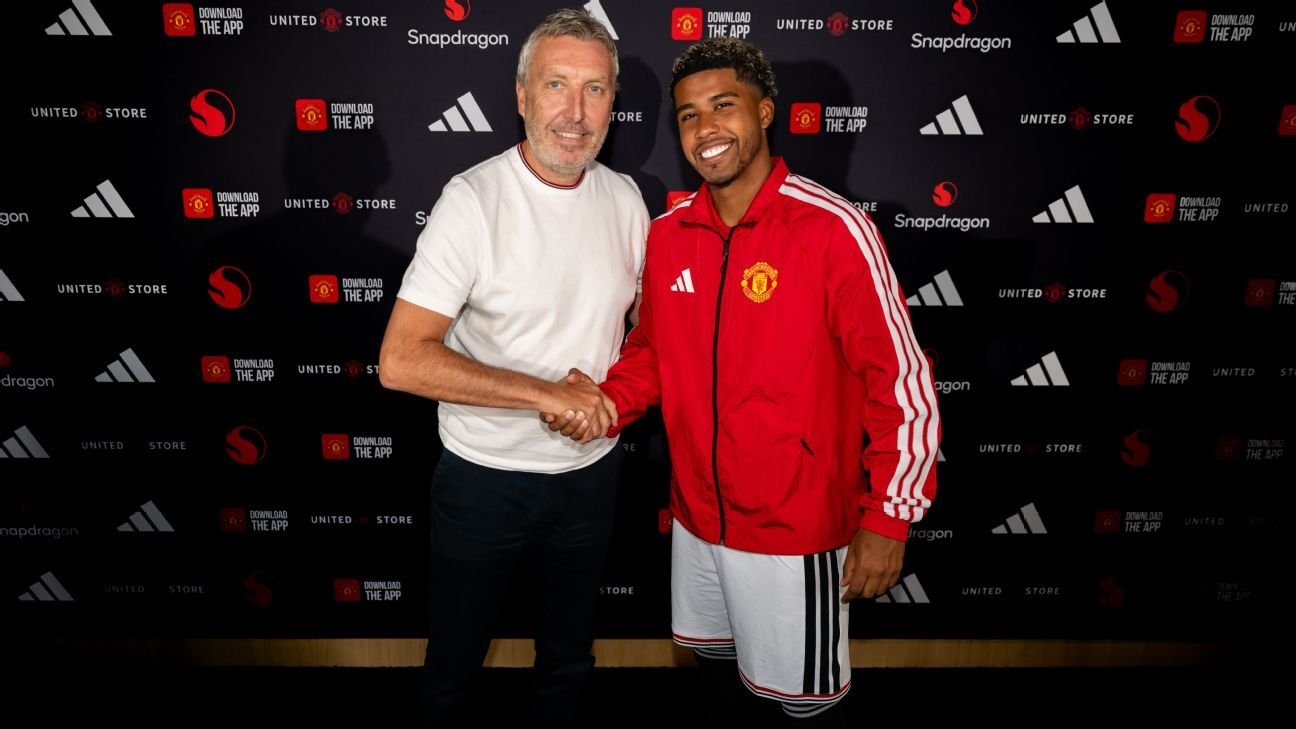
Manchester United haven’t had to completely overhaul their transfer strategy this summer, but they have faced a few challenges that necessitated adjustments. Significant player movements included Elliot Anderson joining Manchester City for £116 million, Mateus Fernandes moving to Tottenham for £85 million, and a failed attempt to secure Éderson from Atalanta for £35 million, highlighting the numerous obstacles they faced.
CEO Omar Berrada had remarked prior to the transfer window that the club would need to be “flexible,” a statement that has proven prophetic. With Anderson and Fernandes no longer on their target list, the focus of their midfield rebuild has shifted towards acquiring new signings like Andrey Santos (£48 million from Chelsea) and Youri Tielemans (£35 million from Aston Villa).
Insiders at United suggest that Berrada and director of football Jason Wilcox have maintained a calm approach throughout the frantic player acquisition process. In the past, the club has often panicked in the face of setbacks. However, this time around, avoiding mistakes has been prioritized alongside making the right signings.
Early on, United recognized that England star Anderson, their primary midfield target, would likely be beyond reach due to Manchester City‘s interest and the hefty fee of nearly £120 million demanded by Nottingham Forest.
They learned a valuable lesson in January from their pursuit of Bournemouth winger Antoine Semenyo. Despite initially being considered frontrunners, negotiations soured once City entered the fray, leading to increased wage demands that forced United to withdraw. They preferred not to take a similar path with Anderson and thus decided to back off early.
Fernandes’ unexpected move to Tottenham also added a twist to United’s plans. The club had budgeted between £80 million and £90 million for a midfielder and could have matched Tottenham’s offer. However, reports suggest that during talks, United lacked confirmation that Old Trafford was Fernandes’ preferred destination, creating uncertainty about whether to meet West Ham United’s asking price.
Berrada and Wilcox found this reluctance to commit contrasting with the decisive stance of players like Bryan Mbeumo and Matheus Cunha, both of whom chose United despite interest from various other clubs, many of which were involved in Champions League competitions.
Sources indicate that the recruitment team believes this commitment is what allowed Mbeumo and Cunha to integrate seamlessly into the squad. Some staff members feel that Jadon Sancho, acquired for £73 million, had an inconsistent start partly because he was unsure about leaving Borussia Dortmund for United in 2021.
Fortunately, Tielemans quickly demonstrated his desire to play for United, bringing valuable Premier League experience to the team. His acquisition came shortly after United paused their negotiations for Éderson, which had already reached an agreement with Atalanta for approximately £35 million prior to the World Cup. However, medical concerns led United to abandon the deal for now.
Club officials haven’t dismissed the possibility of revisiting both Tielemans and Éderson later in the summer.
Despite having bolstered their transfer funds by qualifying for the Champions League this season, United must avoid unnecessary expenditures. Initially, they perceived Fernandes as someone who could be acquired for £40 million to £50 million this summer—assuming West Ham faced relegation. His eventual transfer fee soaring nearly double that raised internal concerns about inflated market prices. Conversely, the deal for Santos at £48 million (plus £2 million in add-ons) was seen as a more prudent option.
Prior to the summer, few anticipated that Tottenham would invest a combined £185 million on acquiring Fernandes and Newcastle United‘s Sandro Tonali, another midfielder that United had considered. As they forged their own transfer strategy, the recruitment team attempted to predict the moves of rival clubs. Tottenham’s significant early expenditures caught them off guard.
Initially, United expected player departures—including Rasmus Højlund (£40 million to Napoli)—to generate about £90 million, helping cover the costs of key midfield acquisitions.
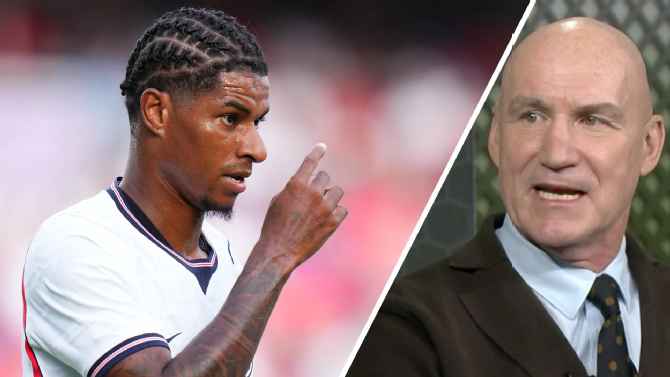
However, Barcelona opted against signing Rashford permanently for £25 million, and Ugarte has been unable to finalize his move after suffering a serious knee injury during the World Cup that may sideline him for an extended period.
1:31
Robson: Rashford return to Manchester United would be ‘difficult’
As the budget fluctuates, United must carefully navigate their expenditures. Berrada has a preference for deals involving players with release clauses to mitigate what they refer to as the “United tax.” This made Tielemans’ £35 million release clause particularly appealing.
United remains open to the possibility of a third midfield signing, especially in light of Ugarte’s injury.
There is interest in Bournemouth players Alex Scott and Tyler Adams, as well as Fulham‘s Sander Berge. They have also closely monitored Crystal Palace‘s Adam Wharton, Wolverhampton’s João Gomes, AS Roma‘s Manu Koné, and Morocco’s rising star from the World Cup, Ayyoub Bouaddi, who currently plays for Lille.
Real Madrid‘s Eduardo Camavinga has also been proposed to various Premier League clubs. Meanwhile, United previously inquired about Brighton & Hove Albion‘s Carlos Baleba last summer, only to find that the required initial fee would be comparable to the £100 million Chelsea paid for Moisés Caicedo in 2023.
United is also looking to address other positions, targeting a left-sided player—either a winger or full-back—and a secondary striker. Additionally, Wales international Karl Darlow, 35, has been brought in from Leeds United as an experienced backup goalkeeper for No.1 Senne Lammens.
United seeks to improve not only the overall quality of their starting lineup, aiming to build on last season’s third-place finish, but also to enhance the depth of their squad in anticipation of the increased demands imposed by Champions League participation.
Nonetheless, sources at United are calm regarding their transfer activity thus far. While there may be some disappointment from the fans about a lack of a standout midfield signing, club officials maintain that the summer transfer business should be evaluated only after the transfer window closes.
With six weeks until the new Premier League season kicks off on August 22, and seven weeks left before the market shuts on September 1, United must swiftly adapt to meet their recruitment objectives amidst the ongoing hurdles.
Plans have shifted, but the work to strengthen the squad persists.