



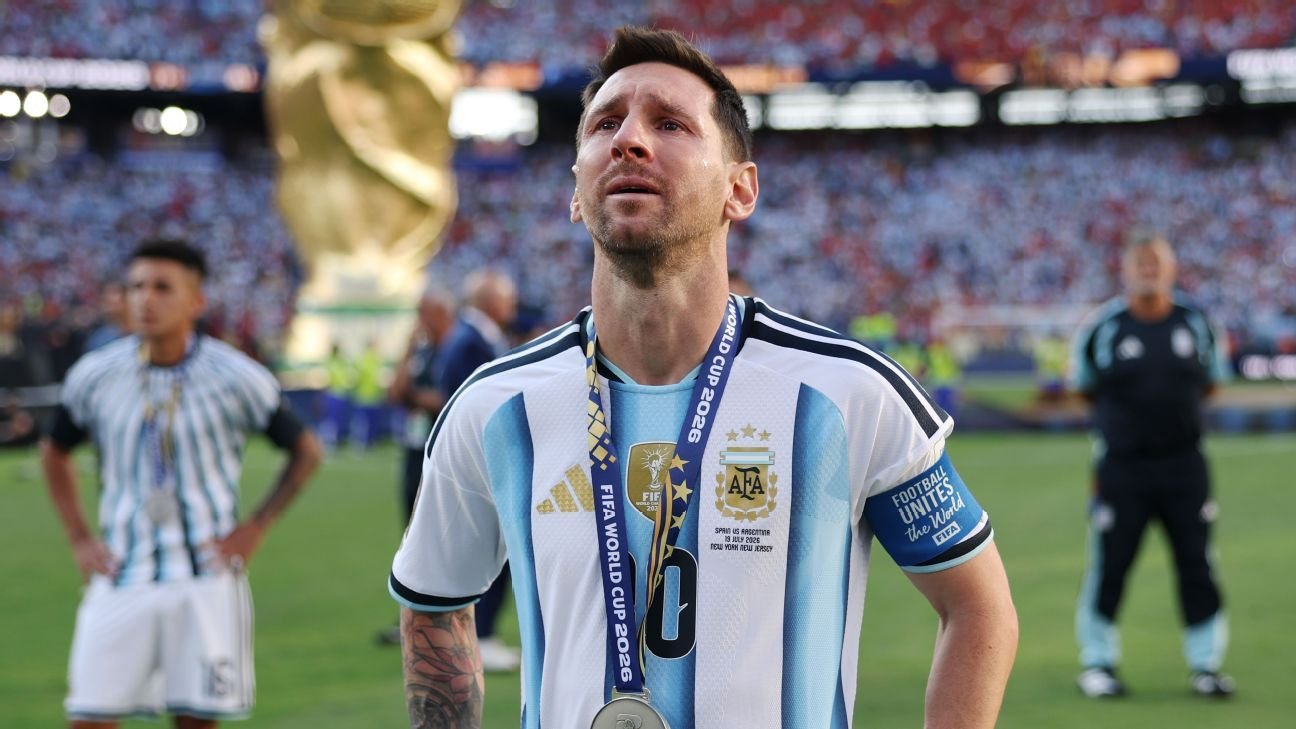
EAST RUTHERFORD, N.J. — Lionel Messi was visibly emotional at the conclusion of the match. It’s become a familiar sight after Argentina games, but this time, following the World Cup final loss to Spain, his tears felt different. While they were undoubtedly tears of disappointment, they also hinted at a farewell.
If this match at MetLife Stadium was meant to be Messi’s “Last Dance,” it certainly didn’t go as planned.
There was no fairy tale ending to his remarkable international career, especially after an astounding World Cup where, defying his 39 years, he netted eight goals and led Argentina to the final.
In contrast, against Spain, Messi was largely absent, not recording his first shot until the 117th minute. Across 120 minutes in the final, he managed only 54 touches, failed to create any chances for teammates, and had just one attempt on goal.
After a six-week World Cup run where he played like a rejuvenated star — who could forget his brilliant hat-trick against Algeria in the group stage? — the aging process finally caught up with Messi just when Argentina needed him most: in the final.
Perhaps that’s why Messi’s tears flowed after the match. He longed to secure a second World Cup title and step away as an iconic, unbeaten champion, but he faced a Spain team that was far from poetic.
Coached by Luis de la Fuente, Spain played like a well-oiled machine, patiently passing their opponents into submission. Their victory marked an unprecedented 38-match unbeaten streak, a new men’s world record, characterized by control rather than excitement.
While Messi and Argentina often triumphed through chaos, passion, and relentless determination, Spain relied on cold efficiency, which even Messi couldn’t penetrate.
However, if this match marked Messi’s final appearance in an Argentina jersey, his tears won’t be the lasting impression. His storied 207 international appearances are filled with unforgettable moments and breathtaking goals. With 125 goals to his name, only Cristiano Ronaldo has netted more on the international stage, alongside 68 assists.
Messi’s final assist came from his cross that led to Lautaro Martínez heading in the decisive goal during Argentina’s 2-1 semifinal triumph over England in Atlanta, which had also brought tears of joy to his eyes.
It’s easy to forget that just a decade ago, Messi was so disheartened by repeated near-misses with the national team that he announced his international retirement.
Back in that same New Jersey stadium, he wept again as he took the decision to retire following a penalty shootout loss to Chile in the 2016 Copa America final. That defeat marked the fourth time he had fallen short in a major final: three Copa Americas and one World Cup.
His inability to lead Argentina to victory drew criticism back in his homeland, where he was often compared unfavorably to Diego Maradona, who was viewed as a passionate talisman that brought immense pride to the national team. In contrast, Messi was sometimes perceived as detached, more focused on success with Barcelona.
Yet a month after his retirement announcement, Messi recanted his decision. Success didn’t come immediately, but the 2021 Copa America victory ended a 28-year drought for Argentina, followed by a World Cup victory just a year later in Qatar.
Messi emerged as the hero in that Qatar triumph, scoring seven goals and providing three assists in leading Argentina to their third World Cup title, just as Maradona had done years before.
1:02
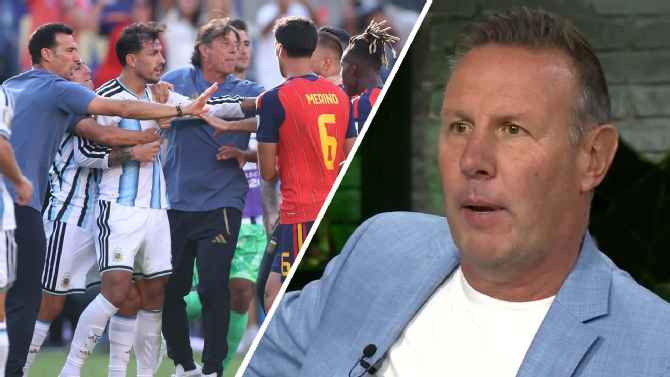
Burley absolutely disgusted by Argentina’s World Cup final performance
Qatar 2022 solidified his place as Maradona’s rightful heir, and his performances in the tournament may have even raised him above Argentina’s legendary number 10. Debates surrounding football greatness have often included Maradona, Pele, and Brazil’s Ronaldo, yet Messi’s legacy now stands apart.
While Pele collected three World Cups as part of stellar Brazilian squads, Messi single-handedly uplifted a modest Argentine side to one World Cup win and nearly achieved a second, though he found it challenging to make an impact against Spain’s precision.
This speaks volumes about Messi’s exceptional talent. His ability to elevate those around him to extraordinary heights is a hallmark of greatness, marking him as the GOAT. Despite Spain’s Rodri being named FIFA’s Golden Ball recipient as the tournament’s top player, the true star of the 2026 World Cup remains Messi.
The fans recognized this too. As Rodri celebrated with his trophy, the MetLife Stadium erupted with cheers of “Messi, Messi, Messi” from Argentina’s supporters and likely many neutrals as well. Rodri might have the Golden Ball and the winner’s medal, but Messi has already secured two Golden Balls (2014 & 2022) along with a winner’s medal, leaving him with nothing left to prove.
While there’s a possibility of seeing him again in 2030 at age 43, it’s more likely this was the closure of a magnificent chapter in his career, despite the outcome of the final.