



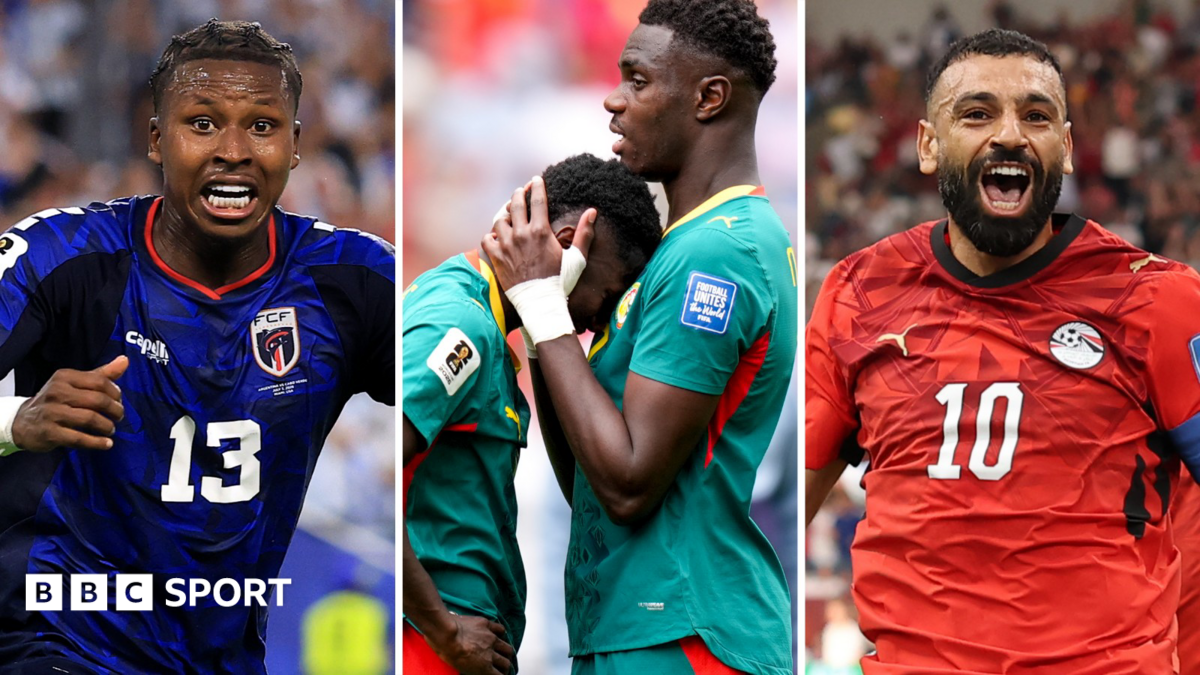
Before the tournament, former Ivory Coast defender Emmanuel Eboue told the BBC he believed African teams can be vulnerable to conceding late goals because of lapses in concentration.
That view seemed to be borne out as DR Congo and the Ivorians both conceded 86th-minute winners in their last-32 fixtures, while Canada struck in the second minute of added time to eliminate South Africa in the same round.
Senegal (against Belgium in the last 32) and Egypt (against Argentina in the last 16) each saw 2-0 leads vanish late on, slipping to 2-2 within three and five minutes respectively. The Teranga Lions ultimately lost to a 125th-minute penalty, while the Pharaohs went out to Enzo Fernandez’s 92nd-minute header.
With Algeria and the Ivorians also conceding stoppage-time goals when on the verge of notable group-stage results, it raises the question: do African teams struggle to close out matches?
“I wouldn’t say it was a trend. I think it’s just unlucky,” Dr Nikita Rowley, a chartered psychologist and course director for sport and exercise psychology at Coventry University, told BBC Sport Africa.
“Every team is more susceptible to mistakes in the closing stages of a match. By that point players are experiencing both physical and cognitive fatigue.
“That cognitive fatigue can affect attention, decision making, communication and makes more lapses more likely. Emotions can be heightened and every action carries greater significance.
“The closer you get to something historic, the more psychologically demanding it can become.”