



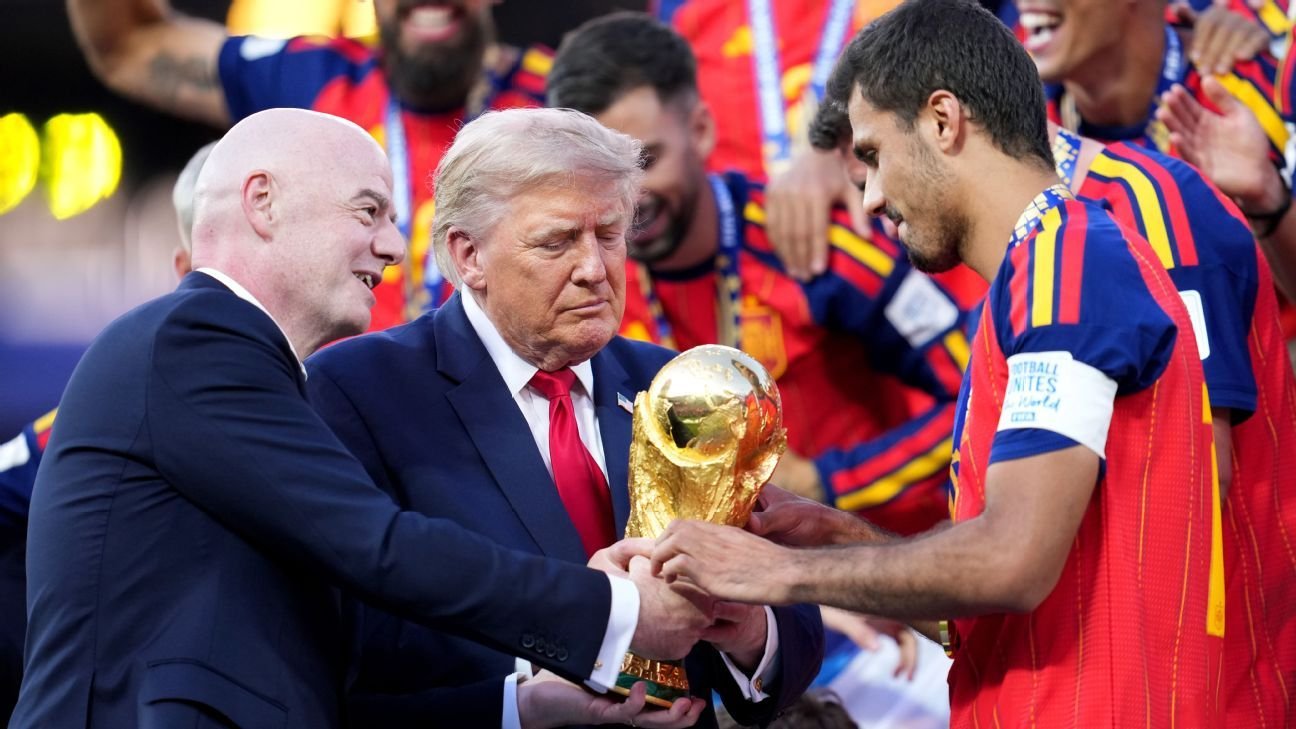
European countries have unanimously decided to boycott all FIFA competitions, including the World Cup, following an emergency meeting on Thursday where they “unequivocally rejected” FIFA President Gianni Infantino’s proposal to sell stakes in the World Cup to a private equity firm.
Infantino’s plan faced further setbacks as both Concacaf, the governing body for North American soccer, and the Asian Football Confederation (AFC) joined UEFA in opposing it.
This decision by UEFA, which includes 55 member nations, means that prominent countries such as Germany, France, England, and reigning champions Spain will not compete in either the men’s or women’s World Cups if FIFA’s proposal remains in place.
UEFA issued a statement confirming, “UEFA and its national associations will not participate in FIFA competitions.”
Later in the day, Concacaf also held a meeting during which its 41 member nations officially rejected Infantino’s plan. This group includes the hosts of the 2026 World Cup: the United States, Canada, and Mexico. The U.S. Soccer Federation expressed its support for Concacaf’s decision via social media.
The AFC followed with a critical statement that called for an “urgent review” of FIFA’s governance, expressing solidarity with UEFA and Concacaf. They noted “fundamental weaknesses” in FIFA’s consultation and decision-making processes that need to be addressed.
FIFA defended its controversial proposal on Friday, asserting that “nobody is selling football,” and attributing the backlash to “erroneous reporting in the media.”
Infantino recently unveiled a plan to sell a stake in FIFA Forward Enterprises (FFE) that could generate $20 billion in exchange for control over future World Cups, including broadcasting and commercial arrangements related to the event. The financing for this venture is being provided by Joshua Kushner, brother of Jared Kushner, who is U.S. President Donald Trump’s son-in-law.
This move is part of Infantino’s broader strategy to align FIFA with figures close to Trump, which previously included creating a FIFA peace prize and allowing Trump to intervene in player eligibility matters.
The proposal includes over $80 million in payouts to each of FIFA’s 211 member associations from now until 2037. Infantino had set a September 19 deadline for associations to accept the initiative, which would require a majority vote to be enacted.
During a virtual meeting, UEFA’s 55 member associations expressed overwhelming discontent with Infantino’s plans, leading the governing body of European soccer to agree to boycott all future FIFA competitions until this sell-off initiative is withdrawn.
Concerns have been raised that a boycott by European nations could politicize women’s soccer, especially with the upcoming 2027 Women’s World Cup set to take place in Brazil.
The first test of this stance will occur in September when Poland is scheduled to host the Women’s U20 World Cup.
“Certain things are simply too important to sell,” UEFA’s statement emphasized. “The FIFA World Cup is the property of football. It always has been and always will be. As long as Europe has a voice, it will never be for sale.”
UEFA also criticized the lack of “meaningful consultation” regarding FIFA’s plans, deeming it a significant failure on FIFA’s part. “This reflects not only a severe failure in leadership but also a neglect of FIFA’s responsibility as the steward of global football,” stated UEFA, where Infantino previously served as a senior official before becoming FIFA president in 2016.
After its Thursday meeting, Concacaf raised concerns about the rushed nature of the proposal and the absence of due process, emphasizing that the FIFA Council should ensure the proper governance processes are adhered to in any future dealings.
Infantino’s high-stakes strategy may jeopardize his previously secure presidency, as dissatisfaction rises among soccer stakeholders across three of six continental governing bodies.
FIFA has set a November 18 deadline for individuals to declare their candidacy for the presidential election, scheduled for March in Rabat, Morocco.
Contributions from Emily Keogh and The Associated Press were utilized in this report.