



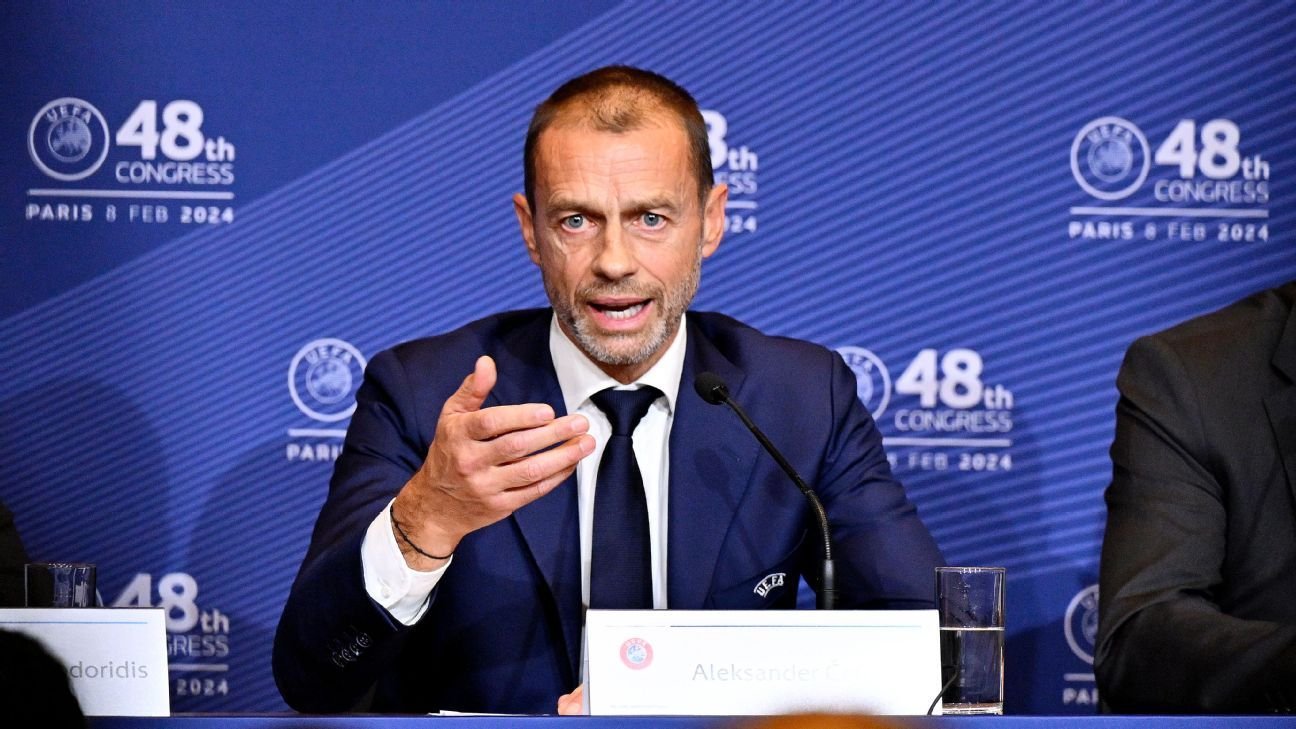
UEFA has announced that FIFA president Gianni Infantino has “lost the confidence” of the organization due to his plan to sell stakes in a World Cup company to private investors, as reported in a recent statement.
Infantino revealed overnight that the controversial plan would be scrapped after it faced rejection from three confederations. UEFA indicated it would boycott FIFA competitions unless the proposal was withdrawn.
– Could Infantino lose the FIFA presidency after World Cup plans were rejected?
– Infantino scraps FIFA World Cup sell-off plan after backlash
While UEFA welcomed the decision to drop the proposal, they expressed concerns that Infantino has eroded trust within the football community due to his recent actions.
“We cannot continue with secretive plans developed by anonymous individuals that provide questionable benefits to the game. It is essential to identify those responsible and hold them accountable,” UEFA stated.
UEFA plans to collaborate with its associations and other confederations in the coming days to reflect on the issue and create a strategy to prevent similar situations in the future.
“This review must be comprehensive and fundamental, and no options should be disregarded. The current FIFA leadership has lost UEFA’s trust, as well as that of many other members of the football community,” UEFA added.
They further pointed out that Infantino’s electoral promises of transparency and ensuring FIFA’s funds benefit everyone have not been fulfilled. “The questionable backroom deal he attempted to push through was anything but transparent,” they said.
UEFA emphasized the need to utilize FIFA’s substantial reserves, which exceed $5 billion, to support grassroots football globally without resorting to selling off valuable assets.
They termed this as a victory for the entire football community but underscored that restoring trust in FIFA is just beginning.
The Football Association expressed its full support for UEFA’s stance, highlighting the need for a thorough review of FIFA’s leadership and governance to ensure global football is managed with transparency for the benefit of all member nations.
Prime Minister Andy Burnham also commended the decision, stating: “It’s the right choice.”
Infantino was seeking approval from national associations to establish a new entity, FIFA Forward Enterprise (FFE), aimed at managing commercial and operational parts of competitions, including the men’s and women’s World Cups. A key point of contention was the proposal to sell a 20% stake to private investors, with FIFA disclosing that Thrive Eternal, founded by Joshua Kushner (brother of Jared Kushner, son-in-law of former U.S. President Donald Trump), was poised to head the investor group.
Despite the backlash, Infantino had claimed that the FFE could “turbocharge” development funding, promising substantial financial incentives to associations that supported it.
Norwegian Football Federation’s president, Lise Klaveness, a longtime critic of Infantino, remarked that the entire framework of international football collaboration was at risk due to a pursuit of individual interests over the game’s welfare, also calling for a shift in governance culture.
Infantino ultimately confirmed that the plan would be abandoned, following opposition from the Asian Football Confederation (AFC) and CONCACAF.
The AFC’s scathing statement also called for an urgent review of FIFA’s decision-making processes, accusing it of consistently moving forward with major initiatives without proper stakeholder consultation.
After CONCACAF’s decisive votes, sources indicated that many of its member nations felt they had lost confidence in Infantino.
In the wake of this controversy, FIFA’s senior adviser Carlos Cordeiro resigned, criticizing the FFE proposal, while FIFA’s chief operating officer Kevin Lamour publicly condemned Infantino’s actions, describing FFE as “the project of one individual.”
Lamour emphasized the adverse impact of Infantino’s unilateral approach, highlighting issues of transparency and governance within FIFA.
The pressing question now is who might consider challenging Infantino for the presidency, with elections set for March of next year. Paris Saint-Germain president Nasser Al Khelaifi, reportedly backed by UEFA, has been mentioned, though sources suggest he is not inclined to pursue the role. Additionally, CONCACAF president Victor Montagliani, currently a FIFA vice-president, has been noted as a possible candidate.
Despite the significant backlash, Infantino seems determined to press on, acknowledging the divisions created by the FFE plan but asserting his intent to unite the various parties involved for the broader interest of football.